Posted by vietnamtravelblog on August 31, 2010 under Vietnam Destinations, Vietnam Travel Info, Vietnam Travel Tips, Vietnam attractions |
According to Bootsnall travel network, there are 5 adventure destinations Vietnam recommended for tourists to travel.
Vietnam seems to be one of the new hotspots in Southeast Asia. Vietnam’s new slogan is “it’s a country, not a war”. Currently Vietnam is experiencing a massive influx of tourists not only interested in it war history, but also interested in the immense amount of soft adventure trips available throughout the country.
Below are a few of our favorites and recommendations:
HALONG BAY

Halong bay, Vietnam
Often touted as Vietnam’s number one tourist destination, Halong Bay, literally means “where the dragon descends into the sea.” This is an area of more than 3000 islands, where tourist come to swim, explore, and visit a natural, scenic areas recognized in 1994 on UNESCO’s World Heritage list. This is a scenic area not to be missed!
Many of the islands are uninhabited, but some have floating villages of fishermen. Most travelers rent boats and spend multiple days exploring the tiny islands. There are some great caves and inlets to explore. The great way to experience this is on sea kayak, and sleeping in a tent at night, instead of taking the main tourists boats like everybody else.
BACH MA MOUNTAIN
The highest point in Bach Ma National Park, the mountain is only 140 meters above sea level and about 18 miles from the coast. Although the mountain is steep and dense, it makes a good day hike to the top. There are great view on the way.
WESTERN CENTRAL HIGHLANDS
Using Dalat as a starting point, head west toward the border of Cambodia and Laos. If you go far enough west, this is a great way to get somewhere way off the typical Vietnam traveler circuit. This is home to a bunch of ethnic minority villages.
Some traveler’s report that tourists are not welcome, but other report to have truly remarkable experiences.
DALAT
Dalat, Vietnam
If you don’t have time, energy, or the will power to visit the Western Central Highlands, then the areas around Dalat are perfect for adventure. Dalat is a hill station in the central highland. There are mountain highlands with tiny villages scattered around throughout the area. It makes a fascinating area worth exploring.
There are a number of standard expensive tours you can arrange in the city, but it’s much better to hire your own guide, usually one that approaches you in the streets. Then, you hire a moped, and he will take you to little villages in the middle of bascially nowhere, staying a night or two and having a real cultural experience.
There are some villages in the area that is off limits to tourists – just look for the sign that has a C.
MEKONG DELTA
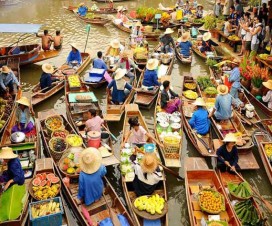
Market floating in Mekong Delta, Vietnam
In southern Vietnam near the border of Cambodia lies Mekong Delta. Known as “Vietnam’s Rice Belt,” the Mekong Delta is a huge system of canals of all sizes that flow into the Mekong River, one of the longest rivers in Asia. This picturesque area is almost all under cultivation, and produces enough rice to feed the entire population of the south and the central regions of Vietnam. This is a great place to relax away from the big cities, taste good fruit and vegetables, and meet local people.
There are a number of interesting adventures through the Mekong Delta. You can take a boat through some of the rural waterways. Most people hire guides but you can also attempt it on your own. The Mekong Delta is also a fascinating place for cycling. You can get a true glimpse of rural life and interact with locals, although conversations are difficult.
(Source: bootsnall)
Posted by vietnamtravelblog on August 30, 2010 under Vietnam Beaches, Vietnam Destinations, Vietnam Travel Info, Vietnam World heritages, Vietnam attractions |
Halong Bay (Water Gulf where the dragon land) is an inlet of the western coast of the Gulf of Tonkin in northeastern sea area of Vietnam, including the sea islands of Ha Long City, Cam Pha Town and part of Van Don island district.
Is the center of a large area there are many factors at similarities in geology, geomorphology, landscape, climate and culture, with Bai Tu Long Bay northeast of Cat Ba Island and the southwest, Ha Long Bay is limited to an area of about 1.553km ² including 1960 islands, mostly limestone islands, which are the core of the Bay area of 334km ² clustered dense 775 islands. Tectonic history of the limestone geology of the Bay has undergone about 500 million years to the ancient geographical circumstances are very different; and Karst evolution fully experienced over 20 million years with a combination of factors such as thick limestone floors, hot and humid climate and tectonic processes improve the overall slow. The combination of environment, climate, geology, geomorphology, Ha Long Bay has made to become clustered biodiversity of forest ecosystems, including closed moist tropical evergreen rain and marine and coastal ecosystems banks with more sub-ecosystems. 14 plant species endemic and about 60 endemic species of animals have been detected in thousands of plant and animal populations in the Gulf residents.
In 1994 the core of Ha Long Bay was recognized as a UNESCO World Natural Heritage with aesthetic value, and re-recognize the 2nd value Premier global geological-geomorphological in 2000. Together with Vietnam’s Nha Trang bay, Halong Bay is one of 29 Bay Club is the world’s most beautiful bays ratings and officially recognized in July 2003
Below pictures about Halong Bay :
Imposing landscape
Sunrise on the Halong bay
Bo Nong cave
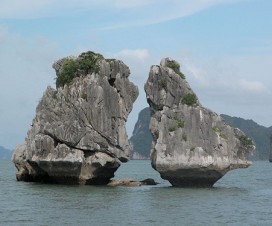
The Kissing Cocks – nice symbol of Halong bay
Sung Sot cave – Stalactite cave largest in Halong bay
Halong bay view at the top
Boats moor
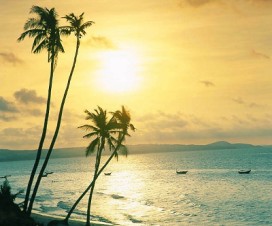
Sunset on Bai Tu Long bay
Welcome to discovery Halong bay – Vietnam !
(Source: http://www.blogcatalog.com)
Posted by vietnamtravelblog on August 28, 2010 under Vietnam Beaches, Vietnam Destinations, Vietnam Travel Info, Vietnam attractions |
Mui Ne beach is the name of a nose, a famous tourist center in
Phan Thiet . Today, Mui Ne is a ward of the city of Phan Thiet . From a deserted strip of beach with red sand hills as the desert is very far from roads, only a few poor fishing hamlets,
Mui Ne is growing up in hundreds resort.
From center of Phan Thiet city 22 km to the northeast, Mui Ne is linked to the city by the sea Nguyen Dinh Chieu – is considered key to the online tourism industry of Binh Thuan.
When to Mui Ne, visitors will be able to visit the fishing village Mui Ne, have the opportunity to witness the operation of a marine origin pure fishing village in
Vietnam.

Break the waves and sail forward

Inshore fishing in sunrise

Beautiful beach with more sun and wind
a flock of buffalo on coast

sand bank

Cham tower
(Source: http://www.blogcatalog.com)
Posted by vietnamtravelblog on August 27, 2010 under Vietnam Festivals |
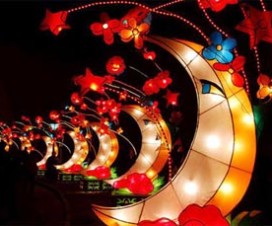
Thang Long Lantern Parade, the largest event of its kind so far, will take place on Mid-Autumn Festival Eve on September 22 around Hoan Kiem Lake.
Sponored by Tivi Phale Co.,Ltd., the parade will have the participation of a unicorn-lion-dragon dance troupe, including a dragon of 1000 meter. Up to 1000 lanterns will be used in the parade, plus 1200 lantern decorations along the street by
Hoan Kiem Lake. Around 1000 lotuses will be released in Hoan Kiem Lake as well.
After the parade, the Mid-Autumn Festival will be held at Ly Thai To flower garden for kids. 1000 pupils from kindergartens will perform songs and dances. The party will feature two giant moon cakes.
The Mid-Autumn Festival, also known as the Moon Festival, is a popular harvest festival celebrated by Chinese and Vietnamese people. It is held on the 15th day of the eighth month in the lunar calendar, which is usually around late September or early October. It parallels the autumnal equinox of the solar calendar, when the moon is supposedly at its fullest and roundest. The traditional food for this festival is the mooncake, of which there are many different varieties.
Traditionally,
Vietnamese family members and friends will gather to admire the bright mid-autumn harvest moon, and eat moon cakes and pomelo together. The Vietnamese version of the holiday recounts the legend of Cuoi, whose wife accidentally urinated on a sacred banyan tree, taking him with it to the Moon. Every year children light lanterns and participate in a procession to show Cuoi the way to Earth. Besides the indigenous tale of the banyan tree, other legends are widely told including the story of the Moon Lady, and the story of the carp who wanted to become a dragon.
One important event before and during the Mid-Autumn Festival are lion dances. The dances are performed by both non-professional children’s groups and trained professionals. Lion dances on the streets go from house to house asking for permission to perform. If accepted, “the lion” will come in and start dancing as a wish of luck and fortune and the host gives lucky money to show their appreciation.
PV
(Source: http://chuckkuhnphotography.blogspot.com)
Posted by vietnamtravelblog on August 26, 2010 under Vietnam Travel Info |
“The World Guinness Book representatives will go to Hanoi to evaluate the Hanoi Ceramic Road in September.
Nguyen Thu Thuy, the author of the Hanoi ceramic road project, said that her group is about to submit the project to the World Guinness Book to recognize the road as the world’s longest ceramic painting in the world.
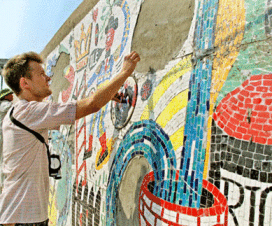
The road is nearly 4 kilometers long, totaling around 7,000 square meters. Around 95 percent of the painting has been completed.
The painting includes 21 sections, running on the wall of the dike along the Red River, with various topics: honoring Vietnam’s history through patterns of the Ly, Tran, Le, and Nguyen dynasties; typical patterns on brocade, ceramic paintings of Hanoi by Vietnamese and international children; and contemporary paintings by Vietnamese and foreign artists.
Thuy said that the project was warmly supported by many Vietnamese artists and nearly 100 foreign artists. It is funded by nearly 30 companies. This is a special work to celebrate Hanoi’s 1000th anniversary.
The painting by Bui Viet Doan and Nguyen Thu Thuy.
The painting by Spanish artist Louis Lambert.
Paintings by Tung Ngoc.
Ceramic paintings by Hanoi children.
Hanoi’s old streets by Nguyen Manh Cuong.
The Red River by Nguyen Thu Thuy.
Nguyen Thu Thuy and painter Ana Tzarev from New Zealand, with paintings designed by Tzarev.
PV
Posted by vietnamtravelblog on August 23, 2010 under Vietnam Destinations, Vietnam Travel Info, Vietnam attractions |
Thang Long – Hanoi is one of the ancient capital city of Southeast Asia and is the only city in this region has a long history and continued development for thousands of years. History of Thang Long – Hanoi associated with the magnanimous history of the nation, the symbol take form years ago where not only the features of the Thang Long culture, but also a symbol of the common culture Vietnam.
That is the Co Loa, one of the oldest court in East Asia – proved a powerful state Au Lac, a lesson on national security, a tragedy loss nation, a sympathize heart before the fate of love between two young people who are just as guilty just a victim of the dark intrigue.
|
|
 |
 |
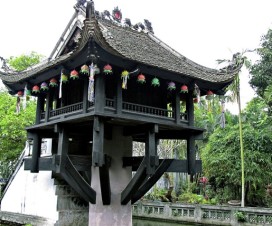
| One Pillar Pagoda |
Khue Van Cac |
Hoan Kiem lake |
As Thang Long citadel is just has revealed archaeological excavations in the scale of Southeast Asia’s
largest early years of this century XXI. A court of epic in scale, unique architecture, the splendid art – symbols of a vibrant capital city today were built by thousands of years in the inspiration of a people proud to have exit foreign country yoke thousand years,
reaching its construction background independence, opening for the Dai Viet era.
As
Van Mieu Quoc Tu Giam – the symbol of national education, traditional fondness for learning, attitudes respectfully, honoring the talented and righteous people of the nation.
As
Hoan Kiem lake with The Huc bridge, Ngoc Son temple sparkling water-polo, symbol of the aspirations of peace – harmoniously, the soul of Hanoi have
reached inspired poetry …
That is the old town – which kept the hallmarks of a “Hanoi 36 streets and district”. The name: Hang Ngang, Hang Dao, Hang Bong, Hang Gai, Hang Bai, Hang Chuoi… not just a simple street name, but behind each name is its excellent handicrafts, a nostalgic concept of history. Hang Bai old one is chosen as Tam Cuc, To Tom(Card game using deck of 120 card and played by 5 persons) … serve for unstudied entertainment indispensable in every family, village in fun days, festivals or Tet. Hang Bac suggestive name of generations of refined talent worker carve golden and silver to do luxuriance of king palace, lords temple, to respect the beauty of lovely Ha Thanh
girls.
Hang Chuoi street on shady trees keep this in the name of memory about innumerable banana area that the ancient using to tend elephant for the king. Hang Dan street where like the iridescent iridescent of the monochord (Vietnamese meaning: Đàn bầu), 16- chord zither (Vietnamese meaning: Đàn tranh), Vietnamese two chord guitar (Vietnamese meaning: Đàn nguyệt) … with the footsteps of actor and beautiful woman … and also how much more sexy name when
touching each leaves, trees, a glimpse of the ancient tile roofs…
|
|
 |
 |
| Hanoi city gate |
Dong Xuan market |
Trang Tien street |
As 5 city gate, as Dong Xuan
market and Trang Tien street, as the passionate flavor of milk flower, a ding-dong of sound tram around Hoan Kiem lake spread Cua Nam, Cau Giay, Buoi market, Mo market today. It’s very interesting if you know Hanoi young people in industrialization with their parents sitting on the train ran out of Hoan Kiem lake eat ice cream sticks, peacefully
watching the tortoise tower in Hoan Kiem lake with graceful willow.
|
|
 |
 |
| La Vong fried fish |
West lake shrimp cake |
Thanh Tri steamed rolled rice pancake |
As “La vegetables, Lang egg-plant”, as Thanh Tri steamed rolled rice pancake, La Vong fried fish, West Lake crisp shrimp pastry, Hanoi Pho, as the Vong green rice flakes … each dish is a attractive taste no palace copy. Eating and dringing arts to be a part of the subtle cultural and human Hanoi.
As Ba Dinh square where President Ho Chi Minh read the Declaration of Independence, the birth of Vietnam Democratic Republic of the September 2, 1945 history, as the solemn & unstudied mausoleum of President Ho Chi Minh that permanent the song by stone, in leaf green flowers from all over the country meet, pervasive flavor, cool cover, keep quiet to sleep healthy of Nguoi in the heart of the nation.
Hanoi symbol are famous man, great personality made to bring fame to Hanoi and the nation. There are famous man born in Hanoi, and there are people weren’t born in Hanoi but name and their career forever immortalized in Hanoi. They really are the sacred symbols of the culture of Thang Long. It is people like Ly Cong Uan – intelligence king has chosen this land to the city for forever descendants with inspired of era to rising ourselves liberation .
|
|
 |
 |
| Ly Cong Uan |
Hoang Dieu |
Chu Van An |
Ly Cong Uan is not only sacred land by the name “Thang Long” actually he opened an era of “Thang Long” for Vietnam. It is also people like Ly Thuong Kiet, Chu Van An, Nguyen Du, Ho Xuan Huong, Nguyen Tri Phuong, Hoang Dieu, Van Cao, Nguyen Dinh Thi … and many famous people succeed to each other through century, typical for chivalrous and elegant Hanoi …
It’s difficult to say all the cultural symbol of Hanoi through time but each generation human in Hanoi must have discovered the secrets of the past that we know to love, respect about heritage that ancestors leave and create symbol for a Hanoi today and the tomorrow.

Celebrate 1000 Years of Hanoi History – Hanoi
Hanoi Tour
These specially-designed Hanoi day trips focus on the diversity and history of this fascinating city and coincide with the 1000 year celebration of the capital in 2010. Led by a history professor or a local university student, you will gain insight in the past millennium of Hanoi and glimpse into what is in
store for the future.
(Source: visithanoi.blogspot.com)
Posted by vietnamtravelblog on August 19, 2010 under Vietnam Destinations, Vietnam Travel Info, Vietnam attractions |
Saigon (Ho Chi Minh City), 27th – 29th May 2010
We arrived into the hustle and bustle of Saigon (now officially known as Hoh Chi Minh city) at around 6am. The streets were already packed with loads of mopeds and the park was full with people doing their morning stretch and tai chi We found a pavement cafe to get some drinks (Doddy’s first ice coffee) and gather our senses. With a little help from the stall holder we managed to figure out where we were on the map and fortunately we weren’t too far away from the main guest house area. With drinks finished we set off in search of somewhere to stay. The first few places we tried were a bit out of our price range but one hotel owner said he’d take us to his friend’s hotel that’d do us a room for £12 a night. We followed him there to find it still shut, but no worries, he just drew back the shutters waking his friend who was sleeping in his underwear on a make-shift bed on the floor of the reception! A quick check of the room and it was all okay and yet again, we were able to check in at 7 am, brilliant.
Even though we were quite tired we decided to pass on a sleep and set off exploring as there was lots to see and do. The first thing we noticed about Saigon was that it was way more hectic than Hanoi, with a population of 7 million and 4 million of those having mopeds the roads were manic and even more difficult to cross. There were people everywhere willing to offer you their best price on a lift on their moped or a tuk tuk to anywhere you could want to go. Our first stop of the day was the Reunification Palace which we had to cross a nice peaceful park to get to. The palace was built in 1966 to serve as South Vietnam’s presidential palace and it is where the first communist tanks crashed through the gates in 1975 when Saigon surrounded to the North. The palace was interesting and gave us a good bit of background information into the conflict between North and South Vietnam.
For lunch we ate at Huong Lai a traditional Vietnamese restaurant where all the staff are former street children.

The service and atmosphere was great but unfortunately the food was pretty poor. After lunch we walked to the War Remnants Museum. It provided a good insight into the Vietnam war and was quite harrowing and moving at times, especially the sections on the torture methods and the effects of agent orange, although it did appear to be a little too propagandist at times. We then walked all the way back stopping off for our last Vietnamese bia hoi (cheap draft beer). We also survived crossing the craziness roundabout I have ever come across! There were 6 exits and cars and motorbikes going round it both ways!
We ate that evening at Kim’s cafe, very cheap and tasty spot, very popular with the locals and tourists alike as every table was full. For dessert we tried a place called Yoghurt Space. The concept is as follows: they have lots of different flavours of yoghurt in whippy ice-cream type machines. It is all served by the weight so you serve yourself, add a variety of pick and mix toppings, weigh it and pay for it and voila you have a tasty yoghurt pudding! We were then very ready for bed and enjoyed a good night’s sleep in a proper bed.
We awoke bright and breezy and ready for our day exploring the Cu Chi Tunnels. The Cu Chi Tunnels are a 200 km network of underground tunnels situated around 30 km away from Saigon that were used to facilitate the Viet Cong’s control of the area during the 1960’s. We went on an organised tour and learnt how the tunnels were made, how people lived in them and different capture and torture methods that were used by the Viet Cong. The trip culminated in a descent into one of the tunnels. It was tiny and each level lower we went got smaller and smaller until we were just able to pass through in a hunched position. I am glad we only did a 60 metre stretch of the tunnel and I really don’t know how people lived in there for days on end.
Back in Saigon city centre we were dropped off at the main market. This was good for two reasons, one to get a late lunch and two so Doddy could get his market fix. Walking back through the park Doddy spotted some locals playing with

From Yoghurt Space
a new kind of hack (a bit like a shuttle cock with feathers) so went and joined them for a game and liked it so much that he bought one afterwards. That evening we ate at the Hard Rock Cafe (another first for Doddy). We had been planning to go to one on our trip but hadn’t got round to it yet so decided tonight was the night. We enjoyed two big burgers whilst listening to a live band. The food was good and we enjoyed the fun and lively atmosphere. We ate dessert once more at Yoghurt Space and then retired to bed after an enjoyable, busy day.
Doddy writing now…
Saturday morning we were up for our 7.30 am bus to Phnom Penh in Cambodia, although there was a few more sights we could have seen in Saigon time was no longer on our side with only a week to go before our return to the U.K.! We climbed onto our bus at 7.30 am and at 8.25 am we were still sat with the bus not yet moved, apparently due to another bus brake down we had to wait whilst the stranded passengers made it
At the Cu Chi Tunnels
to our bus. Shouldn’t complain though as Bowks and I know all about buses breaking down. Finally at 8.30 am we set off and shortly after the ticket guy came down to collect our tickets and also collect the $25 visa fee for our Cambodian visa. Bowks and I had heard that it was possible to get a visa at the border for $20 so smelling a rat we said we would sort it ourselves on arrival. To this we were told there wouldn’t be time and he was doing an express service. Staying strong we declined and said we would go it alone at the border and see how we’d do. Three hours later we arrived at the border crossing and sure enough a tourist visa was $20 so we joined the short queue and within minutes had gained our tourist visa, passed through and were back on the waiting bus. Then we sat waiting for the ticket guy and his so called express delivery service and the other passengers to re-board. Seemed his was on to quite a little money earner as ¾ of the passengers coughed up the $25 without question, an extra $5 off 40 passengers puts a nice wedge of cash in the back burner! However, Bowks and I had slipped the net and we were glad not to have fallen victim.

(Source: http://www.travelblog.org)
Collected by Vietnamhotels.net
Posted by vietnamtravelblog on under Vietnam Destinations, Vietnam Travel Stories |
After 6 months back in the UK, it was time to return to Saigon. It was quite a short time away really, but there are a few subtle differences since I was last here. I was walking from Ben Thanh Market to Sullivans Irish Bar, a route I had taken many times in the past. About halfway there I passed a rather large department store that I did not recognise. Confused, I started to think I had taken the wrong route. There was Parksons and Saigon Tourist as expected, but opposite an entire multi storey building I was sure had not been there before. It was as if the store had sprung up seemingly overnight. I carried on along the road and arrived at my destination. A few days later I was walking from Sullivans to Diamond Plaza. I got to the ‘new building’ and noticed Notre Dame Cathedral in the distance so decided to take this short cut. As I continued along the road I started to recognise other landmarks and it slowly dawned on me that the road I was taking, the road that I thought was a different route was in fact the same route I had always taken. I realised that the building that had appeared had previously been hidden behind advertising boards. Six months is a short time to be away, but for Saigon it might as well have been a lifetime.
Although I have written about some of my time in Saigon in earlier blogs, I thought it was time to talk a little more about this energetic city. Although I travel around as much of Asia and specifically Vietnam as I can, Saigon is my base; spending most of my time working there. To the newcomer it can be overwhelming, but once you get used to the eccentricities you soon settle in. The traffic is just to be expected, the scams can be avoided. What you have to remember is, people are doing what they have to in order to survive. It is still only a small percentage of the population that have good jobs, and despite being a communist government in name there are few state jobs and so it is left to the people to do what they can. Be it selling food, polishing shoes, repairing bikes on a street corner or unfortunately selling themselves there is a genuine feeling of ‘whatever it takes’.
Even if they have a low end job, it does not necessarily mean they are safe. With few government sanctions or health and safety standards, many people are performing dangerous jobs with equipment that is not suitable for the task. Again, this is just what they have to do to get by.
Saigon is still one of my favourite cities in Vietnam. It is the commercial heart of the nation and it is the ‘big city’ that draws the youth that Hanoi fails to be. Although much of the city is new, having been hit hard during the war, there is still a lot to see and do. So, rather than concentrate on the generalities of the City or the various highs and lows that have been documented elsewhere, I will talk about some of my favourite sights. It is the energy of the city that should inspire a visit, just walking around the city is an amazing experience. Once you have arrived and settled in though there is a lot to see and do.
Most city tours will include Notre Dame Cathedral, Reunification Palace and Ben Thanh Market; these are probably the three main attractions and if you only have a day in Saigon these are the must see places.
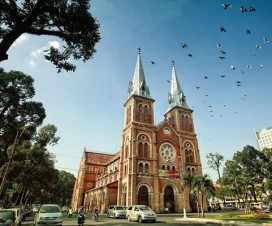
Notre Dame Cathedral sits in the centre of the Government sector. Nearby there are foreign consulates and Vietnamese government buildings. The cathedral itself is inspired by French architecture and is used for Catholic services for both foreign a local worshippers. Across the road from the Cathedral is the Central Post Office. Again this building is of French design. The highlight is very much on the inside with the high ceiling and traditional wooden booths.
Reunification Palace is not far from Notre Dame Cathedral. This strikingly modern (well 1970’s modern) building has gone under several names and duties over the years depending on what is happening in the country at that time. Most recently it was the home of the Southern Vietnamese government and it was here on 30th April 1975 that the South surrendered to the North as a tank came crashing through the main gate. The building now serves as a time capsule to that era and is an important place to visit on Reunification Day. Tours are held through the building and the war bunkers beneath it. It is an interesting walk through the past.
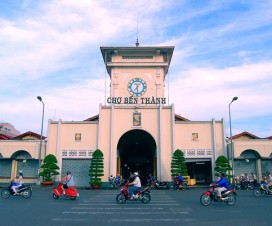
Ben Thanh Market is one of the most famous landmarks in Saigon. Crammed full of stalls you can by almost anything within these walls. It can be a daunting experience walking through though as you a pushed and pulled, being offered anything from knock off clothes to traditional Vietnamese items. Personally, I walked in one door and straight back out the other side without stopping.
There are several museums that I must also mention, and if you are staying for longer you should really check them out as well. All are easily walkable if you are staying in District 1 and all have very reasonable entry fees (15000VND is about the normal price for any museum in Vietnam; equivalent to about 50 pence).
The War Remnants Museum is a shocking reminder of the atrocities of war. The forecourt is filled with helicopters, aircraft and other battle hardware but as you get closer you realise this is not a traditional war museum, it is about the horror of war. A replica of a POW prison drives home the brutality, made even worse by the fact it was run by the US and the inhumanity was perpetrated by them. The main museum is mainly propaganda and photos from the war. I found it very hard to stomach, the only time I had felt this sickened was in Hiroshima.
The Museum of Ho Chi Minh City is housed in a neo-classical building. There are some examples of the successes of the Country, the space program for example, but mostly the museum is about the rise of Communism. As with all things in Vietnam, it is propaganda based and written by the Government. It is an interesting visit though.
The History Museum is at the entrance to the Zoo and is a journey from the Bronze age to modern day. The history of the Vietnamese civilisation is well presented, following the traditions, art and religions of the various ethnic groups that have combined over the centuries. There is also an opportunity to see a Water Puppet show, which is quite a fun introduction to this art.
And that pretty much covers that. There are plenty of things to do in Saigon, just give it a try and walk around.
http://www.travelblog.org
Posted by vietnamtravelblog on August 18, 2010 under Vietnam Destinations, Vietnam Travel Info, Vietnam attractions |
The former trading port of Hoi An is a great place to sample some of Vietnam’s culinary delights while updating your wardrobe too.
By Jessie Richardson
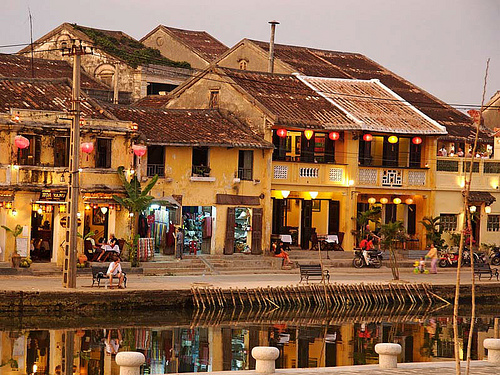
Hoi An: Made up of a mix of Chinese, Vietnamese and colonial architecture.
Hoi An offers a relaxed stay, in anything from dirt-cheap hostels to cash-devouring resorts. iTravel-Vietnam points out the highlights of this tourist haven on the eastern coast of Vietnam.
Getting there
Depending on time and monetary constraints, there are a variety of ways to reach Hoi An. Almost all modes of transport end in the city of Danang and from there it is a 45 minute journey (either taxi, motorbike or car) to Hoi An. Both Jetstar and Vietnam Airlines fly to Danang at least daily with prices starting at around US$50 per person each way.
For the slightly more adventurous (or slightly poorer), the overnight train departs Hanoi at 7pm and arrives in Danang at approximately 10.30am the next day. A tourist class soft sleeper costs US$52 or you can really rough it in a hard seat for US$36. Having an “Easy Rider” moment? Hoi An Motorbike Adventures offers a two day motorbike adventure from the nearby city of Hue to Hoi An. The journey follows the Ho Chi Minh Highway over mountain passes and through ethnic minority villages before arriving in Hoi An. Prices start at US$140 per person.
Where to sleep
Hoi An is full of hotels ranging in price from US$15 per room per night right through to US$2,000 villas. The frosted pink hues of the Cua Dai Hotel give it a slightly wedding cake-esque appearance which is oddly appealing. The hotel is light and airy and is a short walk to the center of town. All of the hotel’s 24 rooms are equipped with air conditioning, wireless Internet, satellite TV, and a refrigerator. Best of all, the hotel has a swimming pool. Rooms start from US$30 per night inclusive of government tax, service charge, and daily continental breakfast. Telephone +84 510 862 231.
The beautiful decorations of the Cua Dai Hotel.
For a more up-market sojourn, the Life Resort Hoi An is certainly dripping in understated colonial elegance. Situated on the Thu Bon River, the hotel is housed within lush, green gardens that provide a welcome relief to the hustle and bustle of the nearby market. All of the rooms come with a private porch and include all of the modern comforts in a charming French colonial exterior. Prices start from US$112 per person (not including taxes and surcharges). Telephone: +84 437 925 079/80.
Imperial binge
The cuisine of Central Vietnam is strongly linked to the imperial emperors of the Nguyen Dynasty and as such is often complex and luxurious in both taste and appearance. Once of the most famous dishes of Hoi An is ‘Banh Xeo’ (Country Pancake) — and no trip to Hoi An is complete without it. This crispy fried pancake made from rice flour is stuffed with pork, prawns and bean shoots and served with fresh herbs and the ubiquitous nuoc mam (fish sauce). The Ancient Town is so bursting with delicious food that it would be sensible to anticipate at least a 3kg weight gain.
The Cargo Club offers French style cakes and ice cream as well as a huge array of savory delights (try the roasted fennel and goat cheese salad). The rooftop terrace offers enchanting views of the Thu Bon River, while the patisserie veranda is a lovely place to watch life drift by. Either way, you will feel like Catherine Deneuve in “Indochine”. Alternatively, cross the street and enjoy a quiet beer in the courtyard of the Hai Scout Café (98 Nguyen Thai Hoc).
Suits you
Let’s be honest, one of the biggest draws of Hoi An is the abundance of tailors. Every street is lined with tailors waiting to kit you out with a new wardrobe. Most tailors can copy items from a picture, allowing you to indulge in all of your couture-related fantasies. For more intricate pieces, head to Yaly Couture who are able to do exquisite beading and embroidery. For simpler items any of the tailor shops will be able to make items within 24 hours at a very reasonable price. Don’t have shoes to match your frock? Never fear, you can also get custom bags and shoes made.
The Japanese bridge at night.
For culture vultures there are a variety of museums, temples and merchant houses that are open for tourists to explore. The most famous site in Hoi An is the Japanese Bridge whose beauty turns any hack photographer’s efforts into a masterpiece with just one click. Tickets for these sites are available at the tourist offices dotted around the town.For non-shoppers or those looking for a hands on experience, head to the Morning Glory Cooking School for Ms Vy’s famous cooking classes. A 1.5 hour class will set you back US$18 and best of all you get to eat a spectacular meal at the end — think fresh spring rolls, green papaya salad and fish in banana leaf.
If you are neither a shopper nor a chef and if the weather is fine, the Cham Island Diving Center offers one day diving and snorkeling. For US$65 per person explore coral reefs with two certified divers and enjoy lunch on a paradise island.
(Source: CNNgo.com)
Posted by vietnamtravelblog on under Vietnam Travel Tips, Vietnam hotels |
The city of Ho Chi Minh in Vietnam is one of the largest in the country. What was once the city of Saigon, Ho Chi Minh is a fast paced city full of economical change and cultural attractions.

You will, of course, need a great place to stay in between excursions into the city and we’re prepared to uncover some of the most popular hotels in Ho Chi Minh.
9. Asian Ruby Hotel Ho Chi Minh City

The Asian Ruby Hotel Ho Chi Minh City hotel is located in the center of Saigon. The hotel boasts a stunning French colonial architectural style and is minutes away from many of the city’s most popular attractions. You’ll find yourself within walking distance of the Notre Dame Cathedral, Ben Thanh Market, and China Town, amongst other incredible attractions.
8. Majestic Hotel Ho Chi Minh City

Also located in the center of the city is the gorgeous Majestic Hotel Ho Chi Minh City. It’s a comfortable hotel and the staff is bound to make you feel right at home during your stay. The rooms are decorated in an elegant French colonial style but are fully equipped to meet the needs of any traveler. The hotel restaurant serves both Oriental and international dishes and has a dessert menu so stunning you’ll want to skip your main course.
7. Caravelle Hotel Ho Chi Minh City

The luxurious Caravelle Hotel Ho Chi Minh is located in the heart of the city’s business district and is a great place for both business and leisure travelers to stay. The hotel is just moments from the airport and offers a myriad of sophisticated and pampering amenities. Make sure you stop by the Port Orient Restaurant for a bite to eat off their stunning international menu. The Saigon Bar and the Lobby Lounge are very nice as well.
6. New World Hotel Saigon

The New World Hotel Saigon hotel is the perfect destination for tourists who want to be located in the thick of the city’s activities at all times. You’ll find yourself within close proximity of the Opera House, Saigon Water Park, War Remnant Museum, and Vietnam Wonder Land as well as a number of historic attractions. Make sure you eat at least one meal in either the Parkview Restaurant or Dynasty Restaurant, too!
5. Continental Hotel Ho Chi Minh City

Also located in the center of the city is the Continental Hotel Ho Chi Minh City. This small hotel has a contemporary flair that makes it perfect for travelers from all walks of life. The hotel is within close proximity of the Chu Chi Tunnels, Ho Chi Minh City Museum, and the Emperor Jade Pagoda as well as several other attractions. The hotel has its own restaurant and bar where you can relax after a long day of tourism.
4. Hotel Equatorial Ho Chi Minh City

The stunning Hotel Equatorial is located a mere 20 minutes away from the Ho Chi Minh airport and is only a few minutes away from some of the area’s most popular recreational parks, shopping centers, and commercial businesses. The 333 room hotel is elegantly decorated, provides stellar customer service, and serves delicious Cantonese and Szechuan cuisine in its Golden Phoenix Restaurant.
3. Sofitel Saigon Plaza

Conveniently located in the center of the city’s business district, the Sofitel Saigon Plaza will not disappoint you, regardless of your reason for being in town. The gorgeous, historic Le Duan Boulevard, upon which the hotel is situated, is moments away from the airport, Reunification Palace, and a wide variety of local shopping malls. The hotel specializes in offering comfortable accommodations for physically challenged guests as well.
2. Legend Hotel Saigon

The charming Legend Hotel Saigon is located in the historic section of Ho Chi Minh and is nestled right on the edge of the river. The breathtaking skyrise provides visitors with stunning views of the city while providing a sense of tranquility and seclusion at the same time. The Atrium Café is renowned for its Euro-Continental and Asian menu.
1. Windsor Plaza Hotel Saigon

The Windsor Plaza Hotel Saigon is a stunning addition to the skyline of Ho Chi Minh. It offers a wide variety of facilities for commercial events and conventions but is welcoming to travels in town for pleasure as well. The staff is attentive, the accommodations are plentiful, and the Vietnamese and Thai food served at the onsite restaurant is decadent.
The city of Ho Chi Minh is bustling with activity but at the same time offers visitors a wide variety of options to choose from when it comes to entertainment and attractions. Choose a great hotel as your starting point and you’ll appreciate every moment thereafter.
(Source: http://blog.asiahotels.com)
Tags: Asian Ruby Hotel, Caravelle Hotel, Continental Hotel Ho Chi Minh City, HCMC hotels, Ho Chi Minh Hotel, Ho Chi Minh hotels, Hotel Equatorial, Incredible Hotels in Ho Chi Minh, Legend Hotel Saigon, Majestic Hotel, New World Hotel Saigon, saigon hotel, Saigon Hotels, Sofitel Saigon Plaza, top hotels in Ho Chi Minh, top hotels in Saigon, vietnam hotel, Vietnam hotels, Windsor Plaza Hotel Saigon