Da Nang to increase tourist information machines

Posted by admin on March 4, 2011 under Vietnam Destinations, Vietnam Travel Info, Vietnam attractions | Be the First to Comment

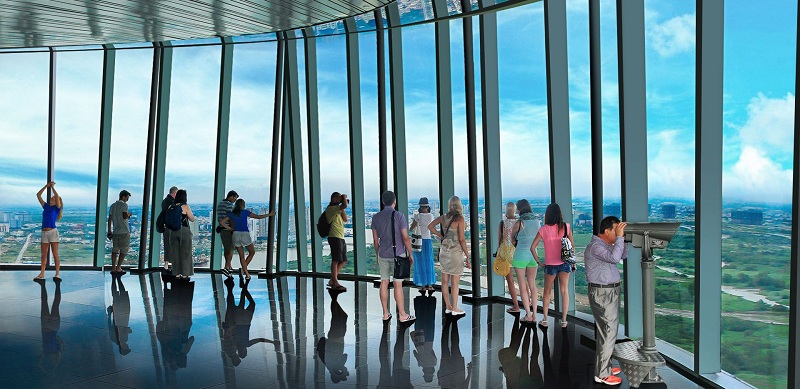
Da Nang to increase tourist information machinesThe People’s Committee of the central coastal city of Da Nang has allowed the Department of Culture, Sport and Tourism to go ahead and install an additional 10 tourist information machines in the city.

The machines with touch-screen computers will provide necessary information in Vietnamese and English to visitors to Da Nang City.

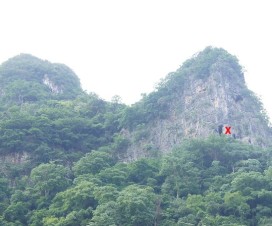
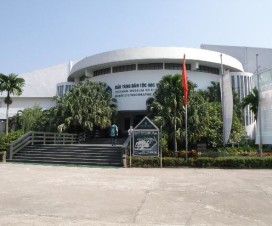
They will be located at public places including the Da nang International Airport, Ba Na cable car station, Big C supermarket, Bach Dang hotel, Champa Museum, Ngu Hanh Son (The Marble Mountains), Dong Seaside Park, Trung Vuong Theater, the central bus station and Da nang hotel.

There were already 5 tourist information machines installed in resorts and supermarkets in the city.

Source: SGGP

Cau Pagoda, symbol of Hoi An City

Posted by admin on March 3, 2011 under Vietnam Travel Info, Vietnam attractions | Be the First to Comment

Zoom in

Zoom out

Add to Favorites

Print

Send to a friend

Cau Pagoda in Hoi An Province is a symbol of the old city

Cau pagoda, also known as Lai Vien pagoda, is a symbol of the old city of Hoi An.

Tourists come to the pagoda to admire the old architecture and some of them pray for the good weather – Photos: Kinh Luan

It attracts many tourists everyday who come to admire the old Japanese architecture and the romanticism of the place.Cau Pagoda was built by Japanese tradesmen possibly in the beginning of the17th century. It is composed of two parts: the bridge and the pagoda which are all in painted wood.

The bridge is covered by a tiled roof. It is about 18 meters long and spans a stream of Thu Bon River, near the intersection of Nguyen Thi Minh Khai and Tran Phu streets.

People also call it the Japanese Covered Bridge and it is a beautiful example of the Japanese architecture from the time.

At one end, there is a sculpture of dog and on the other end is a sculpture of a monkey. The two animals are sacred symbols in Japanese culture. According to the Asian zodiac, many Japanese emperors were born in the year of the monkey and the year of the dog. Records also say that the construction of the bridge was initiated in the dog year and was finished in the monkey year.

Cau pagoda has a very particular architectural style. Inside there is no Buddha statue. Instead in the center of the pagoda, there is a wooden statue of the northern god Tran Vo Bac De. This god is the god of weather. People believe that he controls all kinds of weather changes and natural calamities.

The pagoda was renovated many times in 1817, 1865, 1915 and 1986 making it a hybrid of architectures of Vietnamese, Japanese and Chinese.

The gate of the pagoda is carved with three words Lai Van Kieu (bridge of friends from afar). That name was given by King Nguyen Phuc Chu during a visit to Hoi an in 1719.

This monument was not just a bridge or a pagoda but it was the former gathering place of villagers who dreamed of a community in harmony.

Book hoi an hotel today at http://Vietnamhotels.net/ with good prices!

Sea Festival to take place in Nha Trang Town

Posted by admin on March 2, 2011 under Vietnam Beaches, Vietnam Destinations, Vietnam Festivals, Vietnam Travel Info, Vietnam attractions | Be the First to Comment

The fifth biennial Sea Festival 2011 will be held in Nha Trang from June 11-15 with Truong Sa (Spratly) Archipelago as highlight.

According to the Khanh Hoa Province People’s Committee, the festival will include a photo exhibition of the Vietnamese islands, a music show, a film screening and a conference on the Truong Sa District.

Artists from France, Korea, China, Cuba, and Russia will all perform during the event.

The festival will also include a celebration of bird’s nests, a provincial beauty pageant and a Made-in-Vietnam Goods Fair on Nha Trang, Doc Let and Bai Dai beaches.

In addition, the festival will include many environmental activities, including a scientific conference on preserving Nha Trang Bay and a citywide trash pick up.

According to the organizers, the biennial festival is aimed at promoting the province’s traditional cultural values and tourism industry.

Nha Trang is one Vietnam’s most popular tourist destinations. Book nha trang hotel today at http://Vietnamhotels.net/ to get the lowest price!

Things to do and see in mui ne, phan thiet

Posted by admin on February 26, 2011 under Vietnam Beaches, Vietnam Destinations, Vietnam Travel Info, Vietnam Travel Tips, Vietnam attractions, Vietnam beauty | Be the First to Comment

Lay down beside the Buddha

On top of Ta Cu — a mountainous plateau accessed by an Austrian cablecar system 1.6 miles long, and 505 meters high — resides the region’s renowned recumbent Buddha.  Some 49m long and 10m high, this reclining Buddha is reputed to be the largest in SE Asia. An additional climb through woods droning with cicadas leads you to the fissured and graffiti-splattered Buddha, a cement statue whose serenity and gravitas still manages to shine through, even with forest growth encroaching from all quarters.

Ride the Wind

Who says Charlie don’t surf. Okay, the breaks in Phan Thiet might not satisfy Lieutenant Colonel Bill Kilgore, Robert Duvall’s surf-obsessed character in Apocalypse Now. But this perch on the South China Sea is supremely windy, which has proved the draw for in-the-know adventure sport mavens who make regular pilgrimages here for killer wind- and kite-surfing. Pascal Lefebvre, owner of Jibe’s Beach Club — one of a dozen establishments which can make this experience happen for you — says that Phan Thiet’s popularity is due to the quality of its wind, usually between 20-25 knots during the season, and sometimes as high as 40. “It’s nearly guaranteed every day of the season,” he said. “Great wind and warm water.”

Hit the Road

Unlike traffic-choked Saigon, this part of Binh Thuan Province is a motorbiker’s dream. While most moped-enabled tourists are drawn north of Phan Thiet (to the famed Red Sands of Mui Ne), the coastal road leading south is, if anything, even more alluring.  Great swathes of empty sand back onto quaint Vietnamese fishing villages untouched by the hand of development. Rent a motorbike from a local for a few hours (about $5) and head south to Ke Ga Lighthouse. Once past the small downtown of Phan Thiet, you’ll feel as though you’ve got the road all to yourself — and the road is never more than 50 yards from the ocean. Note the secluded resorts along that stretch that seem like ghost towns but are actually great places to stop and have a drink with a view.

Eat & Drink

Quan Bo Ke — Situated at the north end of the Mui Ne strip this al-fresco joint offers some of the cheapest and best seafood in town. Lobsters go down well with the Russian tourists who flock here, but a better bet are the generous platters of grilled scallops with spring onions and peanuts – a steal at around VND90, 000 or $5 a pop.

Joe’s The Art Cafe — Strangely bohemian for a 24-hour bar in an Asian seaside resort, Joe’s offers an imaginative menu, a decent wine list and nightly live music. Perfect for a sandwich or snack after a night out. It also shows movies, sports comfy couches, and stays open till the wee hours of morning.

Cay Bang — Get into some seafood here at the south end of Mui Ne’s strip. Right on the water, it’s popular among locals and tourists alike and offers the rare (and raw) experience of picking your own fish. Upon arrival, you are escorted into a room/garage full of dozens of tanks, swimming with squid, rockfish, grouper, etc) You can tell them to fry it, steam it, grill it, whatever.

Shree Ganesh — Run by the same crew responsible for Saigon’s popular Ganesh restaurant, this particular spice emporium offers a flawless selection of north and south Indian dishes.

Three more fine venues on the strip in Mui Ne: Sankara Beach Bar & Restaurant, The Indian Restaurant, and Mia. For drinks in a more upscale setting, hard to beat The Sailing Club.

Visit Van Thuy Tu Temple

Two hundred years ago, Van Thuy Tu had three separate repositories of whale skeletons. Today, the Temple site is famous mainly as home to Ong Nam Hai, a 100-foot whale skeleton moved inside, in tact, in 1893. The actually found it washed ashore in 1890, and buried the whale in a spot close to the ocean. After three years, the body eroded, they dug up the skeleton and built a temple for it. They still keep more than 100 skeletons here, as with tradition, still burying the whale where they found them or in a sandy cemetery beside the temple — thus offering respectful offerings to the spirits who look after fishermen and bring the bountiful catch. The plants in the cemetery are grown in pots, so the root systems don’t bind up the soil, making exhumation more difficult.

Behold, Bamboo Basket Boats

At night, gazing out onto the East Sea, lines of illuminated squid boats bob gently on the horizon. During the day, the bamboo basket coracle is the more familiar sight — here and all along the south central coast of Vietnam. It takes about a week to weave the strands of a basket boat and seal the bamboo lattice with a pitch derived from the dau trai tree. The boats sell for about 400,000 dong, or $27 each. Fishermen frequently make boats in the grounds of the Van Thuy Tu Temple, and surrounding streets, but they are ubiquitous all along the beaches of Binh Thuan Province. Fishermen propel these boats by churning a single oar, like a milkmaid at butter.

Check out the Cham Towers

The Cham people are thought to have arrived on these shores from the island of Borneo and, at its 9th century peak, the Cham culture controlled coastal lands from Hue in central Vietnam all the way south to the Mekong Delta. The Cham Kingdom fell before the encroaching Vietnamese in the 16th century, but some 100,000 ethnic Chams still reside in Vietnam, and they are particularly prominent in Phan Thiet/Mui Ne. A grouping of impressive Poshanu Cham towers can be found just off the road from Phan Thiet north to Mui Ne. The government repaired and restored these architecturally significant temples from 1990 to 2000. Just beyond the ruins — in a coupling of empires both long gone — are the ruins of a French playboy’s seaside bungalow.

Book resort in mui ne now to get good prices at http://Vietnamhotels.net/

Head into the clouds on a journey through Vietnam’s hill country

Posted by admin on February 24, 2011 under Vietnam Destinations, Vietnam Travel Info, Vietnam attractions | Be the First to Comment

By Susan Griffith | The Independent |

According to the young Red Dao woman with the incisor decoratively encased in gold, her village of Ta Phin had not seen the sky, let alone the sun, for six long weeks. The winter had been so cold and hard, she explained as we slopped along the muddy track (she in her plastic sandals, me in my hiking boots), that many villagers, including her own family, had lost at least one of their precious water buffalo, animals that cost upwards of eight million dong (£250) to replace.

This level of hardship rather eclipsed our own. Yet there was no denying that our little group was feeling downcast by the lack of visibility in this remote region fabled for its glorious landscapes. Someone had even dared to breathe the word “depressing” as we peered into the monochrome murk. The hotel lobby was heated only by a mean little corner fireplace that had been reluctantly stoked with kindling by the hotel manager in his shiny, too-tight suit.

The only reliable source of heat was bed, where the electric blankets were switched on around the clock; but you don’t journey to a hidden corner of Asia to go to bed.

We had just arrived off the overnight train from Hanoi at the railhead town of Lào Cai. From here the only way is up: we had travelled for an hour by switchback road through the pre-dawn blackness to the hill resort of Sapa in northern Vietnam. China’s Yunnan province was only 36km away. This region was unknown to Europeans little more than a century ago when French missionaries arrived to convert the local hill tribes (I speculated whether they had won them over with gifts of blankets). After moving the capital of Indochina to Hanoi at the start of the 20th century, the French colonial masters seized upon Sapa as a place to escape the heat of the lowland summer – an amusing irony in our case. Opened to tourism again in 1993, Sapa has become a honeypot, attracting tens of thousands of visitors, including many urban Vietnamese in the rainy summer months.

We thought with longing of the brochure photographs of verdant valleys, rice terraces reaching to impossible heights, and bucolic villages with a scattering of wooden and bamboo houses. We knew that a couple of kilometres away Mount Fansipan rose to a height of 3,143m, the highest peak in Indochina. But we might as well have been searching for Cleopatra’s Needle in the haystack of a pea-soup fog in Victorian London. I couldn’t help but be reminded of the hordes of Japanese tourists I had once seen staring forlornly at an opaque mass of cloud where New Zealand’s Mount Cook should have been. While travellers to the tropics are familiar with the concept of “wet” and “dry” seasons, Sapa seemed to have come up with a variant: the foggy season. Holiday weather is always a lottery, but I wondered if the decision by Travel Indochina to launch a tour to this new destination in winter might have been a gamble too far.

Oh well, there was always Sapa’s other attraction, its diverse population of minority peoples. Of the various groups, the principal ones are the H’mong and the Dao (pronounced Dzao) who settled in these hills after fleeing persecution in southern China, mainly in the 18th and 19th centuries. Nowadays village women, tiny of stature, flood into Sapa to sell their handicrafts. The traditional tribal costumes and customs flourish still, and the people’s cheerfully coloured clothing and headgear brightened the gloom.

The Black H’mong wear deep indigo tunics with embroidered sleeves and back aprons, dark velvet puttees and pillbox turbans, multi-hooped silver earrings and huge bamboo baskets strapped to their backs. Apart from their lapels embroidered with geometric patterns, the distinguishing characteristic of the Red Dao costume is the astonishing headdress. On top of partially shaved heads, they wear a length of scarlet material wrapped and folded to create a bulging cushion-like turban from which red tassels, tiny bells and silver coins dangle down their backs. Before you get as far as Sapa market, where textiles are displayed on circular cloths rescued from defunct umbrellas in a charmless concrete room, village traders will surround you on the street to display their wares.

Against the odds, the fog and our spirits lifted the next day. As if on cue for the first day of the lunar new year, early morning sunshine flooded the deep balcony of the hotel, illuminating the jagged line of hills all around and revealing the town’s attractive ochre-coloured turreted villas with balconies and shuttered windows. Within minutes, the mist had rolled in again, but now it was easy to persuade ourselves of the possibility that rambles between villages scheduled over the next few days would reveal further wonders.

The scenery around Sapa is magnificent, but it was the human drama that proved most gripping. A boy no older than 10 nonchalantly whittled a stick as he rode bareback on a water buffalo plunging knee-deep across the fallow rice paddies on his way home. A man brandishing a curved-bladed knife bounded up the terraces behind his house in search of something meatier than a cabbage. Children played a version of hopscotch that involved the near-impossible feat of picking up a pebble with their bare toes while hopping on one foot. In the background, a sow failed to discipline her litter of squealing squabbling piglets while white ducks did pirouettes on the village pond.

The beating of a drum presaged the most remarkable spectacle of all. We were invited into a sizeable one-room house to observe from behind an open partition a religious ceremony akin to a Mummers’ Play. A young man sat on a bench and started to shake violently, then cavort wildly round the dirt floor. When the gyrating dance subsided, three youths moved jointly up and back holding up bamboo sticks painted red for good luck. Like a child at a pretend tea party, the holy man who was directing proceedings mimed the pouring of tea into a row of tiny tea cups and then burned lucky (phoney) money.

The young men turned their attention to the altar next to which painted tableaux and calligraphy panels had been hung. They hopped forward and backwards on one foot, shouting a word that sounded like “hop”, which probably meant something along the lines of “May our ancestors’ spirits keep our buffaloes warm this year”. They scattered corn on the floor before showering each other with edible confetti. All that was missing was an accompanying ethnographer to interpret what we had witnessed, though it seemed reasonable to assume that prosperity and plenty were being invoked for the year ahead.

If prosperity does increase in those villages, it will be due to the tireless efforts of the village women. The male population is largely invisible, especially at festival time when many over-indulge in rice wine. The men in evidence were swanning around on their motor scooters. All the tribal girls learn to sew as children and become expert needleworkers. Gaggles of them can be seen in doorways bent over their handiwork or stitching as they walk, mostly objects to sell to tourists – although, as in 18th-century England, they create their finest pieces for their weddings. If it is true that the best seamstresses are able to make the best marriages, then some of these young women must be betrothed to princes.

These enterprising women have no access to shops or fixed outlets. So they have adopted a peripatetic sales technique that many tourists find exasperating but is undeniably successful. Large groups besiege hikers setting off on footpaths to one of the six or so minority communes accessible from Sapa on half-day or full-day trips. The village women quickly identify the most likely victim and attach themselves accordingly as “friends” and informal guides.

Running the gauntlet is unavoidable, even for those with “Miser” emblazoned on their foreheads. I put my cards on the table from the outset of the first trek, telling my entourage of Red Dao women that I have been to many countries but have at home no souvenirs; I would not be buying. Undeterred and with quiet dignity, “my” group of about four women accompanied me for the entire half-day’s amble, answering questions when their English permitted and smiling for the camera. They called our attention to points of interest such as the now-disused rattan bridges straight out of an Indiana Jones film. Some performed feats such as fashioning a sculpture of a horse out of a single strand of grass. When asked about their music, one sang a haunting lament for those “with no mummy, no daddy”.

At the end of a trek, it is impossible not to feel some obligation to these eager, smiling people when they produce their embroidered pencil cases, purses and shoulder bags, silver earrings and bracelets. The quality is as variable as the price. Some is just imported Chinese tat. The dye which they make themselves from the nondescript-looking indigo plant grown locally comes off straight away (though can be fixed later by washing in cold salt water). It might go against the grain to encourage this commercialisation of contact with local people. Yet all I can say is that the day I resisted their blandishments, I felt more of a heel than when I handed over a few hundred thousand dong (a trifling amount).

Revived by the watery sunshine and the glow of having made a small financial contribution to an impoverished community, we were eager to travel 18km deeper into Lào Cai province to stay at Topas Ecolodge, run by an expatriate Dane. The conical thatched roofs atop an isolated cone-shaped hill are reminiscent of the distinctive Nó* lá (bamboo hat) worn by Vietnamese paddy farmers. All the clean Scandinavian design inside and efficient heating of the individual lodges proved a welcome haven. The lodge’s trekking sheet did not make clear that the short “Buffalo Track” was a route suitable for buffaloes, not humans. Droppings marked the deeply rutted quagmire like so many cairns.

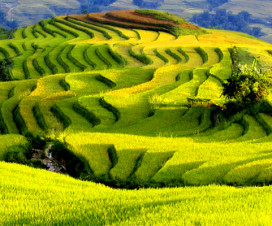
But the panoramic views justified the effort. Stepped terraces reached dizzying heights and created patterns as beautiful and natural as sand ripples under shallow water. These astonishing constructions result from generations of wet rice farmers working from the top down, in case a terrace collapses and obliterates the one below. In winter the puddled mud on these tiny man-made platforms glints in the light. In summer, the emerald greens and golds of the ripening rice must transform these valleys into a place reminiscent of Tolkien’s Shire on a Brobdingnagian scale.

Street life in Hanoi had prepared us well for experiencing Vietnam in a way appropriate for a country where gambling is an entrenched part of the culture. Huddles of young boys on Hanoi’s back streets bet eyebrow-raising sums of money on impromptu games of chance. In the evenings, old men can be glimpsed through half-open doors intent on their hands of cards, and it is certain they are playing for more than the delicious roasted peanuts used in their cuisine.

Even the most cautious visitor to north Vietnam, city and country, will be forced to play a game of hazard. Stepping off the kerb to cross a road for the first time feels like spinning a revolver cylinder and giving yourself a one-in-six chance of survival. The technique is to wait for a bit of a lull and then step slowly and steadily across the road, establishing eye contact with all oncoming scooter drivers who will lean one way or the other to avoid you. Easy for people with strong nerves, impossible for Westerners who cleave to the supremacy of lollipop ladies.

Clambering into our comfortable bunks on the train at the beginning of the trip, we knew that we were dicing with disappointment. But as we left this mountain fastness behind, the peak of Fansipan finally revealed itself above its girdle of clouds, making us feel especially vindicated in our gamble to visit Sapa in the fog season.

Collected by vietnam hotel

Rowing toward heaven

Posted by admin on February 21, 2011 under Vietnam Destinations, Vietnam Travel Info, Vietnam attractions | Be the First to Comment

Bai Dinh Pagoda, the largest pagoda in Vietnam, is famous not only for its size but also for housing a 100-ton bronze Sakyamuni Buddha statue and 500 stone Arhat statues

Roughly 90 kilometers south of Hanoi, Trang An sits nestled amid the glorious limestone cliffs, forested mountains, and lakes of Ninh Binh Province.

We took a rowboat through the area to discover Trang An’s stunning scenery. The huge green mountains shone back up at us from the clear blue water below. As we paddled, we couldn’t help but feel taken in by the romantic chorus of songbirds and oars gently stirring the water.

The boat carried us through many lakes, studded on all sides by inviting cave grottos.

We must have passed through 50 caves, each one a grinning maw of bright stalactites.

HOW TO GET THERE
* Trang An Tourist Site covers a total of nearly 2,000 hectares in Truong Yen, Ninh Van, and Ninh Hai communes of Hoa Lu District, Gia Sinh Commune in Gia Vien District, and Ninh Nhat Commune in Ninh Binh Town in Ninh Binh Province.

* From the center of Hanoi, travel south along National Highway 1A for 80 kilometers to get to Ninh Binh Town. Turn right and go for another 12 kilometers to reach Trang An.

* Tourists can also take a bus from Giap Bat or My Dinh bus stations to go to Ninh Binh Town. They then take another bus or taxi to get to the tourist site.

Toi (Dark) Cave stretches 315 meters back into the mountain – the deepest in Trang An. Large limestone outcrops looming at the entrance and exit give the cave a surreal, mystical feel.

Other grottoes like Sang (Light), Ba Giot (Three Drops) and Son Duong (Chamois) are also famous attractions.

In fact, the 2,000-hectare Trang An Tourist Site is endowed with nearly 100 caves. While half of them can be visited by boat, the rest must be accessed on land.

After cruising through the caves, we climbed mountains to visit temples that held relics dating back to the eleventh century.

We also stopped in at Bai Dinh Pagoda, the largest in Vietnam.

The 107-hectare pagoda is famous for housing a 100-ton bronze Sakyamuni Buddha statue, the heaviest of its kind in Southeast Asia, and 500 stone Arhat statues (spiritual practitioners who have realized the goal of Nirvana).

Thanks to its majestic architecture and solemn atmosphere, Bai Dinh Pagoda attracts many pilgrims every day, especially during the first lunar month.

Tourists take rowboats to take in Trang An’s stunning scenery

Reported by Ngoc Minh (thanhnien news)

Northern natural beauty, traditions call out to adventurous travellers

Posted by admin on under Vietnam Destinations, Vietnam Travel Info, Vietnam attractions, Vietnam beauty | Be the First to Comment

Tra Co Church was built in 1880. It is a massive structure decorated with beautiful reliefs. It houses an 80-year-old bell.

What do you think of when you read the fol-lowing lines about Viet Nam by the famous Vietnamese poet To Huu:

How amazing my country is!

Lean against Truong Son Mountain Range

Reach to Truong Sa (Spratly) Islands

From north-eastern most Tra Co with populous forest

To southernmost Ca Mau with mangroves

If you are a traveller cherishing your exploration of the country, you will most likely share the same impressions with your family and friends when you talk about your experience enjoying the beauty of Viet Nam.

Let’s start the journey from Tra Co, a beautiful beach in the country’s northeastern most province, Quang Ninh.

The winding road to Tra Co doesn’t dissuade visitors from continuing the journey thanks to sweeping views of the beautiful landscape. Travellers can also go to Tra Co by boat from Hai Phong or from Bai Chay, another coastal city in Quang Ninh Province.

The locality is endowed with a 17km-long coast line and beautiful beaches from Sa Vy to Mui Ngoc. The full length is one of the most attractive beaches in Viet Nam.

While Nha Trang Beach attracts visitors with its beauty reminiscent of a chic modern girl, Tra Co beach looks like a country girl because its beauty has not been altered from its natural state by development.

The wild beauty of Tra Co allows people to enjoy the peaceful and slow flow of life in the province. Taking a stroll along the white-sand beach, listening to the sound of waves crashing, and freeing your mind as you look up at the immense blue sky and the never-ending sea is a simple and enjoyable way to pass the day.

There are four seasons in Tra Co with comfortable temperatures throughout, neither too hot in the summer nor too cold in the winter. The average temperature is about 220C, going up to about 26-280C in summer. In the moderate heat of summer, the cool and clean sea water beckons to would-be swimmers and waters sports enthusiasts.

Visitors are recommended to wake early one morning to travel the 6km to Con Mang to watch the immense red flame of the sun slowly rising to welcome the day. Likewise, as the day wanes they can find a place to relax along the beach to enjoy the sunset. Lovers and groups of friends alike will find enjoyment as they share in the quiet beauty of the pristine sands and feel their souls mesh in harmony with nature and escape from the troubles and sounds of daily life.

Not far from Con Mang is Sa Vy, the country’s northeastern most point, where people can look out across neighbouring China. At Sa Vy point, visitors can pose for a photo next to three popular tree-shaped sculptures. Lines from the poem by To Huu are posted on it.

Another worthy stopping point is Tra Co Church, an old piece of architecture built in 1880. It is a massive structure decorated with beautiful reliefs and an 80-year-old bell. In 1995, the damaged reliefs were restored, returning the structure to its original glory.

The nearby Tra Co Temple is another popular destination which is the pride of the local people. It was built in the 15th century but has gone through some changes over time. However, its typical architectural and decorative features have been maintained.

Villagers worship their ancestors at the temple. According to legend, the ancestors were originally from the northern coastal town of Do Son (Hai Phong City now) and migrated to Tra Co more than 600 years ago. Six ancestors in particular are still worshipped here for their great contributions to the establishment of the village.

Vietnamese style

Tra Co Temple features typical Vietnamese artchitectural style. Although it was built in a border area with China and could easily have included features from the country’s northern neighbour, the style is distinctly Vietnamese, confirming that the Vietnamese people have long respected their national cultural identity.

After nearly 600 years, the temple still sits as the witness to the country’s ups and downs and acts as a vivid story teller who helps generations of Vietnamese learn more about their traditions.

Tra Co Temple is similar in style to many others in the Hong (Red) River Delta. Decorations include various patterns of four supernatural creatures including dragons, unicorns, tortoises and phoenixes, along with God and humans.

The temple inspired Vietnamese composer Nguyen Cuong to write the song Mai Dinh Lang Bien (Temple Roof in Coastal Village) that has left a deep impression in the souls of many Vietnamese people.

Historian Do Van Ninh said that Tra Co Temple proves the territorial expansion process of the Vietnamese and the connection between the border coastal area with other areas of the country.

Annual festival

People visiting Tra Co during late lunar May and early June can take the opportunity to join in the village’s annual festival. From May 30 to June 6 a variety of activities are held to celebrate the village.

Prior to the festival, on May 25, a festive procession from Tra Co begins a return journey to the original hometown of Do Son to honour the ancestors there. It takes them about three days by boat to make the trip to the hometown but only two days to return. They belive that the festive procession can travel faster thanks to support from the ancestors.

On the night of May 30, the temple is bright with candles, lights and smells of burning incense. Locals come to pray for health, wealth and a properous year.

The following morning, a ceremony to escort the King to sea takes place. Dozens of people donned in traditional attire join the procession, some playing musical instruments and others holding colourful flags or weapons. A crowd of people follow creating an exciting atmosphere.

During the festival, the village also hosts activities such as a cooking competition where people can enjoy local specialities, and dancing competitions.

The ritual has been preserved for hundreds of years, consistently enriching the spiritual life of the coastal village residents.

One tourist from Ha Noi, who enjoyed the festival during a holiday to Tra Co, said that she was very impressed by the way the locals preserved their traditions.

“Their performance at the festival helped me learn more about Vietnamese culture, especially the culture in a coastal areas,” she said.

Source: VNS

Collected by Vietnam hotel

Yen Tu Buddhist Spring Festival kicks off

Posted by admin on February 15, 2011 under Vietnam Festivals, Vietnam Travel Info, Vietnam attractions | Be the First to Comment

Yen Tu Buddhist Spring Festival kicks offThe annual Yen Tu Festival in the northern coastal province of Quang Ninh opened with a ceremony on Feb. 12 (tenth day of the first lunar month).

Deputy Prime Minister Nguyen Thien Nhan beat the drum to launch the start of the festival. Prominent guests at the ceremony were Vice State President Nguyen Thi Doan, the Vice Chairman of the Vietnam Buddhist Sangha’s Executive Council, Most Venerable Thich Thanh Tu, Buddhist dignitaries, monks, nuns, followers and visitors. All joined in offering incense to King Tran Nhan Tong, who reigned over the country from 1279 to 1293 and then renounced the throne to devote his life to Buddhism. All present also joined another ceremony to pray for peace for the country and the citizens.

According to the organizing committee, the weather this year has been so pleasantly conducive that a large number of visitors are being drawn to the Festival.

The Tung lam tour Company is making use of the cable car system to serve tourists who want to visit the Dong pagoda on Bach Van Son Mountain. Unfortunately, the 70 cable cars are still unable to meet the tourist rush and hundreds of tourists have to walk up to the Dong pagoda.

Yen Tu has so far welcomed over 20,000 visitors since the first day of the lunar year and the festival will last through spring for three months. Last year the festival recorded over 2.1 million visitors according to Vu Van Khoan, Vice Director of the Managing Board of Yen Tu pagoda.

Yen Tu Mountain is located about 50km from Ha Long City. The winding route of the pilgrimage from the foot of the mountain to its peak is almost 30km. On the highest peak sits the Dong Pagoda, which is more than a kilometer above sea level.

The area’s natural beauty and awe-inspiring landscape in its surrounding setting of ancient pagodas and hermitages is said to be the reason that King Tran Nhan Tong renounced his throne to devote his life to Buddhism on this majestic Mountain. He crowned his son as heir to his empire and after becoming a monk he founded the Truc Lam meditation sect which later gave Yen Tu the recognition as the country’s leading centre for Buddhism.

Source: SGGP

Driving through Heaven’s Gate

Posted by admin on February 11, 2011 under Vietnam Travel Info, Vietnam attractions, Vietnam beauty | Be the First to Comment

We had planned to go together, but after Sa Pa, David had to take a train back to Hanoi. I continued my trip around the northwestern region in a car with some of my other friends.

The foggy and bumpy road ahead.

Wednesday, February 17, 2010

9 am:

We climbed up a few hundred steps from Sa Pa to the Ham Rong tourism area. Like other tourist spots that we visited the previous day, Ham Rong was filled with people, and the view was not exactly impressive, partly due to the thick fog, but also because I’ve been to Sa Pa twice many years ago, when it still had much more of it natural and authentic beauty. However, we stopped for some local tea along the way and it was a reminder of how it was long ago.

1 pm:

Lunch at the Cha Pa Restaurant in downtown Sa Pa. The restaurant has been renovated since my last visit, but the food here was still delicious and authentically Sa Pa’s.

3 pm:

It was time to bid farewell to our Estonian friends who had come here to visit and had been our companions for the past week, as well as to my colleague David Cornish. They were headed back to Hanoi by train. We, in the meantime, got back in our car and went on with our adventure.

The fog was getting thicker and thicker. As a driver, I could only vaguely see about 50 metres ahead at any time and had no choice but to put my faith in the GPS. The road was quite narrow and there was no fence between us and the abyss alongside. I drove extremely slowly and carefully and felt very intense, and I could see that everyone else in the car was even more intense than me.

Our next destination was the capital town of Lai Chau Province, about 80 kilometres from Sa Pa. To get there we would have to pass by the Silver Waterfall, which is a popular spot for tourists to Sa Pa. For the first 20 kilometres from Sa Pa to Silver Waterfall, we encountered many cars and buses, some of them carried Hanoi’s license plates. We had hope for some companions, but it turned out that all of them stopped at the Silver Waterfall.

After that, we were on our own. We passed the spot locals refer to as “Heaven’s Gate”. It is the highest point of the Hoang Lien Son Mountain Pass, and the border between Lao Cai and Lai Chau provinces. This is also the highest car road in Vietnam. After that point, we started to descend down the steep pass. The fog was still getting thicker and thicker, as the road got more and more narrow and bumpy. The curves were the tightest I had ever handled so far, and most of those were under renovation where workers were in the process of slicing up the mountain to widen the curves.

I put our car into 2nd gear most of the time to control the descending speed of an average of 20 to 30 km/h. The road was very quiet thanks to the Tet holiday, making it much easier to handle as we did not have to deal other vehicles, but it also gave us a special feeling of loneliness and adventure. We occasionally saw some cars and motorbikes heading the opposite direction. There were also two motorbikes going our direction, and they seemed to be happy to follow us as their navigator for about 20 kilometres.

I started to feel a bit tired as driving required all of my focus, so I pulled the car up and waved goodbye to the people on the motorbikes. We stopped at a large area beside the road, where we saw many road-making equipments and some temporary shelters. The road workers were obviously having their days-off and were gathering for their Tet drinks in the shelters. I didn’t want to disturb them, and the view down into the abyss was completely blurry, so I just took a quick rest and got back into the car.

Another 20 kilometre drive in the cloud, and we finally got low enough to be under it. The view was suddenly so clear and we were really excited to stop to take some pictures. The area was totally deserted, so natural and breathtaking. We looked down the valley and all we saw was hills and trees. I now realised that this had been the most amazing drive I had ever taken in my life, and I felt like I had taken my driving license to a new level. Now I felt much more confident to handle any roads ahead.

4:30 pm:

We drove a few more kilometres and entered the outskirt of Lai Chau Province. Villages started to appear, and we decided to stop at a local household to pay a visit. The house belonged to a man named Tinh. He told us that the village had over 60 households, all belonging to the H’Mong Hoa (Hoa means flower in Vietnamese) ethnic group. The traditional dress here is decorated with lots of floral patterns, hence the name. This is different from the H’Mong people in Sa Pa, who are called H’Mong Den (Black H’Mong) and wear black traditional dress.

Villagers gather around a fireplace in Tinh’s house.

Tinh’s houses had a large courtyard, and we saw dozens of children playing there cheerfully. He said it is Tet holiday, so kids from all around the village came here to play. The adults, meanwhile, gathered around a fireplace, happily talking the time away. Tinh said all people in this village had been christianised since 1999. However, their way to celebrate Tet was not much different from other Vietnamese, especially in the foods, which included chicken, pork, banh chung anh banh day.

5:00 pm:

We said Happy New Year and goodbye to Tinh and his villagers and continued on our journey. I now personally felt so refreshing to get out of the heavily tourist-condensed town of Sa Pa and see the more natural sceneries and meet the less tourist-affected people.

Along the way, we saw more and more people of different ethnic groups, most dressed up in their traditional costumes to come out and celebrate Tet. All were so friendly as we smiled, waved and said Happy New Year to them. We stopped to cheer with some young girls from the Dao ethnic group. Their traditional dresses were really remarkable and they looked proud and happy in them.

Households spread through the valley.


Local woman giving us a friendly wave.

Dao girls dressing up in their traditional costumes in celebration for Tet.

6:00 pm:

We entered Lai Chau centre. The total distance was not too long for an afternoon drive, so we took it really easy and drove really slowly to enjoy all the beautiful scenery. Before entering the main, old centre town, we saw a new and impressive urban area under construction. It seemed that in the not so distant future, Lai Chau would become a very modern and well-planned town which could rival some major cities in the north.

6:30 pm:

We checked in Muong Thanh Hotel, the biggest hotel in Lai Chau. It was large and the rooms were nice, all for a very reasonable price of VND 250,000 ($13) per night.

We went to sleep early to prepare for another adventure tomorrow: Sin Ho and Pu Dao villages in Lai Chau Province.

Lai Chau Town starts to appear as we drive closer.

(Source: Dtinews)

Collected by Vietnam hotel

Doc let – Unspoiled beaches

Posted by admin on February 10, 2011 under Vietnam Beaches, Vietnam Destinations, Vietnam Travel Info, Vietnam attractions, Vietnam beauty | Be the First to Comment

Gone are the days when Nha Trang was a sleepy little beach town. In the last decade, this central coastal town has developed into an international tourist destination, complete with the hustle of trade and bustle of tourists.

But if you’re truly looking to get away from the resorts in  Nha Trang, head out 45 kilometres to the charming Doc Let Beach.

Doc Let, or Doc Lech, literally means “a hill one needs to crawl over.” Indeed, we had to crawl up the white sand dunes lining the beach before we could see the aquamarine waters.

Doc Let stretches over 10 kilometres and is largely undeveloped. On our drive up the coastal road, we found few hotels and restaurants.

Doc Let has the shallowest waters in all of Khanh Hoa Province. Along most of the beach, the sea is only half a meter deep even 100 meters from the beach. The crystal blue waters beckon even those who can’t swim, and time passes quickly as one luxuriates in the warm, tropical waters.

While most parts of Doc Let are free from tourist traps, a small stretch has been developed into the Doc Let Tourist Park. Fresh seafood stalls serve crabs, snails, clams, and squids under the shade of the casuarina trees dotting the beach.

HOW TO GET THERE
- Doc Let Beach is located in Ninh Hai Commune, Ninh Hoa District, Khanh Hoa Province.

- To get to the beach from Nha Trang, take National Highway 1A heading north. About a kilometre after passing Ninh Hoa Town, turn right onto a small road. Continue for another 14 kilometres to reach Doc Let.

Water spinach grows wild along the seashore at the Cat Trang (White Sand) Tourist Park, forming a green carpet adorned with violet flowers.

When the tide is low, crabs scuttle hurriedly across the beach, barely visible against the white sands. I tried hard to get close enough to get a picture, but the crabs are wary of humans, and disappear into their sandy homes in seconds.

If lazing around is not enough, get into some action with water sports. Boats and jet skis are available at the beach for VND150,000-250,000 (US$8-13) for 30 minutes.

For a breathtaking view of the waters, head for the skies. Parasailing costs VND450,000 for 15 minutes.

In the summer, Doc Let is surrounded by the Hon Khoi salt fields. Mountains of salt make for a unique landscape.

At a village near Hon Khoi Port, fishermen use round boats or coracles to go fishing every morning.

Doc Let Beach is near the famous Van Phong Bay, which is being developed as a tourist destination. There are a range of hotels and resorts near the bay as well as entertainment activities.

Source: Thanh Nien