Ly Son Island offers fresh round scads

Posted by admin on July 12, 2011 under Food and Drinks, Vietnam Destinations | Be the First to Comment

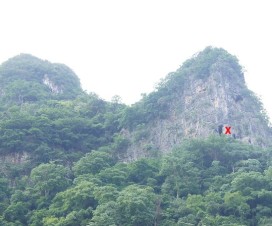
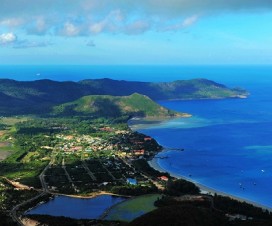
Ly Son Island is now well known for its juicy, nutritious Ca nuc (round scads) which are now available and brought in by boats in abundance to the mainland.

Steamed round scads (Photo: Thanh Nien)

Ever since the Sa Ky Port-Ly Son high-speed waterway route opened for travel, the 18 mile distance has been cut short from three hours to only fifty minutes. Ly Son round scads are therefore available fresh as soon as they arrive on the mainland.

However, enjoying the round scads at the island soon after they are caught from the sea is even more enjoyable.

People of Ly Son usually process the round scads in two ways. One is by steaming them and serving with girdle cake. The other is by slowly simmering the fish on fire and eating it with hot rice.

After procuring the fresh fish straight from the boat, the round scads are washed thoroughly in a pan filled with fresh water, a scare commodity on the island during summer months, even when there is an abundance of round scads.

The fish gills and guts are removed to keep the silvery color of the fish scales to make it attractive in appearance when served.

Round scads are placed on a grill which is rubbed with a little oil to prevent the fish from sticking. The fish is then covered with a layer of spring onions before putting in a pot to steam.

About 20 minutes later, when a delicious aroma pervades the kitchen, the fish is taken out of the pot.

Each round scad is then rolled in a girdle cake with some slices of star fruit and served with fish sauce which is mixed with fragrant Ly Son garlic. The girdle cakes must be soft and pliable so as not to break while rolling with the fish.

The simmered dish is made by carefully marinating the fish before cooking it on a low fire until it dries out completely.

(Source: SGGP)

Enjoying clouds on the Roof of Indochina

Posted by admin on May 28, 2011 under Vietnam Destinations, Vietnam beauty | Read the First Comment

Fansipan is the highest mountain in Vietnam and Indochina, at 3,143 meters. It is located in Lao Cai province in northwest Vietnam, 9km southwest of Sa Pa Township in the Hoang Lien Son Mountain Range.

Fansipan is dubbed “the Roof of Indochina”. It is also one of the very few ecotourist spots of Vietnam, with about 2,024 floral varieties and 327 faunal species.

The topography of Fansipan is varied. Muong Hoa Valley, at the lowest altitude (950 to 1 000m), is created by a narrow strip of land at the base on the east side of the mountain. It can be climbed in a steep and fairly strenuous hike.

“Hunting clouds” on the Roof of Indochina has been always an interesting tour for adventurers. The feeling of bobbing on clouds to see the grandiose landscape of the nature is worthy for their efforts to conquer this 3,143m peak.

How to get there?

The most popular means of transport chosen to save your time and money is train. From Hanoi, you can get the train at Tran Quy Cap railway station to Lao Cai, then get a bus to Sapa and start your adventure.

You should book train tickets 1-2 weeks before the trip, especially if your trip is scheduled at the weekend. The ticket price may be different if you book it directly at the railway station or through travel agents. You should also book the return ticket early at your hotel or travel agents in Sapa or Lao Cai.

To adventure the Fansipan, you need the license granted by the Hoang Lien Son National Par to get into the park. You can take the license in the morning, when you start to visit Fansipan.

There are many ways to the peak of Fansipan. There are four major roads. The first way is from Cat Cat to Sin Chai. This is the most difficult road in Lao Cai to conquer Fansipan. Those with good physical strength and want a long trip often choose this road to adventure the Roof of Indochina.

The second way is from Cat Cat to Tram Ton. This road is good to see Fansipan clearly. However, it is quite long.

The third way is from Sapa to Tram Ton: This is the shortest and most simple road for everyone. You can hire a car of a travel agent to go from Sapa to Tram Ton. You should book the return.

From Tram Ton, you will get into the jungle at around 10 am. You will pass many streams and stop at Bai Soi for lunch at around 12.30-1 pm. From Bai Soi, the road will be more sloping. After two hours of walking from Bai Soi, you will reach a camp at the height of 2,200m and you will rest there.

The next day you will continue the trip to the camp at the height of 2,900m and then to the peak. This is a long and sloping road so you should walk slowly to maintain their breath. You can have lunch on the peak and return to the camp at the 2,900 or 2,200m for a night rest and return the next morning.

The route to Fansipan doesn’t require so-good physical strength but endurance. You should practice exercises on a daily basis at least one week before the tour.

Pictures of Fansipan:

The road to Fansipan

Wild flowers on the Fansipan

Thuy Thom (photo: quycoctu.multiply.com, phuot.com)

Collected by http://Vietnamhotels.net

Nha Trang all set for sea extravaganza

Posted by admin on May 18, 2011 under Vietnam Destinations, Vietnam Festivals, Vietnam Travel Info | Read the First Comment

The fifth biennial Nha Trang Sea Festival, themed Nha Trang – Coastal Destination this year, will be held next month.

Life’s a beach: Nha Trang Beach in the coastal province of Khanh Hoa will host some 60 cultural, arts and tourism events next month during the fifth biennial Nha Trang Sea Festival. (Photo: VNS)

It will feature some 60 cultural, arts, sporting and tourism events, Khanh Hoa Province People’s Committee deputy chairman and head of the organising board, Le Xuan Than told the media in HCM City on Monday.

“The festival aims to attract domestic and foreign tourists to the province and the country,” Than said.

Thai Nguyen Province will also participate into this event this year, he said.

From June 2 to 10 there will be a fishing and sea tours at night, an S1 water-motorbike performance, a sepak takraw competition on the beach, and a Nha Trang sea bath day.

There will be environmental protection activities, including a city-wide rubbish clean-up on the International Environment Day (June 5), and a conference on marine preservation.

Exhibitions will be held to showcase Cham culture, Lu Cam porcelain, calligraphy, photographs of the city, and high-quality Vietnamese goods, as will a festival of folk cuisine and the region’s special dishes, a music concert and comedy shows.

The organisers will highlight the region’s speciality – swallow’s nest – with conferences on the industry’s history and traditional culture, developing swallow communities and the uses of swallow’s nests, and two swallow’s nest festivals in the city and on Hon Noi Island.

A charity show, Dance on the Beach, will be held on June 10.

The main festival will open with a fireworks display. The opening day will feature a volleyball competition, a film week, a street photo exhibition on the Beauty of Aloe Wood Region, another on the Truong Sa (Spratly) Archipelago, a Champa pottery and brocade display, a cooking contest, a food court, and a street-arts show.

The highlights of the festival will be parades of bicycles, pedicabs, Vespa scooters and vintage motorbikes, an exhibition of sand art, human chess, a Fish Worshipping ceremony, stunt kite flying, dancing by the best couples from the Khanh Hoa Gymnasium, poetry recitation, and music shows themed the sea and islands.

Morbihan Province of France will participate in the festival, bringing its own musicians and photography enthusiasts.

Vietravel’s diving centre, Vinadive, will organise underwater weddings for 10 couples on June 15 at Hon Mun Sea Reserve Area.

Of the cost of organising the festival, 80 per cent has been contributed by organisations and businesses in Khanh Hoa and elsewhere.

Source: VietNamNet/Viet Nam News

Mangrove palm forest draws tourists in Hoi an

Posted by admin on May 16, 2011 under Vietnam Destinations, Vietnam Travel Info, Vietnam tours | Be the First to Comment

About three kilometers from the ancient town of Hoi An, the Dua nuoc (mangrove palm) forest in Cam Thanh Commune in the central province of Quang Nam has become a much sort after tourist destination.

The forest rests at the convergence of Thu Bon and Truong Giang rivers before they flow into the East Sea. The Hoi An mangrove palm forest plays an important role by forming a natural filtration system before the river currents merge into the sea.

The year-round green forest grows along the river and canal banks. On islets and areas around the forest, there is a particular ecosystem, which is home to many species of fishes and shrimps.

Local residents are well aware of the value of the mangrove palm forests to the environment and for tourism and are cooperating with organizations and tourist companies to exploit the tourist potential, annually broadening and preserving the forest area.

Visitors to the forest can take a leisurely bicycle ride through the forest. Crossing the various paths there, visitors will see local farmers picking mangrove palm leaves, which they use as roofing material and for handicraft items.

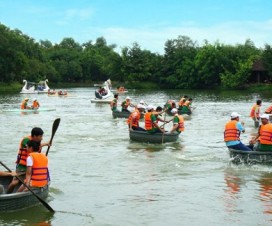
Boats are always available to carry visitors along the canals to pick mangrove palm nuts and enjoy a cool coconut drink.

For those who want to relax in a fresh atmosphere, they can bring fishing rods, choose a suitable place and enjoy the sunset as it lazes over the Thu Bon River. People prefer wide-open spaces, they can row a boat out to the river or cast a net with the help of local anglers.

Source: Thanh Nien

Sapa – Top ten places to walk by Lonely Planet

Posted by admin on May 6, 2011 under Vietnam Destinations, Vietnam Travel Info, Vietnam attractions, Vietnam beauty | Be the First to Comment

Sapa Town in the northern mountainous province of Lao Cai has been voted one of the world’s top ten spots for walking by popular travel guide Lonely Planet.

The other greatest places for walkers are the Grand Canyon in the US, Aoraki/Mount Cook Village in New Zealand, Lake District in England, Torres del Paine in Chile, Lauterbrunnen in Switzerland, Brecon Beacons in Wales, Kakadu National Park in Australia, Taman Negara in Malaysia, and Dartmoor in England.

According to Lonely Planet, walking can be the best way to experience a place.

“Heaven on earth”

For Vietnamese, Sapa is also a top holiday destination.

1.600m higher than the sea level, Sapa has a mild temperature of 15 to 18 Celsius degree.

Though this town welcomes visitors all year around, it is generally agreed to be most beautiful in April and May.

Before the summer, the weather may be a bit cold and foggy, and after the summer, the rain season sets in.

In April and May, Sapa is blooming with green pastures and flowers, many of which can’t be found anywhere else in the country, and few visitors fail to marvel at the beauty of the cloudy valleys here every summer morning.

Sapa is also home to many breathtaking spots such as Ham Rong Mountain, Silver Waterfall, Rattan Bridge, Bamboo Forest and Ta Phin Cave.

And this is here that adventurers can climb to Vietnam’s rooftop on Fansipan Mountain at 3.143m above the sea level.

See the best hotel in sapa at the website http://Vietnamhotels.net/.

Hanoi Old Quarter a link to past

Posted by admin on April 13, 2011 under Vietnam Destinations, Vietnam attractions, Vietnam beauty | Be the First to Comment

HANOI, Vietnam — Close your eyes in the streets of Hanoi Old Quarter and you’ll experience two sensations. The first is the earsplitting cacophony of conversation, cars, clamor and chaos. The second is the realization that closing your eyes for very long in such a crowded place can be unwise, unless you enjoy being jostled, bumped, hustled, shouted at, or maybe even knocked down.

Such is the Vietnamese capital, lurching into the 21st century with the swirl of unfettered street capitalism set to the soundtrack of Communist proclamations.

Everywhere people are buying, selling, hawking goods and offering services, while nationalistic music and announcements about keeping streets clean play regularly in the background. Six million people live in this former colonial metropolis; add hundreds of thousands more who jammed Hanoi last fall for the celebration marking its 1,000th anniversary, and you sense that this already dizzying city is spinning into a new era.

This is not to say that traditions are endangered. The Old Quarter is arguably the epicenter for the city’s connections to its past. Wander its crisscross of streets — with tall trees, narrow buildings, louvered windows and people’s lives spilling onto sidewalks — and you’ll discover a district known as 36 Streets, named for the craft guilds that populated the neighborhood over the centuries, mixing Vietnamese and Chinese merchants and artisans together. Silk Street (Hang Gai), Silver Street (Hang Bac), Sails Street (Hang Buom), among others, all offer their crafts and other goods for tourists or locals. The Old Quarter’s oldest building, the Bach Ma (White Horse) Temple, dates back to Hanoi’s original incarnation as the imperial city of Thang Long — Soaring Dragon.

For culinary traditions, Cha Ca La Vong is a nondescript restaurant on Cha Ca Street that’s been serving up one dish for more than a century. Sit down at a communal tables shared by random guests — common language not required — and forget the menu. Waiters bring out tabletop, gas-fired stoves in which chunks of marinated, turmeric-coated whitefish are fried in oil — by patrons themselves — along with dill, chives and other greens. Dump the mixture over rice noodles, top with peanuts and wash it down with a draft beer known as bia hoi. The fish itself doesn’t deserve many superlatives and tourists have pushed up prices, but it’s still worth the experience. You can also find bia hoi at the corner of Luong Ngoc Quyen and Dinh Liet streets, where backpacker tourists outnumber the Vietnamese sitting on the stools.

Pho is the dish Vietnam is best known for — a steamy broth of beef or chicken with noodles, greens, star anise and spices. It’s served up everywhere, and everyone has their own spice secret. Order a bowl from a sidewalk vendor, squat on a plastic stool a foot or so from the traffic, savor the broth and watch the crush of people go by. You can also sop up good soup in quieter, though less interesting settings in the indoor comforts of the chain restaurant Pho 24.

Vietnam is one of the world’s top coffee exporters, and it’s known for bitter, super-strong coffee, lightened with condensed milk. You may also see ads for ca phe chon, the coffee famously brewed from beans that have been digested — in one end, then out the other — by weasel-like animals known as civets. Real civet coffee is extremely expensive — $100 a cup — so beware of imitations, which are extremely common, particularly in areas frequented by tourists.

http://www.news-press.com

Tourists ride in the Old Quarter neighborhood in Hanoi, Vietnam.

Tourists ride in the Old Quarter neighborhood in Hanoi, Vietnam. / The Associated Press file photo

If you go

Getting there: No major international carriers serve Hanoi’s Noi Bai airport directly from the United States or Europe. But travelers can easily connect via flights from Bangkok, Singapore, Seoul, Hong Kong or other Asian hubs.

Tips: May to September is the hottest time of year. Travelers from most countries need visa to Vietnam, usually obtained ahead of time, though if crossing the border by land, it’s an easy procedure to get a stamp for your passport. U.S. citizens can get them through the Vietnamese Embassy in Washington or through online visa processing services.

Accommodations: Hanoi has hotels, hostels, boutique accommodations and bed-and-breakfasts to suit any traveler’s budget. Most Old Quarter hotels are midrange ($25-$65 a night) such as the Classic I Hotel, Ta Hien Street, or the Paradise hanoi Hotel, Hang Chieu Street. Outside the Old Quarter, modest hotels range from the Church Hotel, Nha Tho Street, to upscale hotels (from about $125 a night) like the high-rise Sofitel Plaza, Thanh Nien Street, or the Intercontinental Hanoi Westlake, Nghi Tam Street.

South Central Coastal Area Longs For Visitors

Posted by admin on April 5, 2011 under Vietnam Beaches, Vietnam Destinations, Vietnam Travel Info, Vietnam attractions, Vietnam beauty | Be the First to Comment

The National Tourism Year 2011 will take place in many localities in the south central coastal region. On this occasion, Saigon-Phu Yen Tourism Joint Stock Company introduces many events to attract tourists.

The National Tourism Year in south central coastal region, Phu Yen 2011, is expected to go with more than 30 cultural, sport and tourist events of national and international levels.

The event, hosted by Phu Yen Province together with other localities in the central region – Danang, Quang Nam, Quang Ngai, Binh Dinh, Khanh Hoa, Ninh Thuan and Binh Thuan, aims to mark the 400 years of its establishment and development.

Throughout this year, south central coastal provinces, especially Phu Yen, will hold a series of activities for the National Tourism Year. The key of them are the sea and island tourism, meeting and parade to celebrate the 400th anniversary of Phu Yen on April 1, international seminar on “Cultural legacies in Vietnam’s south central region” on April 2 and 3, and the cultural exchange night between Vietnam and South Korea and some other countries on April 3.

Phu Yen has a 189-kilometer coastline with sceneries of wild beauty such as Cu Mong and O Loan lagoons, Vung Ro and Xuan Dai bays, and Dai Lanh Cape. In particular, this province has Da Dia Rock as the country’s exclusive scenic spot and more than 10 desolate, beautiful beaches.

Phu Yen is also a land with a cultural tradition and many historical events. The inhabitation of various ethnic groups creates an abundant folk culture. Visitors to the province will enjoy the sounds of Tuy An District’s rock music instrument, attend fishermen’s festivals, or festivals of ethnic communities with people playing gongs around a big fire.

Saigon-Phu Yen Tourism Joint Stock Company, which is an affiliate of Saigontourist Holding Company and runs Saigon Phu Yen Hotel and Huong Sen Hotel in the provincial city of Tuy Hoa, will welcome the national tourism year with its business activities.

Saigon Phu Yen Hotel, one of the biggest accommodation facilities in Tuy Hoa, has 87 rooms, 10 suites, a hall for 300 people, restaurants with five sections to serve Vietnamese, Asian and European cuisines, and bars. Providing places for conferen-ces and parties are among its servi-ces. The four-star hotel was brought into operation in August last year.

The hotel has launched two new programs. That is, it serves dinner buffets with more than 30 selected dishes for VND49,000-59,000 on weekends and offers rooms with a price discount for VND400,000 per night.
Huong Sen Hotel, accredited with two-star standards, consists of 56 rooms. Competitive room rates make it one of the best venues for visitors to the city.

Saigon-Phu Yen Tourism Joint Stock Company is strong in providing tours. A wide range of tours meet diverse tastes of guests and visitors. These tours include visiting Da Dia Rock, watching sunset and dawn at Dai Lanh Cape, and trekking in primeval forests.

Saigon-Phu Yen Hotel:

541 Tran Hung Dao St., Tuy Hoa City, Phu Yen Province.

Huong Sen Hotel:

22B Nguyen Tat Thanh St., Ward 2, Tuy Hoa City, Phu Yen Province.

Top 10 romantic beach retreats

Posted by admin on March 30, 2011 under Vietnam Beaches, Vietnam Destinations, Vietnam attractions, Vietnam hotels | Be the First to Comment

Top 10 romantic beach retreats Sometimes all you need is the right setting of sun, sea and sand for love to simply blossom.

Boutique hotel collection Mr & Mrs Smith (www.mrandmrssmith.com) help you to find the romantic beach retreats to get you in the mood for passion.

1. Six Senses Ninh Van Bay, Nha Trang, Vietnam

Set on a private peninsula that’s just a sexy speedboat ride from coastal town Nha Trang in south-central Vietnam, romantic boutique hotel Six Senses Ninh Van Bay offers luxury for lovers. Its 58 dreamy villas all feature seductive beds and bath tubs open to the outdoors, with private pools for cooling dips (choose between beach, spa or waterside settings). You can also dine alfresco by the bay, the pool or up on the rocks for serene sea views – or book a table for two in the atmospherically lit Wine Cave, perfect for popping the question. After quality pampering at the Six Senses Spa, make a date with a sunlounger on the secluded beach. REUTERS/Handout

2. Cap d’Antibes Beach Hotel, Côte d’Azur, France

With design as glittering as the surrounding sea, chic Côte d’Azur retreat Cap d’Antibes Beach Hotel in the south of France is all about Gallic glamour. Once a beachside club for the jet-set, including film stars Sofia Loren and Cary Grant, this heavenly hotel has its own beach for sandy sojourns. With just 27 rooms, it’s intimate, too; Deluxe Room 208 has dazzling views, but Room 201 has a fabulous fish mural. Even the restaurant is named Les Pecheurs (The Fishermen) after the maritime setting. Dine here for gastronomic gravitas, or casual beachside Le Cap serves up pasta, fish and local dishes by the waves. Bring this season’s swimwear for poolside posing.

3. Lizard Island, Great Barrier Reef, Australia

For a romantic hotel on the Great Barrier Reef, look no further than Australian boutique retreat Lizard Island, a short flight from Cairns off the Far North Queensland coast. With just 40 secluded rooms and 24 ivory-white beaches to choose from, you’re likely to have a seductive cove of sand all to yourself for that picnic by the waves. Swim off the beach, take a kayak or boat out, or go snorkeling or diving at famous Cod Hole on the outer reef with turtles and rays for company. Back at base camp, enjoy a hot-stone massage at Azure Spa, then dine on fresh fish and seafood at airy Osprey’s restaurant. This idyllic island has honeymoon written all over it. REUTERS/Handout

4. The Datai, Langkawi, Malaysia

Set on beach-blessed Langkawi Island, a back-to-nature getaway off Malaysia’s northwest coast, the Datai occupies a dramatic perch between pure white-sand beaches and verdant rainforest. Famed for its opulence, this beachfront luxury hotel attracts the great and the glam, with 112 wood-crafted rooms, including standalone villas in jungle pockets. The striking main pool boasts beach views, and is for adults only, so you can relax in peace. Alternatively, take a couple’s cooking class, enjoy a spa or yoga session, or go on a guided nature walk (look out for monkeys and eagles). With delicious Malaysian and Thai dishes up for grabs, as well as a beach club restaurant, dining is an affair in itself. REUTERS/Handout

5. Masseria Torre Coccaro, Puglia, Italy

A fortified farmhouse set amid sea-scented olive groves, Masseria Torre Coccaro boutique hotel in Puglia offers refined romance on Italy’s Adriatic shores. Located between Brindisi and Bari on the country’s south-east coast, its 37 stone-walled rooms are exquisitely decorated with linen bedding, silky sofas, baroque mirrors and antique furniture. Chill out in a poolside hammock, warm up in the Turkish baths or treat yourself in the Aveda spa. For nautical romance, commandeer Masseria’s private 14-meter yacht, then relax at the beach club restaurant. The hotel also runs a horse riding center, if you fancy a trot along the sand. REUTERS/Handout

6. Zeavola, Ko Phi Phi, Thailand

One of the only boutique hotels on the intimate twin islands of Koh Phi Phi, Zeavola resort is a sandy seaside hamlet of traditional Thai huts blending relaxed rusticity with mod-con indulgence. An affordable spot to savour beautiful shores, it offers 52 freestanding villas (beachfront ones are the most romantic – plump for number 51, nearest the sea). Inside, net-draped beds, teak surfaces and Thai furniture keep things simple. When you’ve overdosed on swimming and sunbathing, learn to dive at the PADI center or take a speedboat trip around the islands, then settle in at Tecada beach bar and restaurant for some serious sunset-scoping. REUTERS/Handout


7. Martinhal Beach Resort & Hotel, Sagres, Portugal

Set at Sagres on the wild south-west coast of Portugal’s Algarve, Martinhal Beach Resort & Hotel is beloved by beachcombers, with an inviting stretch of sand and a national park for neighbors. Natural materials rule in the 38 rooms, from cork to timber, wicker and stone, ensuring ocean views remain the star of the show. The Beach Rooms are the most private, with sea vistas from airy balconies. Floor-to-ceiling windows bring the outdoors in at O Terraço restaurant, too, where sea urchin roe with scrambled egg is a must. Distractions include tennis courts, a sports club, pools, watersports, a spa, sauna and steam rooms, but strolling along the seductive beaches at Sagres’ fishing port takes some beating. REUTERS/Handout

8. Cocoa Island, Maldives, Indian Ocean

To rev up the romance, escape to serene sanctuary Cocoa Island, a cluster of 33 suites and villas set over the Indian Ocean in the Maldives. A hit with honeymooning couples and lovers of pristine diving, it’s the stuff of faraway island fantasies. All rooms are individual at-sea dwellings sited off a snaking wooden pier, with private sun-decks, walk-in showers, roll-top baths and vintage-style ceiling fans. Resembling Keralan boathouses, they promise over-water views, soothing white interiors and teak flooring for laid-back romance. Scuba diving and snorkeling on the reef are mind-blowing, or just explore the holistic Como Shambhala Spa. Cocktails at poolside bar Faru beckon for re-intoxicating after. REUTERS/Handout


9. Shore Club Miami, Miami, United States
Miami meets Marrakech at Shore Club Miami, a stylish 309-room retreat in the heart of South Beach. This art deco hotel is a hedonistic playground for grown-ups by day or night, with a sexy retro lobby, sprawling lawns, the slinky Skybar and a branch of acclaimed Japanese restaurant Nobu. The party people may flock here, but it’s a romantic spot, too. Bag a sleek white room with a balcony sea view, loaded with hi-tech treats, then head down to the steamy hot tub and two elevated infinity-edge pools, fringed by decadent cushion-strewn day-beds. Luxurious, tropical and right by the beach. You’ve so arrived…REUTERS/Handout

10. Alila Villas Soori, Bali, Indonesia

Strung along Bali’s south-west coast between black-sand beaches and jade-green rice paddies, just-remote-enough Indonesian retreat Alila Villas Soori is seriously seductive. All 48 of its pool villas are sublime, minimal havens with ocean views, but book a second-storey Ocean Pool Villa for a blue bonus: a sea-view bath tub. After lazing by the beach or 25-meter infinity pool, enjoy a slumber-inducing Balinese massage at Spa Alila. Surfing, horse-riding and cycling are all on offer, or ask the Leisure Concierge to hook you up with bespoke visits to local food markets, artisans or romantic temples. Just steps off Kelating Beach, the resort’s casual restaurant Coast grills fresh seafood over charcoal or clink glasses at more formal restaurant Cotta. REUTERS/Handout

Source: Reuters

Xuan Dai Bay recognised as national landscape site

Posted by admin on under Vietnam Beaches, Vietnam Destinations, Vietnam Travel Info, Vietnam beauty | Read the First Comment

A certificate honouring Xuan Dai Bay as a National Landscape Site was presented to the Phu Yen provincial Department of Culture, Sports and Tourism on March 28.

The bay was officially recognised as a national landscape treasure, according to a Decision approved by the Minister of Culture, Sports and Tourism on January 20, 2011.

Xuan Dai Bay, with a water surface area of about 13,000 hectares, is located between Song Cau town and Tuy An district in Phu Yen province. The bay is encircled by mountains which shape delightful, unique pools. The bank surrounding the bay is about 50 kilometres long and overlooks beautiful natural scenery with an endless white sandy beach.

The acknowledgement of the bay as a national landscape treasure will help promote the site’s tourism potential and create favourable conditions to exploit and develop different kinds of tourism in the locality.

The bay will be submitted for consideration as a member of the World’s Most Beautiful Bays Club.

Quiet delights of Cu Lao Cham, Hoi an town

Posted by admin on March 28, 2011 under Vietnam Beaches, Vietnam Destinations, Vietnam attractions, Vietnam beauty | Be the First to Comment

The beaches and attractive landscapes of Cu Lao Cham in Quang Nam Province are a draw for travellers.

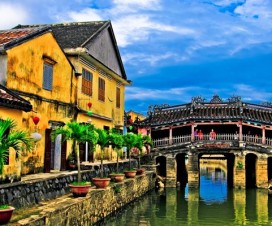
The island in Tan Diep Commune in Hoi An has been recognised by UNESCO as World’s Biosphere Reserve. It boasts several relics from diverse and ancient cultures, such as Sa Huynh, Cham Pa and Dai Viet. More information about hoi an hotels, please visit this link http://Vietnamhotels.net.

Arriving in Cu Lao Cham in the early morning is a rare delight, giving the visitor a chance to see the dawn’s glow from serene beaches.

Blue, clear and isolated coastline, such as Ong and Huong, are ideal destinations for holidays. The sea takes on a special sparkle at sunrise and sunset.

Visitors’ first impressions may be the warm smile and hospitality of the locals.

This is a fishing town, and fresh fish can be found in the area markets.

In addition, this is one of the few areas in Vietnam where Cham people can still be found.

Hai Tang Pagoda, built more than 400 years ago, adds to the town’s rare atmosphere. Burning a few sticks of incense and walking around the town may renew your senses and give you a bit of respite from the noise and fury of every day life.

At night, the silence of Cu Lao Cham is quite noticeable, compared to the busy streets of big cities. The only sounds are made by the waves crashing into the shore.

Peaceful beaches

An ancient well

Holy pagoda

An intimate sunrise