Sapa – Top ten places to walk by Lonely Planet
Posted by admin on May 6, 2011 under Vietnam Destinations, Vietnam Travel Info, Vietnam attractions, Vietnam beauty | Be the First to Comment

Sapa Town in the northern mountainous province of Lao Cai has been voted one of the world’s top ten spots for walking by popular travel guide Lonely Planet.

The other greatest places for walkers are the Grand Canyon in the US, Aoraki/Mount Cook Village in New Zealand, Lake District in England, Torres del Paine in Chile, Lauterbrunnen in Switzerland, Brecon Beacons in Wales, Kakadu National Park in Australia, Taman Negara in Malaysia, and Dartmoor in England.

According to Lonely Planet, walking can be the best way to experience a place.

“Heaven on earth”

For Vietnamese, Sapa is also a top holiday destination.

1.600m higher than the sea level, Sapa has a mild temperature of 15 to 18 Celsius degree.

Though this town welcomes visitors all year around, it is generally agreed to be most beautiful in April and May.

Before the summer, the weather may be a bit cold and foggy, and after the summer, the rain season sets in.

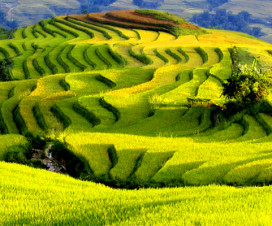
In April and May, Sapa is blooming with green pastures and flowers, many of which can’t be found anywhere else in the country, and few visitors fail to marvel at the beauty of the cloudy valleys here every summer morning.

Sapa is also home to many breathtaking spots such as Ham Rong Mountain, Silver Waterfall, Rattan Bridge, Bamboo Forest and Ta Phin Cave.

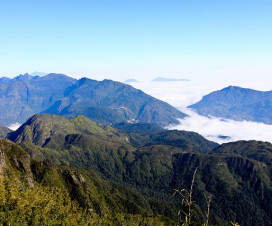
And this is here that adventurers can climb to Vietnam’s rooftop on Fansipan Mountain at 3.143m above the sea level.

See the best hotel in sapa at the website http://Vietnamhotels.net/.

Avoid bottleneck to reach Mui Ne in style
Posted by admin on April 25, 2011 under Vietnam Travel Info, Vietnam beauty, Vietnam hotels | Be the First to Comment

By Kinh Luan in HCMC

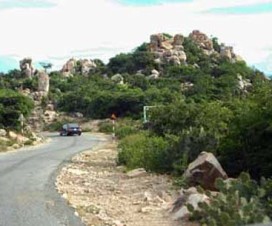
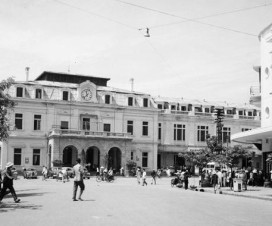
The adventurous route to Mui Ne along Nui Chua National Park in Ninh Thuan Province

Beach lovers, who want to go to Mui Ne in Phan Thiet City, might not fancy being cramped in a bus from five to seven hours in horrendous traffic.

So it’s time to choose the coastal route with the trip along Long Hai-Ho Tram-Nui Chua-Lagi a must for this idyllic destination.

From Vung Tau T-junction on National Highway 1A, about 25 kilometers from HCMC, travelers will head on National Road 51 to Ba Ria Town.

From there, you face two roads, one heading to Long Hai Town and the famous Anoasis Beach Resort and Long Hai Beach Resort and Spa and the other head to Ho Tram Beach and Loc An Tourist Area. The second option will see you facing a 250 kilometer detour a whole lot longer than the normal 50 kilometer journey, but it is worth it due to the enchanting landscapes you will see on the way.

You will pass the luxurious Ho Tram Beach Resort and Spa and Loc An Ecological Tourist Area. Located along the coastal road of Ba Ria-Vung Tau Province, Ho Tram Resort is the ideal get-away from the hustle and bustle of HCMC, showcasing authentic Vietnamese architecture, set against a backdrop of blue seas, clear skies and rich garden landscapes.

The journey gets even more exciting when it runs through Chua Mountain in Ninh Thuan Province. The mountain, covering about 30,000 hectares, is famous for its biodiversity and a popular destination for nature lovers and adventure enthusiasts alike.

A view of the splendid Ba Dien Beach in Vinh Hy Bay Photos: Kinh Luan

Leaving Chua Mountain, you should stop by at Vinh Hy Bay nestled between two popular tourist destinations of Nha Trang City in the north and Phan Thiet-Mui Ne in the south. The bay attracts a lot of tourists but it still reserves its rural beauty with white sand beach, steep rocky mountain ranges, caves and spectacular waterfalls.

At the bay, visitors can take a boat tour on the beautiful sea, visit the forests and mountains of Nui Chua National Park, the salt production fields, or even go diving in the spectacular coral reefs and bathe in springs.

Coming to Vinh Hy Bay, tourists must stop by Ba Dien Beach, the most stunning beach in the bay.

After the wonders of life on the road, tourists will finally arrive in Mui Ne thinking that their adventure is now over, but of course it is just beginning.

Hanoi Old Quarter a link to past

Posted by admin on April 13, 2011 under Vietnam Destinations, Vietnam attractions, Vietnam beauty | Be the First to Comment

HANOI, Vietnam — Close your eyes in the streets of Hanoi Old Quarter and you’ll experience two sensations. The first is the earsplitting cacophony of conversation, cars, clamor and chaos. The second is the realization that closing your eyes for very long in such a crowded place can be unwise, unless you enjoy being jostled, bumped, hustled, shouted at, or maybe even knocked down.

Such is the Vietnamese capital, lurching into the 21st century with the swirl of unfettered street capitalism set to the soundtrack of Communist proclamations.

Everywhere people are buying, selling, hawking goods and offering services, while nationalistic music and announcements about keeping streets clean play regularly in the background. Six million people live in this former colonial metropolis; add hundreds of thousands more who jammed Hanoi last fall for the celebration marking its 1,000th anniversary, and you sense that this already dizzying city is spinning into a new era.

This is not to say that traditions are endangered. The Old Quarter is arguably the epicenter for the city’s connections to its past. Wander its crisscross of streets — with tall trees, narrow buildings, louvered windows and people’s lives spilling onto sidewalks — and you’ll discover a district known as 36 Streets, named for the craft guilds that populated the neighborhood over the centuries, mixing Vietnamese and Chinese merchants and artisans together. Silk Street (Hang Gai), Silver Street (Hang Bac), Sails Street (Hang Buom), among others, all offer their crafts and other goods for tourists or locals. The Old Quarter’s oldest building, the Bach Ma (White Horse) Temple, dates back to Hanoi’s original incarnation as the imperial city of Thang Long — Soaring Dragon.

For culinary traditions, Cha Ca La Vong is a nondescript restaurant on Cha Ca Street that’s been serving up one dish for more than a century. Sit down at a communal tables shared by random guests — common language not required — and forget the menu. Waiters bring out tabletop, gas-fired stoves in which chunks of marinated, turmeric-coated whitefish are fried in oil — by patrons themselves — along with dill, chives and other greens. Dump the mixture over rice noodles, top with peanuts and wash it down with a draft beer known as bia hoi. The fish itself doesn’t deserve many superlatives and tourists have pushed up prices, but it’s still worth the experience. You can also find bia hoi at the corner of Luong Ngoc Quyen and Dinh Liet streets, where backpacker tourists outnumber the Vietnamese sitting on the stools.

Pho is the dish Vietnam is best known for — a steamy broth of beef or chicken with noodles, greens, star anise and spices. It’s served up everywhere, and everyone has their own spice secret. Order a bowl from a sidewalk vendor, squat on a plastic stool a foot or so from the traffic, savor the broth and watch the crush of people go by. You can also sop up good soup in quieter, though less interesting settings in the indoor comforts of the chain restaurant Pho 24.

Vietnam is one of the world’s top coffee exporters, and it’s known for bitter, super-strong coffee, lightened with condensed milk. You may also see ads for ca phe chon, the coffee famously brewed from beans that have been digested — in one end, then out the other — by weasel-like animals known as civets. Real civet coffee is extremely expensive — $100 a cup — so beware of imitations, which are extremely common, particularly in areas frequented by tourists.

http://www.news-press.com

Tourists ride in the Old Quarter neighborhood in Hanoi, Vietnam.

Tourists ride in the Old Quarter neighborhood in Hanoi, Vietnam. / The Associated Press file photo

If you go

Getting there: No major international carriers serve Hanoi’s Noi Bai airport directly from the United States or Europe. But travelers can easily connect via flights from Bangkok, Singapore, Seoul, Hong Kong or other Asian hubs.

Tips: May to September is the hottest time of year. Travelers from most countries need visa to Vietnam, usually obtained ahead of time, though if crossing the border by land, it’s an easy procedure to get a stamp for your passport. U.S. citizens can get them through the Vietnamese Embassy in Washington or through online visa processing services.

Accommodations: Hanoi has hotels, hostels, boutique accommodations and bed-and-breakfasts to suit any traveler’s budget. Most Old Quarter hotels are midrange ($25-$65 a night) such as the Classic I Hotel, Ta Hien Street, or the Paradise hanoi Hotel, Hang Chieu Street. Outside the Old Quarter, modest hotels range from the Church Hotel, Nha Tho Street, to upscale hotels (from about $125 a night) like the high-rise Sofitel Plaza, Thanh Nien Street, or the Intercontinental Hanoi Westlake, Nghi Tam Street.

Vietnam remains a “hidden beauty” in the eyes of foreign tourists
Posted by admin on April 7, 2011 under Vietnam Travel Info, Vietnam beauty | Read the First Comment

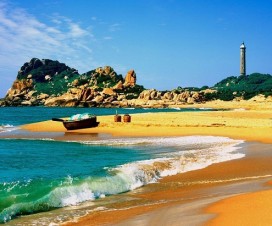
Vietnam has spent hundreds of thousands of dollars to show its beautiful landscapes on famous television channels CNN or BBC, or to advertise on taxis in London. However, Vietnam remains an unknown and hidden charm to foreign travelers.

The arrow that failed to reach the target

In recent years, Vietnam has been paying more attention to promoting tourism. However, the result remains modest. In the second half of 2010 alone, Vietnam spent 5.3 billion dong to run advertisement campaigns on CNN, which gobbled up 12 percent of the total budget for the yearly national tourism promotion program.

A mini survey conducted by the Vietnam Economic Forum conducted on 200 foreign travelers showed that 77 percent of foreign travelers have never seen information about Vietnam’s tourism in mass media, advertisements or at tourism trade fairs. Ninety-three percent of polled tourists said they never see the advertisement pieces on BBC and CNN.

Vietnam also spent money to place advertisements on 27 taxis out of 10,000 taxis in London in the UK for six months. However, local dwellers said they never see the advertisements.

Vu Huy Vu, Deputy General Director of Saigon Tourist, said Vietnam needs to do many more things to popularize Vietnam’s tourism in the world. “Vietnam needs to have more and more publications introducing Vietnam’s tourism potentials. It needs to set up tourism representative offices in other countries to promote tourism,” he said, adding that other regional countries like Thailand, Singapore and the Philippines all have representative offices in Europe and the US for tens years.

Meanwhile, a cheap but effective communication channel – Internet – has been ignored.

Ben Chua is a Singaporean person who builds and runs vietnam720, an website that uses interactive products like videos, audios to introduce attractive destinations in Vietnam.

“If you access to yoursingapore.com, you will find everything about Singapore. For example, if you type “art”, the website will show all the information about arts, from the events to places for excursions or the hotels near art centers,” he said.

Ben Chua said he has an account on Twitter to listen opinions from people about Vietnam. There is a tweet posted in every 10 seconds, which means 36,000 opinions come every hour. However, no official agency has replied to the opinions.

What is a new image for Vietnam?

In mid January 2011, the Vietnam National Administration of Tourism VNAT officially announced the result of the logo creation competition for the new period. The slogan “Vietnam – a different Orient” has won the competition. However, after two months, the slogan has not been approved to become the new slogan of Vietnam’s tourism in the new period.

It seems that foreigners still see Vietnam as a war torn country, rather than an attractive destination in peacetime. It is because Vietnam is still busy looking for a new suitable slogan to be introduced to the world.

“Vietnam is a friendly, joyful country, where the prices are reasonable. However, the images Vietnam introduces to the world do not reflect these things,” said Tim Russell, Managing Director of Come & Go Vietnam travel firm.

He believes that since Vietnam cannot build up a reasonable tourism brand, only five percent of tourists return to Vietnam for the second time, while 50 percent of tourists come to Thailand for the second time.

He went on to say that Vietnam only has been trying to attract the tourists who are interested in the culture and discoveries, while it has not been trying to attract holidaymakers. Meanwhile, tourism does not only mean discovery, but also means relaxing, sunbathing, playing golf and water sports, meals, nightlife and anything that is a part of a comfortable life.

He believes that Vietnam should look for professional consultants and should carry out surveys in many places in order to build up a professional marketing strategy.

Collected by Vietnam hotels

South Central Coastal Area Longs For Visitors
Posted by admin on April 5, 2011 under Vietnam Beaches, Vietnam Destinations, Vietnam Travel Info, Vietnam attractions, Vietnam beauty | Be the First to Comment

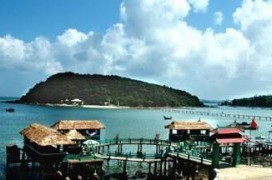
The National Tourism Year 2011 will take place in many localities in the south central coastal region. On this occasion, Saigon-Phu Yen Tourism Joint Stock Company introduces many events to attract tourists.

The National Tourism Year in south central coastal region, Phu Yen 2011, is expected to go with more than 30 cultural, sport and tourist events of national and international levels.

The event, hosted by Phu Yen Province together with other localities in the central region – Danang, Quang Nam, Quang Ngai, Binh Dinh, Khanh Hoa, Ninh Thuan and Binh Thuan, aims to mark the 400 years of its establishment and development.

Throughout this year, south central coastal provinces, especially Phu Yen, will hold a series of activities for the National Tourism Year. The key of them are the sea and island tourism, meeting and parade to celebrate the 400th anniversary of Phu Yen on April 1, international seminar on “Cultural legacies in Vietnam’s south central region” on April 2 and 3, and the cultural exchange night between Vietnam and South Korea and some other countries on April 3.

Phu Yen has a 189-kilometer coastline with sceneries of wild beauty such as Cu Mong and O Loan lagoons, Vung Ro and Xuan Dai bays, and Dai Lanh Cape. In particular, this province has Da Dia Rock as the country’s exclusive scenic spot and more than 10 desolate, beautiful beaches.

Phu Yen is also a land with a cultural tradition and many historical events. The inhabitation of various ethnic groups creates an abundant folk culture. Visitors to the province will enjoy the sounds of Tuy An District’s rock music instrument, attend fishermen’s festivals, or festivals of ethnic communities with people playing gongs around a big fire.

Saigon-Phu Yen Tourism Joint Stock Company, which is an affiliate of Saigontourist Holding Company and runs Saigon Phu Yen Hotel and Huong Sen Hotel in the provincial city of Tuy Hoa, will welcome the national tourism year with its business activities.

Saigon Phu Yen Hotel, one of the biggest accommodation facilities in Tuy Hoa, has 87 rooms, 10 suites, a hall for 300 people, restaurants with five sections to serve Vietnamese, Asian and European cuisines, and bars. Providing places for conferen-ces and parties are among its servi-ces. The four-star hotel was brought into operation in August last year.

The hotel has launched two new programs. That is, it serves dinner buffets with more than 30 selected dishes for VND49,000-59,000 on weekends and offers rooms with a price discount for VND400,000 per night.
Huong Sen Hotel, accredited with two-star standards, consists of 56 rooms. Competitive room rates make it one of the best venues for visitors to the city.

Saigon-Phu Yen Tourism Joint Stock Company is strong in providing tours. A wide range of tours meet diverse tastes of guests and visitors. These tours include visiting Da Dia Rock, watching sunset and dawn at Dai Lanh Cape, and trekking in primeval forests.

Saigon-Phu Yen Hotel:

541 Tran Hung Dao St., Tuy Hoa City, Phu Yen Province.

Huong Sen Hotel:

22B Nguyen Tat Thanh St., Ward 2, Tuy Hoa City, Phu Yen Province.

Xuan Dai Bay recognised as national landscape site
Posted by admin on March 30, 2011 under Vietnam Beaches, Vietnam Destinations, Vietnam Travel Info, Vietnam beauty | Read the First Comment

A certificate honouring Xuan Dai Bay as a National Landscape Site was presented to the Phu Yen provincial Department of Culture, Sports and Tourism on March 28.

The bay was officially recognised as a national landscape treasure, according to a Decision approved by the Minister of Culture, Sports and Tourism on January 20, 2011.

Xuan Dai Bay, with a water surface area of about 13,000 hectares, is located between Song Cau town and Tuy An district in Phu Yen province. The bay is encircled by mountains which shape delightful, unique pools. The bank surrounding the bay is about 50 kilometres long and overlooks beautiful natural scenery with an endless white sandy beach.

The acknowledgement of the bay as a national landscape treasure will help promote the site’s tourism potential and create favourable conditions to exploit and develop different kinds of tourism in the locality.

The bay will be submitted for consideration as a member of the World’s Most Beautiful Bays Club.

Quiet delights of Cu Lao Cham, Hoi an town
Posted by admin on March 28, 2011 under Vietnam Beaches, Vietnam Destinations, Vietnam attractions, Vietnam beauty | Be the First to Comment

The beaches and attractive landscapes of Cu Lao Cham in Quang Nam Province are a draw for travellers.

The island in Tan Diep Commune in Hoi An has been recognised by UNESCO as World’s Biosphere Reserve. It boasts several relics from diverse and ancient cultures, such as Sa Huynh, Cham Pa and Dai Viet. More information about hoi an hotels, please visit this link http://Vietnamhotels.net.

Arriving in Cu Lao Cham in the early morning is a rare delight, giving the visitor a chance to see the dawn’s glow from serene beaches.

Blue, clear and isolated coastline, such as Ong and Huong, are ideal destinations for holidays. The sea takes on a special sparkle at sunrise and sunset.

Visitors’ first impressions may be the warm smile and hospitality of the locals.

This is a fishing town, and fresh fish can be found in the area markets.

In addition, this is one of the few areas in Vietnam where Cham people can still be found.

Hai Tang Pagoda, built more than 400 years ago, adds to the town’s rare atmosphere. Burning a few sticks of incense and walking around the town may renew your senses and give you a bit of respite from the noise and fury of every day life.

At night, the silence of Cu Lao Cham is quite noticeable, compared to the busy streets of big cities. The only sounds are made by the waves crashing into the shore.

Peaceful beaches

An ancient well

Holy pagoda

An intimate sunrise

Go nocturnal

Posted by admin on March 11, 2011 under Vietnam Destinations, Vietnam Travel Info, Vietnam beauty | Be the First to Comment


Cat Tien National Park Bau Sau (Crocodile Lake), one of the beautiful vistas at the Cat Tien National Park

Just 160 kilometers northeast of Ho Chi Minh City, Cat Tien National Park, one of the largest treasure troves of biodiversity in Vietnam, offers some of the best ecological and cultural experiences even as it reenergizes our body and soul with its beautiful natural landscapes.

There are several tour options designed and provided by the Cat Tien National Park’s Ecological Tour Center, and we decided to follow the highly recommended “night safari.”

After a short trip around the park in the afternoon, we gathered at the park’s office at 8 p.m., ready for a two-hour cruise into the jungle. A jeep came to pick ten of us up and our “night safari” in Cat Tien began.

GETTING THERE
A two-day trip is just right for taking in Cat Tien National Park. From Ho Chi Minh City, you can easily make a backpacking trip by motorbike, car or bus to the park. If you drive your own motorbike or car, follow National Highway No. 1 A and then No. 20 which takes you right to the park. You can also take a bus to the park from the Mien Dong Bus Station.


A langur on the tree in the forest

The whole forest was plunged in darkness. The air was really wet and cold. We sat closer to one another and strained our eyes to see through the dark. Everything seemed to be in a deep sleep, until I spotted a civet cat running at the foot of a huge tree and a small squirrel climbing fast and jumping from one tree to another. Why were they up and about at this time? What emergency was it that kept non-nocturnal creatures up at this time, I wondered. Was it us?

The jeep drove slowly through dense forest. We began spotting owls, rabbits and even butterflies, a few porcupines, wild boar, bulls and other creatures.

The jeep finally took us to a large grassland about 10 kilometers away. I looked at my watch. It was 9 p.m.

“This is the place where you can see many kinds of animals come for food,” our guide said. “This tropical forest is home to some of the world’s most endangered species. The park was established in recognition of Cat Tien’s unique wildlife and the importance of protecting it.”

We relaxed our mind and inhaled the pure, fresh, invigorating air. Through the headlights, we could see some herds of deer grazing, some kingfishers waiting for their prey near a small pond and heard the noisy croaking of frogs. Our guide said that the animals here were accustomed to the presence of visitors at night so we could watch them very easily.

Later at night, life in the jungle seemed more exciting. We were treated to thrilling sights and sounds here before we drove back at 10 p.m. An oriole, which we would hardly get to see in daytime, put in a surprise appearance and sent us along with some beautiful melodies.

Reported by Phong Lan
thanhniennews

Ha Long Bay – top ten destinations by boat

Posted by admin on March 1, 2011 under Vietnam Destinations, Vietnam Travel Info, Vietnam World heritages, Vietnam beauty | Be the First to Comment

Ha Long Bay in Quang Ninh province has attracted more than 2.5 million visitors over the past 11 months.

Ha Long Bay has been listed among the top ten destinations by boat, according to the world’s leading tourism magazine, Lonely Planet in the UK.

Visitors can sit in the boats to discover the beauty of Ha Long Bay, and paddle a kayak to visit small caves and grottos. Ha Long Bay currently has nearly 500 tourist boats and attracts millions of visitors each year.

Other destinations in the list include the fjords in Norway, the Amazon River in South America, Franklin River in Australia, Quetico Provincial Park in Canada, backwaters of Kerala in India, Milford Sound in New Zealand, the Greek islands, Disko Bay in Greenland and the Galapágos Islands in Ecuador.

Book halong bay cruise today at Vietnamhotels.net to enjoy best prices!

Travel story: Sapa – our mountain retreat

Posted by admin on February 28, 2011 under Vietnam Travel Stories, Vietnam beauty | Be the First to Comment

After travelling from Hue to Hanoi we caught the overnight Green Train to Lao Cai in the mountains on the Chinese border. The train left Hanoi at 9.00 pm and we had a four berth compartment to ourselves. However, luxury was in short supply with shared loos and one washbasin for the carriage and it was a very rickety ride, making sleeping difficult. We arrived at Lao Cai at 5.30 am the following morning and were met by a guide who took us for a very early breakfast at a nearby restaurant. After breakfast we went to the bridge where one can cross over to China. The bridge is open from 7.00am to 7.00pm each day and we watched a steady stream of Vietnamese making their way over the bridge where apparently they purchase cheap Chinese goods which they then bring back to sell in Vietnam.

On the way to Sapa we stopped at a mountain town known as Bac Ha where, every Sunday, there is a large market to which all the surrounding villagers come to exchange goods and purchase their necessities. It could have been a rural scene in 18th century England, with almost everything for sale including cattle, pigs, hens, dogs, vegetables, ironwork and clothing, just to name a few. Of course, the piles of sugar beet and bamboo and the water buffalo that were being sold weren’t very Anglo Saxon.

Our hotel in Sapa had spectacular views of the town and the surrounding mountains, but very intermittently as most of the time it was surrounded by swirling mist. We experienced a drop in temperature and had to dig deep into our suitcases to find our warm clothes that we hadn’t worn since we left Totnes. We were thankful for the 3-bar electric fire in our bedroom and made sure that we reserved a table in the restaurant for dinner each night by the big log fire.

On our first full day John went off with Cuong, our guide, for a five hour hike in the mountains. The views through the mist showed terraces of paddy fields clinging to the slopes and there was water everywhere which made for a very muddy walk at times. It was almost like an oriental version of Wales! The packed lunch was eaten at the home of a Vietcong war veteran in one of the mountain villages.

Throughout the market at Bac Ha there are local women wearing a colourful traditional dress
built of wood with a corrugated iron roof, was very dark. It consisted of two rooms downstairs and two up which housed him, his family of eight and his scooter. On the walls were his certificates of commendation which he proudly showed off. Opposite his house was the village school which unfortunately was bereft of pupils as the locals feel it is more productive for their children to try and get money from the tourists than receive an education. Tourism is not necessarily helping these village people.

Lynne declined the opportunity of hiking and took the soft and restful option of a day at the hotel spa and pool to recover from the train ride!

On our second full day in Sapa the guide took us off for a drive to visit a couple of mountain villages. The houses are very basic being constructed of timber with corrugated iron or asbestos roofs and with very little home comforts inside. The homes also act as stores for the crops they have grown and houses their domestic animals such as hens together with their motorbikes. The floor is bare earth but clean and they have a very old TV in the middle of the house connected to a dish.

Just outside of Sapa the landscape is dominated by the watery terraces where shortly the annual rice crop is to be planted. What must they think when they see the conditions we live in on their televisions? No wonder so many of the local people devote their life to trying to extract money from the tourists. However the scenery surrounding the villages is a definite bonus and must provide some form of spiritual compensation.

At the end of the second full day it was back to Lao Cai to catch the 8.00 pm train back to Hanoi and arriving at 4.30 the following morning. Hanoi is the last lap of our journey.

by John from Totnes, The delights of Bangkok, Cambodia and Vietnam travelblog.org