Costumes of 54 ethnic groups to go on stage in Hanoi

Posted by admin on December 6, 2010 under Vietnam Travel Info, vietnamese clothing | Be the First to Comment

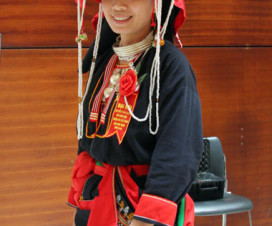
For the first time, 250-300 contestants will represent all 54 ethnic groups in Vietnam to perform their traditional clothing in Hanoi next February.

According to the National Committee for Ethnic Groups, the Ministry of Culture, Sports and Tourism will combine with relevant agencies to organise the first show of traditional clothing of 54 ethnic groups.

The provincial round will be held in December 2010 from which the best 250-300 contestants will participate in the national show in Hanoi in February 2011.

At the national show, contestants will model the costumes of their ethnic groups, including wedding dresses, casual wear, traditional costumes, traditional jewelery, etc.

In May 2010, the gathering of 1700 people in Hanoi, representing over 12 million people from 54 ethnic groups was the first such event to take place in Vietnam since 1975.

Source: TravelNews.VN

Palm leaf conical hat of Chuong village- The beauty of traditional nation

Posted by vietnamtravelblog on September 18, 2010 under vietnamese clothing | 4 Comments to Read

“Want to eat white with catfish
Want good hats to the Chuong village”

The center of Hanoi about 40 km west of the Chuong village (Thanh Oai district, Hanoi) from hundreds of years was famous for palm leaf conical hat. With 2,400 households in here, this job is not rich but enough to live suitable with the poor rural, less plowing and transplanting.

Palm leaf conical hat of Chuong village- The beauty of traditional nation

Vietnamese girl with white orient robe and palm leaf conical hat
Long-lasting images slender woman in oriental robe and a palm leaf conical hat or loving in the four panel traditional dress with flat palm with fringes  was bold in the mind of Vietnamese people. The palm leaf conical hat follow Vietnamese women in all the ways,  working on the hot field  and today on the brilliant catwalk. Palm leaf conical hat of Chuong village beautiful design, durable back, how was the souvenirs of girls stepped up to carriage decorated with flowers follow husband.
Ancient hat of Chuong village was a gift carried the queen, the princess by own beauty, were made by hand so talented, skillful artisans of the village. Today, hat of the Chuong village are everywhere, both inside and outside the country.

Palm leaf conical hat of Chuong village- The beauty of traditional nation

An average day, Chuong village is make 7000  palm leaf conical hats, bring consumption out of the province. In addition, the village bell hats were exported to China, Japan and European countries.However, compared with other villages, people of Chuong village are still poor. Raw materials must be imported from the leaves extinct Quang Binh, Ha Tinh, because the village was not planted. Price caps cheap travel products, from 3000 to 7000 e / unit, a family should do, only an average household income is only 10,000 to 15,000 VND per day.

Palm leaf conical hat of Chuong village- The beauty of traditional nation

A conner of Chuong village

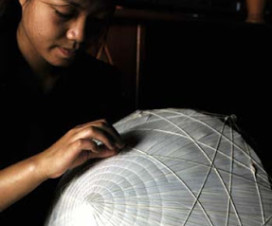
Bring-glare white hat with stitching clever and certainly on hand, few know that, to make it very very meticulous. First is the choice of leaves. Leaves were purchased to crush up of sand then dry two, three times sun until the leaves are green to white. Then, holding the rag, lined leaves, plow blades using rapid strokes that leaves flat, but not brittle, not crushed.

Round of hats are made small bark of bamboo and erasing. When connected, the compulsory round of hats should round not be conjoined ripple marks. Unlike the normal hats are usually  up to 20 round layers, hat of Chuong village has 16 classes  help ensure durable hat but still soft.

Palm leaf conical hat of Chuong village- The beauty of traditional nation

Next, workers ranked within each leaf into a hat, a sheath of bamboo and a layer of species of bamboo then stitching. Sewing is a very difficult stage, because the leaves are easily torn, so only the skilled hands, there are new experiences. Hand held metal workers quickly at the first glance, smooth, straight stitches each both from within and outside.

The hat take shape, the artisans dry the hat over sulphur gas make color of hats become white and hats are not mouldy.Formerly, the Chuong village produce many palm leaf conical hats, used for many classes of people such as flat palm hats with fringes for girls, Nho hats, feather hats, soldier’s conical hat, metal stopped conical hat for the boys and the men of luxury. But from 1940 until now, the Chuong village artisans made only a single type of hat.

Mr. Cat Hai, an artist now than 80 years old, who has deserved bring Xuan Kieu hats, also Ba Don hats to  the village production replace ancient hats types.

Currently, the village only two artists made ancient hats. It was Mr Tuy Le Van making metal topped hat and Tran Van Canh make flat palm hat with fringes.

Palm leaf conical hat of Chuong village- The beauty of traditional nation

Making flat palm hat with fringes more complex as normal hat, but not commonly used. Therefore, the hosiery was poor, making flat palm hat with fringes get poorer. But with the intention of “Keeping a traditional produce no loss in the present life and to keep the children know it”. Tran Van Canh artists have decided to find out and keep doing traditional flat palm hat with fringes of village. Seventy four year-old, who lost a leg in the war, but his hands still nimble, agile. His products are exported to the orders of a member of the ensemble provinces. Fat palm hat with fringes of his have been displayed at exhibitions at home and abroad.

Palm leaf conical hat of Chuong village- The beauty of traditional nation

Collect material for making  hat
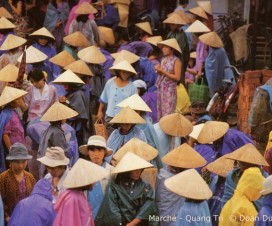
Market of Chuong village meeting in a month 6 main session, on days 4, 10, 14, 20, 24 and 30. The fair is only sold only hat. Hats are classified into long-husband, glare white. This job suitable for women and they  are also major consumers. Therefore, the fair attracted a large number of village women and girls to come. Go to market of Chuong village in the early days of the year, see all the special identity of a traditional village, said that the new color white hat has become a close friendship with the people. The white hats have everywhere, mixed pink face of rural women, with laughter, voice, thrill invitation. Although still poor, but many families that had adopted only two hats, three children, who pass college courses. “I’m proud of the traditional craft villages, but hope that the village was more concerned for those who make life as our hats down hard.” An artist for over 40 years with career, was revealed as such.

Flat palm hat with fringes in Quan ho fork song
Inside the slope of dyke dry very white leaves, hand bell villagers, from children are 7- 8 years old until old man and woman are 70- 80 year old still maintain the beauty of each day for a traditional craft, keeping a simple beauty of a woman Vietnam, contributed more pride for our international friends.
(Source: http://visithanoi.blogspot.com)

Ok Om Bok Festival

Posted by vietnamtravelblog on November 29, 2008 under vietnamese clothing | 6 Comments to Read

The Khmer ethnic people annually celebrated their traditional Ok Om Bok Festival on the full-moon day of the tenth lunar month to shows their gratitude to the Moon Goddess for giving them a bumper harvest and rich aquatic sources.

Ok Om Bok is now a popular festival celebrated not only in Soc Trang but also in other Mekong Delta provinces of Vinh Long, Tra Vinh, Can Tho, Kien Giang and An Giang. In the Khmer belief, the Moon Goddess is the one who cares for the crops, aquatic sources and human life. Also called Festival of Worshipping the Moon, the Ok Om Bok Festival of each village takes place on the yard of a local pagoda, and the whole province’s Ok Om Bok Festival takes place at Ba Om Pond. The festival is one of the three typical festivals of the Khmer in the circle of one year.

Interesting traditional activities…

Ok Om Bok features folk religion originated from Buddhism. The festival opens by a Ngo Boat Race (Um Tuk Ngua in the Khmer language), one of the most attractive activities of the Khmers. The race drew hundreds of thousands of Khmer people in the region and tourists nationwide. On the noon of the 14th day of the 10th lunar month, on the Long Binh River takes place the exciting Ngo Boat Race in the echoing sounds of the Five tones of the traditional musical scale and the resounding encouragement shouts of tens of thousands of audiences. The racing teams from different town and districts on the territory of Tra Vinh Province and neaby provinces bring a noisy and stirring atmosphere for the festival. Ngo Boat Race is both a game and a way to express the strength of consolidation, as well as a traditional ritual to see off the God Water to the ocean after the growing season, and a religious ritual of the Khmer to commemorate the Snake God Nagar, who once turned into a lump of wood to help the Buddha cross the river. It is honored as a sacred relic, used only in essential festivals like Ok Om Bok and is kept and preserved carefully in local pagodas. The boat is about 24 meters long, 1.2 meter wide and is able to hold about 40 people. Sitting in two lines midway along the sides, young Khmer men and women move gently in harmony with the sounds of gongs and waves. As the first boat crosses the finish line, the crowds on both riverbanks cheer loudly and enthusiastically for their victory. Hundreds of people enthusiastically support their favourite teams and enjoy the race. Attending the festival, you will have a chance to watch the jubilant and competitive boat race of the Khmer people.

During full-moon the night, Khmer family members gather in front of the communal pagoda or their houses and prepare a special feast with green rice flakes, ripe bananas, fresh peeled coconuts and mangoes to offer to the moon. When the God Moon rises, the offering ceremony begins with all family members sitting flat on the ground and clasping their hands in wait for the moon to rise. An elderly man expresses their gratitude to the moon and prays for continued good crops and good health. They prayed to the Moon for bumper harvests all the year round, prosperity and happiness. A jubilant atmosphere prevailed over the celebration sites where large members of people gathered to enjoy folk art performances, including floating flames, flying balloons, and Khmer stage arts of Du Ke and Ro Bam. Then, the village elders will pick up handfuls of “com dep” to put into the children’s mouths with a wish for their strong eating and rapid development (the word Ok om bok literally means eating “com dep” by picking up it and put into the mouth). After

the ceremony, they continue looking at the moon, while receiving green rice flakes from an elderly man and making their wishes. At the festive nights, tourists and locals walk in groups around the ponds and enjoy local food and buy souvenirs. All seem to forget tiring daily work and drift with the melodies and sounds of folk songs, diverse instruments and dance of the Khmer.

The night becomes more exciting with ethnic games and traditional fashion shows. Some join a contest of flying lanterns and silently contemplate the colors. A flying lantern is made with a bamboo frame pasted with paper. A tinder is tied under the frame then fired, which makes the lantern fly high in the air. The flying lantern rises higher and higher in a mysterious and romantic breeze as if bringing the hopes and beliefs of the Khmer people to the Moon God, who is tucking up the clouds to look down at the earth. At Ba Om Pond, the ritual of the flying-lantern release has become an exciting contest with the participation of tens of pagodas in the province under the encouragement of tens of thousands of festival participants.

The event also features water-lanterns made from bamboo and paper in the shape of a boat with colorful decorations. People make a line with a drum band ahead, whisper their prayers to God and gently drop paper-boats on the water. The river is indulged in peaceful and fanciful scenery. This is also the traditional time for couples to pray for their love and destiny. The festival celebrations also included traditional Khmer rituals and special performances by art troupes from other provinces. People also flocked to downtown Soc Trang for shopping at trade fairs and watching traditional sports and games.

Really interesting and meaningful, Ok Om Bok Festival is the most imposing festival in Mekong Delta. Once taking part in, and you will realize…

Ao Dai, the Vietnamese long dress

Posted by vietnamtravelblog on October 13, 2008 under vietnamese clothing | Be the First to Comment

Source:  Vietnam Traditional Clothes

The beauty of women dressed in “Ao Dai”always leaves a deep impression on foreign visitors to Vietnam

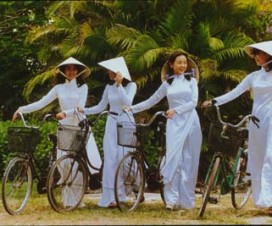
The beauty of women dressed in “Ao Dai”always leaves a deep impression on foreign visitors to Vietnam. Girl students dressed in white long robes take to streets on the way to schools or back home, or gracefully sail on their bikes along streets. Female secretaries in delicate pastels greet you at an office door and older ladies in deep shades of purple, green or blue cut a striking pose at a restaurant dinner. The “Ao Dai” appears to flatter every figure.

Early versions of the “Ao Dai”date back to 1744 when Lord Vu Vuong of the Nguyen Dynasty decreed both men and women should wear an ensemble of trousers and a gown that buttoned down the front. However, not until 1930 did “Ao Dai”appear partly similar to its look today. Now, Men wore it less, generally only on ceremonial occasions such as weddings or funerals. During the 1950s two tailors in Saigon started producing “Ao Dai”with raglan sleeves. This creates a diagonal seam running from the collar to the underarm and this style is still preferred today

“Ao Dai”is made individually to fit each customer’s shape to create the most graceful look. Its body-hugging top flows over wide trousers that brush the floor. The pants should reach the soles of the feet and flow along the floor. Splits in the gown extend well above waist height and make it comfortable and easy to move in.

Comfortability is always taken into account for fashions and beauty. Tailoring must ensure the wearer’s freedom of movements. Despite it is a long robe, “Ao Dai”must be cool to wear. Synthetic or silk fabrics are preferred as they do not crush and are quick drying, making the “Ao Dai”a practical uniform for daily wear.

The color is indicative of the wearer’s age and status. Young girls wear pure white, fully-lined outfits symbolizing their purity. Older but unmarried girls move into soft pastel shades. Only married women wear “Ao Dai”in strong, rich colors, usually over white or black pants. However, “Ao Dai”is rarely seen in places where manual work is practiced. The nineties saw a real resurgence of ao dai. It has become standard and common attire for girl students as well as female staff at offices and hotels. Traditionally, “Ao Dai”has become the most preferred dress on formal occasions.

Today, “Ao Dai”has been a bit modified. Its length is cut shorter usually just below the knee. Variations in the neck, between boat and mandarin style, are common. And even adventurous alterations such as a low scooped neckline, puffed sleeves or off the shoulder designs are appearing as ladies experiment with fashion. Color patterns are no longer rigidly controlled and accesses to new fabrics have generated some dazzling results. However, most visitors to Vietnam have highly appreciated local tailors’ skills when making ao dai. It is hard to think of a more elegant, demure and charming outfit, that suits Vietnamese women of different ages, than ao dai.

Beauties with conical hats, glasses and fashion

Posted by vietnamtravelblog on October 1, 2008 under vietnamese clothing | Be the First to Comment

The 30 contestants of Miss Vietnam 2008 pageant practiced on a big stage at the Hoai River Square, Hoi An on August 28, to prepare for the final night this Sunday (August 31). captured the rehearsal.

Photo: S.Ha – Phuc Chu

Conical Hat (or Non La)

Posted by vietnamtravelblog on August 21, 2008 under Vietnam Culture, vietnamese clothing | 4 Comments to Read

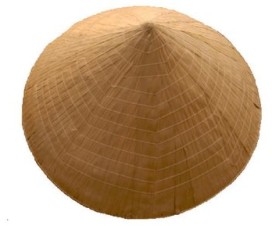
Take a peasant’s common conical hat, add a touch of this and a little of that, and you will have the idea, but not quite an authentic Non Bai Tho or “Poetical Leaf” from Central Vietnam. Just a few simple arrangements added to the conical form are enough to give the Vietnamese leaf-covered hat unique features found nowhere else among Asia’s various types of conical hats.

The legend of the conical hat is related to maternal love and the history of rice growing in Vietnam.

Once upon a time, the legend says, when a deluge of rain was falling there descended from the sky a giant woman wearing on her head four huge round leaves as large as the sky itself and stitched together by bamboo sticks. The leaves protected humankind, then still naked, from the rain. The giant messenger from the sky twirled round the leaves on her head to dispel clouds and rains. Those who followed her were taught by her how to grow crops. One day mankind dozed off as they listened to stories narrated by her. When they woke up the goddess was gone. The Vietnamese built a temple in her memory and honored her as the Rain-shielding Goddess. Following her example, people went into the forests to fetch broad and round leaves (palm) which they stitched together on a bamboo frame. This was to become an indispensable headwear for the farmers on the fields, boatwomen carrying passengers across rivers, travelers under the blazing sun…

However, Vietnamese girls do not like just any conical hat they come upon. The dearest to them is inevitably the one called the “Poetical Leaf “for they become milder, more elegant and more delicate when once they put on a hat, which gives shelter to their blushing cheeks like a crowing bud protected from sun, rain or rough wind. Vietnamese women also use the conical hat to fan off the heat of summer, as a container for a bunch of vegetables, and even as a bowl to relieve the thirst when passing by a well, etc. Romantically, young couples can veil their kisses behind this traditional conical hat during their dates.

The shape as well as the size of the conical hat has evolved greatly. As a rule, the broad-rimmed hat was reserved for women while men wore hats with a higher cone and smaller rims. Then, there were hats made specifically for wealthy and powerful people, hats for children, hats to equip the army, hats for the Buddhist clergy, for the mourners…, more than 50 types in all. Undoubtedly, the two best known and best liked are the conical hat of Chuong village in Ha Tay province, north of Hanoi, and the “Bai Tho”, hat of Hue, the old imperial city.

The prototype of Lang Chuong hat is a large disk-like bamboo frame covered with palm leaves and perpendicularly bent on its rim to form a band of about four inches. At the centre is placed a small bamboo frame to fit the head. The strap is usually very elaborately made of silk, adorned with yellow tassels also made of silk. This hat used to be worn by upper-crust families during visits to pagodas or festive occasions.

The present conical hat is, however, patterned on the “Bai Tho” hat originating in the old capital city of Hue and the birthplace of many eminent literary men. It is true that the place where the hat comes from has been romantically famous with its peaceful Huong (Perfume) River and its majestic Ngu Binh (Peace) mountain. Moreover, Hue has been famous for her attractively sentimental, soft-voiced and long-haired girls who often gave inspiration to poets whose creative works have been handed down to the present day. And the “Poetical Leaf” has a prominent place in all that poetical, dreamy and yet scholarly diet of the ancient city. It is so called because the artisan takes great pains to cut the characters of a verse out of a palm leaf and insert them between two layers of palm leaves before stitching them together. The characters will be easily readable when the hat is seen against sunlight. Nowadays the characters are usually replaced by a decorative figure such as a flower, a dragon or even a landscape.

The making of a conical hat is a one-hundred-percent handicraft. The leaves used to cover the hat are brought from the forest. Then they are exposed to the dew for one night to soften them. When the leaves become dry but still soft they are flattened either by hand or by ironing. Only young leaves are selected. Old or dark ones are discarded. A hat usually consists of 16 to 18 rims made from a special kind of bamboo. In order to have a well-made hat, it must be knitted together with a peculiar kind of thread called “doac” made from the leaves of a special kind of reed. Finally, the hat is trimmed and painted with a coat of attar oil to keep it clean and smooth.

The skill of the craftsman (who in this case is more likely a woman) can be judged by the regularity of the leaves arranged on the hat. The roundness of the rim and particularly the fineness of the stitches which must be so done as to reveal no knot.

Although the conical hat is no longer the cities women’s everyday costume, it remains the ubiquitous headwear in the countryside. And a young girl with her conical hat, quite charming in her four-flapped long dress, is always a popular image of Vietnam and the Vietnamese people.