Activities to celebrate 1000th Thăng Long-Hà Nội anniversary
Posted by vietnamtravelblog on September 30, 2010 under Vietnam Culture, Vietnam Festivals, Vietnam Travel Info | 3 Comments to Read

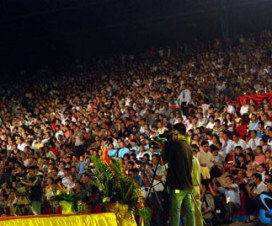
VGP – The Prime Minister recently approved an overall program to mark the 1,000th anniversary of the founding of Thăng Long-Hà Nội, with the highlight of a ten-day festival on October 1-10, 2010.

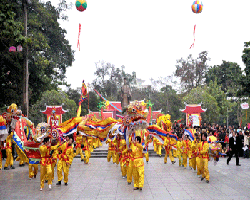
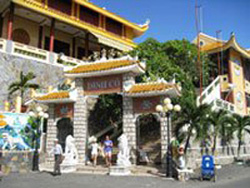
Numerous activities will take place to welcome the 1000th anniversary of Thăng Long-Hà Nội - Illustration photo

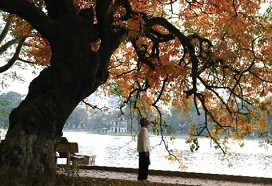
The festival will start with an opening ceremony at the monument of King Lý Thái Tổ and streets around the Hoàn Kiếm (Sword) Lake. Then come a series of activities, including exhibitions, art performances and sports events.

1. Opening day (October 1)

- The opening ceremony will be held by the Hà Nội authorities and the Ministry of Culture, Sports and Tourism at the Lý Thái Tổ Statue by the Hoàn Kiếm Lake in the morning of October 1.

- The exhibition of socio-economic achievements of Việt Nam and Hà Nội will open in the afternoon at the Giảng Võ Exhibition Center.

- The exhibition of cultural and art works of Việt Nam in different periods at the Cultural and Art Exhibition Center, 2 Hoa Lư, Hà Nội.

- “The country with Hà Nội” show will be lively televised in the evening of October 1, with the direct participation of many people in different sites in Việt Nam and abroad.

- A general cultural and art performance will be organized by the Ministry of Culture, Sports and Tourism in Hà Nội in the evening, with the contribution of foreign artists.

2. Activities on October 2-10

a. Cultural and art activities:

- Cultural exchange festival for ethnic groups in Việt Nam to celebrate the 1000th Thăng Long–Hà Nội anniversary in Hà Nội.

- A week for historical films in Hà Nội.

- “Thăng Long impetus and the song for the country” music show at the Hà Nội Opera House.

- Performace of selected new songs to celebrate the anniversary at the Bà Kiệu Temple stage.

- Street festival and cultural-art program of young Hanoians at various places in Hà Nội.

- The first international festival for young musical bands in Việt Nam at the Mỹ Đình National Convention Center.

b. Sports activities

- Final round of the international Thăng Long–Hà Nội Football Cup in Hà Nội and other provinces

- Performance of Vietnamese marital arts at the Quần Ngựa sports palace.

- A running contest around the Hoàn Kiếm Lake.

- International cycling tournament from Hồ Chí Minh City to Hà Nội.

c. Tourism activities

- A tourism festival in Hà Nội.

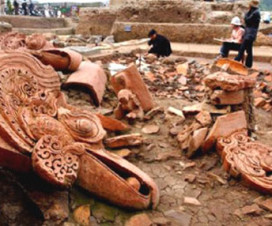
- An exhibition of antiques, documents and objects about Thăng Long–Hà Nội at the Thăng Long ancient citadel vestige site, Hà Nội.

- Exhibition of ornamental trees and flowers at the Thăng Long ancient citadel vestige site.

- Craft Village Festival in Hà Nội.

3. Grand celebration of the 1000th anniversary of Thăng Long-Hà Nội, October 10:

- A State-level meeting with military march and parade, Ba Đình Square

- A cultural gala night by West Lake

4. Other activities to celebrate the 1000th Thăng Long–Hà Nội anniversary in Hà Nội from October 1, 2010

- Circus shows under the motto “Hà Nội – The city for peace” at Thiền Quang Lake, Đông Kinh Nghĩa Thục Square and the National Circus.

- Music concerts by famous Vietnamese artists at the Hà Nội Opera House.

- Performance of ancient dances of Thăng Long–Hà Nội at the Lý Thái Tổ Monument.

- International music and stage festival with the participation of art troupes from some 1000-year-old cities in the world (around 29 troupes).

- A big concert performed by Vietnamese and foreign orchestras at the Hà Nội Opera House.

- The national press awarding ceremony on the 1000th Thăng Long–Hà Nội anniversary.

- The awarding ceremony of international competition “Hà Nội – Your Rendezvous”.

- The conclusion of the contest on Thăng Long–Hà Nội for Vietnamese citizens.

- Photo exhibitions of Hà Nội at 93 Đinh Tiên Hoàng Street and 45 Tràng Tiền Street.

- A calligraphy exhibition and festival at Văn Miếu (Temple of Literature).

- Exhibition on famous battlefields and campaigns in the military history of Việt Nam at the Việt Nam Military History Museum.

- Exhibition on national heroes and cultural celebrities of Việt Nam at the Revolution Museum.

- Exhibition displaying products of individuals and organizations presented to Hà Nội at the Hà Nội Friendship Palace.

- Ancient Thăng Long–Hà Nội exhibition at the Hà Nội Museum.

- Performance of traditional áo dài (long dress)

- A kite-flying festival

- The debut of a collection of books about Thăng Long–Hà Nội

- Inauguration ceremonies of the Hà Nội Museum (Phạm Hùng Road), the Hòa Bình Park (Từ Liêm District), statues of President Hồ Chí Minh and President Tôn Đức Thắng (Thống Nhất Islet in the Thống Nhất Park), the Workers’ Theater (Tràng Tiền Street), Thanh Trì and Vĩnh Tuy Bridges, and Láng-Hòa Lạc Highway./.

The village where French and Vietnamese architecture collided
Posted by vietnamtravelblog on September 29, 2010 under Vietnam Culture, Vietnam Travel Info, Vietnam architecture | 2 Comments to Read

By Lan Hieu | dtinews.vn

Modern life in Hanoi may seem a million miles from tradition but just 15km north is Cu Da Village – where poignant reminders of history still live on.

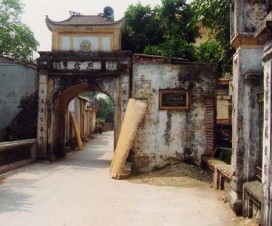
The old gate leading Cu Da’s ancient houses

Cu Da Village in Thanh Oai District is the perfect place to spend a lazy Sunday exploring Northern Vietnamese culture.
Cu Da is not only famous for its two specialties of mien (vermicelli made from a kind of tuber plant similar to cassava) and tuong (soya sauce) but also well-known nationwide for its big ancient houses and villas with beautiful architecture typical of Northern Vietnam. The village is an ideal place to explore the culture of the Red River Delta region.

Cu Da Village was a land of rich merchants hundreds of years ago, when almost all villages in Vietnam were still deep in poverty, these two villages were already well-known as prosperous locales that had big brick houses, clean paved roads and well-off people. Besides houses boasting ancient styles of Vietnam, the extrovert merchants in Cu Da also built many French-style villas, very popular at that time.

Today, after more than a hundred years, visitors to the village are still surprised and attracted by the charms of the ancient Viet-styled houses or the French-styled villas, the vaulted gates and the roads paved with slanting bricks. The village has nearly 200 such ancient houses and villas, of which about 50 remain unchanged through time. The main village road runs along Nhue River and every small lane has a vaulted gate. The village also has a pagoda which has been recognized as a national relic. The houses, the roads, the pagoda here feature a beautiful picture of a rich Vietnamese village at the beginning of the 20th century and now are a precious heritage that lures many visitors.

According to the elders, Cu Da Village has existed for hundreds of years. In the past, it was situated in a very good location which was near Nhue River, Ha Dong Town and Thang Long, Hanoi. Nhue River used to be a busy waterway for traders between Hanoi and Cu Da, making the village a centre providing rice, fabric and other commodities for Hanoi.
Therefore, many villagers became very rich and the village was soon built like a town where, unlike other hamlets in Vietnam, all the houses and villas had numbers.

One of them is house No.11, owned by Trinh The Sung. It was built in 1874, and features architecture typical of the Nguyen Dynasty. It was low, mainly made of wood, with delicate carvings on the beams and pillars. The roof was made of yin-yang tiles. There was an ancestral altar, panels and parallel scrolls in the middle of the house.

Not very far away, the two-storey house of Dinh Van Tuong’s family at No. 152 was built in a French style. It was built more than 100 years ago by Tu Bang, a wealthy businessman in the village. Tuong has just bought it for nearly 30 years. The house’s walls, yard, and gate have been covered with moss. Its first storey was decorated with occidental patterns, floor paved with stone tiles. The second floor was ruined in 1947 in a battle against French colonialists. Although the house has been greatly affected by time and war, it is still very charming and attracts a lot of visitors.

Many other ancient houses in this village have similar stories. However, the ancient houses in Cu Da are not being preserved properly due to the rapid urbanization process of the capital. Visitors to Cu Da Village may feel sorry to see such cultural heritages decaying beyond repair.

Vietnam’s traditional ao dai part of 1,000 Year celebrationvietn

Posted by vietnamtravelblog on September 28, 2010 under Vietnam Culture | Be the First to Comment

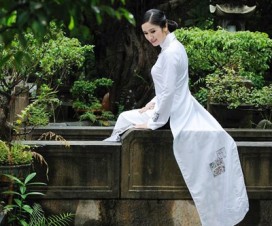
Some of Vietnam’s greatest beauties came together to pose in the traditional ao dai, a symbol of the nation.

Famous actress Thu Ha, Miss Ngo Phuong Lan (Miss Vietnam World 2007), Ngoc Oanh (Runner-up Miss Vietnam 2000) and former Model Hoang Xuan posed for the first time together wearing the ao dai.

The photo shoot was taken in anticipation of the Ao Dai Festival which will take place on October 1, 2010, the opening day of the upcoming events for the 1,000 Year Anniversary of Thang Long – Hanoi.

The ao dai is a Vietnamese national dress worn by women. In its current form, it is a tight-fitting silk tunic worn over pantaloons.

The Ao Dai Festival of the North, Central and South regions will be held at the well-known sight-seeing Thap But (pen tower) – Ngoc Son Temple, in Hanoi. The festival provides an outstanding art activity as part of the programme “The fanciful night by Hoan Kiem Lake”.

Based on an idea of bringing the finest of Vietnamese culture and tradition into the design, organisers designed and created 600 of the traditional dresses for the festival. The festival will include two main themes: One shows the city of Hanoi in the past and the other will show special features of the ao dai from Vietnam’s three regions. From these two themes, organisers have prepared several Ao dai collections such as “Recalling memories”, “Sacred dragon features”, “Hanoi’s streets” and “Sunny flowers”.

Vietnamese beauty stars Miss Ngo Phuong Lan, Ngoc Oanh, Tran Thi Quynh, Dang Thuy Trang and others will perform in the Ao Dai Festival.

The festival will last for 45 minutes with the performance of 100 models. The stage will have very unique design and decorations. Its catwalk will cover 350 metres and the stage will be decorated with flowered mats and conical hats. The show will also include performances on traditional activities of Hanoians in the past.

Below are some photos of the ao dai dresses which will be showcased on October 1, 2010:


Actress Thu Ha

Ngoc Oanh

Miss Ngo Phuong Lan

Former Model Hoang Xuan

Natural Wonders: Vietnam National Parks
Posted by vietnamtravelblog on September 7, 2010 under Vietnam Culture, Vietnam Destinations, Vietnam Travel Info, Vietnam Travel Tips, Vietnam World heritages, Vietnam attractions | 2 Comments to Read

I usually think about how people draft their trips and vacations. Things like choosing a destination, selecting airlines and planning entertaining activities. Most times, I am kind of a random traveler. Living in Taiwan for such a long time, my travel pattern is that if the airfare looks right and the place sounds fun, I wouldn’t mind pay it a visit. Reading about Vietnam, I would choose Vietnam as a destination because it means a mysterious cultural discovery.

Although Vietnam is a quite well known country because of its media coverage in films, news and television programs, Vietnam did not open its gate to the rest of the world until the end of the Vietnam War. The media exposure did not ensure an accurate report of Vietnam, and not many travelers’ found the way to share their indescribable experiences.

For a long time, Vietnam was occupied by various countries: Chinese Empire, France and Japan. During the Cold War, the North was controlled by China, and the South was supported by United States. Since the Vietnam War ended in 1975, Vietnam has been shaping its new identity. Under the influences of many other cultures, Vietnam blended them into their ancient traditions and made their own personality. Today Vietnam is welcoming visitors to show off its unique traits and share its national treasures.

National parks in Vietnam are one of the country’s most valuable resources. From north to south, there are 87 national parks scattering around. They are nature reserves, historical sites and natural areas. The common issues among the national parks are the illegal hunters and traders. They endanger the nature cycles of Vietnam. The Vietnamese government and international organizations are doing the best they can to stop these harmful actions and to educate the public the importance of preserving the lands.

Cat Ba National Park
Cat Ba Island is the largest island in the Cat Ba Archipelago in Ha Long Bay. About 16 kilometers away from Cat Ba Town, there is the Cat Ba National Park. The park’s headquarter is located in Trung Trang. One-third of the park is the marine zone, and the rest is the forest. Although there are many wild animals such as wild boars, macaques, deer, white-headed langurs, bird species and reptile species and over 600 plants in the park, they are not well protected. Some local people hunt them or make traps to capture them for their high prices in the market.

Cat Bat is a great place for hiking and outdoor activities. However, if you are not an experienced hiker, trails at Cat Ba might be quite a challenge for you. In this situation, a sophisticated tour guide is highly recommended for the purpose of safety. Exploring Cat Ba, you will see one of the most beautiful landscapes in Vietnam and the copious ecosystem. Oriental pied hornbill, a very rare species in Northern Vietnam, can be seen in the park. Other attractions include limestone formations, numerous waterfalls, caves and grottoes. Human history dates 6,000 to 7,000 years back, and the entire Ha Long Bay region was listed as the World Heritage Site by United Nation Educational, Scientific and Cultural Organization (UNESCO) for its biological significance.

Cuc Phuong National Park
Cuc Phuong National Park was founded in 1962 in Hanoi. It is the first national park of Vietnam. The park is about 100 kilometers southwest of the capital. 90 percent of the park is covered by forests, and about 2,000 plant species grow in the park. More than 60 mammal species are in the park and the special residents inc the park are the Red-Bellied Squirrels. The highest mountain is 648 meters above the sea level.

Cuc Phuong is where the Endangered Primates Rescue Centre is located; the Center rescues the animals from illegal trading. Cuc Phuong National Park is also a main attraction for botanists. Researched done by United Nations Development Program (UNDP) and Flora and Fauna International (FFI) distinguished the complexity of the tropical forest and the monsoon influence on Southeast Asia in Cuc Phuong National Park.

At the park’s surroundings you will see limestone cliffs, plenty of plants and mammals. The summit May Bac (silver cloud) is 656 meters in elevation. The limestone caves in the park are eminent attractions and include Thang Khuyet Cave, Con Moong Cave, Pho Ma Cave, and Nguoi Xua Cave. Quen Voi Cave presents diverse aspects of the limestone after its long-term weathering process. The best time to visit the park is during the dry season from April to November.

Phong Nha-Ke Bang National Park
The Phong Nha-Ke Bang National Park situated at the north of Truong Son range in Quang Binh, is one of the world’s two largest limestone regions. It is called “the paradise of researchers and explorers of grottoes and caves.” Over 95 percent of the park is limestone formations, grottoes and caves and forest. Vietnamese and British scientists have surveyed the 20 limestone formations in the park.

The karst formation of Phong Nha-Ke Bang National Park has evolved since 400 million years ago, and it is also the oldest major karst area in Asia. The formations of underground rivers and caves also extend to the border of Laos. The rock formations, underground rivers, large caves, passageways and sand bank all possess world-class beauty. The many marvelous rocks in the park own charismatic names such as Lion, Fairy Caves and Royal Court. Phong Nha-Ke Bang is also an archeological and historical location. The government officials recognize its value and plan to make it a major tourist destination of the nation in the near future.

Accommodations can be arranged at the parks, please contact the tourist center to obtain more information. Read more about the national parks in Vietnam; go to the official Web site: Vietnam Tourism.

(Source: BootsnAll)

Getting lost in Hanoi's Old Quarter

Posted by vietnamtravelblog on August 3, 2010 under Vietnam Culture, Vietnam Overviews, Vietnam Travel Info, Vietnam Travel Stories, Vietnam Travel Tips | 8 Comments to Read

A CNNGo editor gets intentionally lost with his camera walking in the Old Quarter of Vietnam’s Hanoi.

Vietnam. Hanoi’s Old Quarter. Hectic, noisy, chaotic, adjective, adjective. Describing Hanoi’s oldest district is somewhat of a waste of breath. No need to ramble on about where exactly to go in the Old Quarter either, as the weaving and winding streets are best explored by aimless wandering. No destination. No pre-planned route. Just left, right, or straight ahead.

There is no road “less travelled” in this part of town. They’re all loaded with scooters, cars, bikes and people so the main bit of advice we’d give is to watch your step but be assertive when crossing the road. Don’t second guess your moves, look both ways, and enjoy the fact that yes, you are standing in the middle of the road with dozens of scooters whizzing by on both sides.

Hanoi is hot in the summer time. We’re talking 30 to 35 degrees Celsius at a very, very high humidity, so for a walking tour take lots of water and expect to sweat. The sweating is worth it, as the view of street life you get by covering the district on foot is fantastic. The neighborhood has over 1,000 years of history coursing through its meandering street veins, pumping with life representing both the past and present.

For those able to stand the heat, one full day exploring should do it. For those with less heat tolerance, taking two days at around four hours each day is recommended. Or simply visit during the cooler Fall or Spring months.

Electrical wires string along many streets in hap-hazard fashion. Much of the infrastructure looks like it is being held together by duct tape.

Old buildings line Hang Dao road, just north of Hoan Kiem Lake.

Rush hour in Hanoi’s Old Quarter is an experience. You must be on your toes at all times as the streets fill with scooters, bikes, cars, and people. The rules of the road are “pay attention and whoever flinches first loses the right of way.”

The sidewalks can be just as chaotic as the middle of the street. Locals stake out their spots with small plastic stools and the wares of whatever trade they’re plying. The ever-present scooters are parked at all angles. Small dogs skitter about. People bargain and negotiate for goods and food, and fans sprout from everywhere.


A family sits and chats in the hot Hanoi summer heat in front of their tombstone business.

The Hoan Kiem lake park is a green, shady spot locals like to use to escape Hanoi’s seemingly ever-present frenetic energy. The northern tip of the small lake borders the Old Quarter on Dinh Tien Hoang road.

One of the Old Quarter’s street markets.

A woman relaxes in the market. Expending as little energy as possible is a common strategy for fighting the heat.

Vendors in the market are mainly women.


A woman barbecues on the sidewalk in 32 degree Celsius heat. Hanoi has a rich street food culture, worthy of a book let alone another article.

Crabs and sea snails ready to be bought.

Locals eating a quick noodle meal.

Various animals roam freely in some parts of the Old Quarter. This scrawny little chicken looked too sad for even a bowl of soup.

An old stuffed deer sneering in a rictus death grimace from a shop window. A sight only seen by walking the streets for hours. Similar random sightings can be expected when least expected.

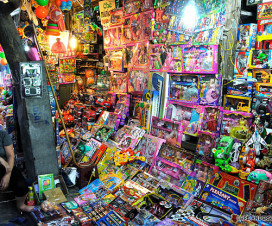
The Old Quarter has many streets dedicated to specific trades. This was the toy street. Others to be found included streets dedicated to shoes, clothing, tombstones, antiques, and scooter repairs.

These tourists opted for a more comfortable whirl around the Old Quarter. Though it is good to be wary as these rides are often overpriced.

(Source: Dtinews)

Royal Citadel recognized as World Heritage

Posted by vietnamtravelblog on August 2, 2010 under Vietnam Culture, Vietnam Travel Info, Vietnam World heritages | Be the First to Comment

UNESCO’s World Heritage Committee on August 1 agreed to recognize Vietnam’s Royal Citadel as a World Heritage.

Relics found in the centre of the citadel

The Citadel in Hanoi was recognised because of its three outstanding characteristics: the length of its cultural history, the continuity of the citadel as a power centre, and the variety of relics it contains.

Relics found in the centre of the citadel show that it was influenced by many different cultures, theories, and systems of thought.

The centre of the citadel embodies the enduring cultural tradition of the people of Vietnam’s Red River Delta, a tradition which has existed for 13 centuries

Restoration of the Royal Citadel began in 2006 when it was officially recognized as a special national relic.

UNESCO’s recognition of the heritage is very significant for Vietnam, which is currently making grand preparations for its capital’s millennial anniversary.

(Source: VOV)

Hat Xoan dossier submitted for UNESCO’s recognition

Posted by vietnamtravelblog on July 14, 2010 under Vietnam Culture | 2 Comments to Read

The dossier for Hat Xoan Phu Tho has been submitted to UNESCO for recognition as an intangible World Cultural Heritage in need of urgent protection as scheduled.

Associate Prof. Le Van Toan, Director of Vietnam National Music Academy told Hanoi Moi Newspaper on April 2 that after more than six months of building, the compilation group has been able to send in the dossier ahead of the deadline on March 31.

As planned, the UNESCO Secretariat will review the dossier, and UNESCO will conduct verifications in October.

Hat Xoan, a kind of folk song of northern Phu Tho Province, is believed to have been created more than 500 years ago. It is not only popular in 18 communes long the Lo River in Phu Tho Province, but it is also sung in midland and northern regions.

Hat Xoan has some similarities with the lullaby. Like Quan Ho, many of the songs are about love, but it is also a kind of folk music that praises a village genie.

There are many forms of Hat Xoan: duet, group singing accompanied by several kinds of dances.

Xoan Festivals are often held in spring in village temples. On the fifth day of the first lunar month, the artists often sing it at the Hung Temple Festival.

Source: VNA

The Sound of Đàn Bầu: Yesterday, Today and Beyond

Posted by mssarah55 on March 25, 2010 under Vietnam Culture, Vietnam Travel Info | Be the First to Comment

Believed to be as old as Vietnams’ early dynastic era, an extraordinary musical instrument exists through time holding with it centuries of beautiful music incorporated into lifelong histories of lives of the Vietnamese people. The Dan Bau is known to create soft, serene sounds, which, every melody produced by it embodies the beauty of the country and its people. One of the only two musical instruments thought to be of pure Vietnamese origin, the Dan Bau is the unequivocal presentation of the country’s unique culture.

Legends talk of a blind woman playing sweet music from the instrument as a means of living while her husband’s at war. That, they say, was the beginning of how the instrument was discovered and the unmistakable emotional appeal of its melody began to be appreciated. Though there’s not much to substantiate such story, one thing’s for sure, the sounds produced by the Dan Bau sends a powerful message of love, longing and beauty that never cease to evoke the hearts and souls of its listeners.

A single-stringed musical instrument, the Dan Bau is simple yet very unique. Đàn, meaning a stringed instrument, and bầu, which means gourd, the device is exactly what is says. In general, it consists of a few components which includes the soundboard serving as its resonator, the spout, gourd, string and a tuning peg. Though originally, the instrument is made of four parts: a bamboo tube, a wooden rod, a coconut shell half, and a silk string. The string runs across the bamboo and secured on one end to the rod, which is perpendicularly attached to the bamboo.

Present day Dan Baus are constructed using wooden soundboards in place of the bamboo. The traditional silk string have also been replaced with an iron string. The instrument’s spout, which is a flexible rod that varies the string’s tension, is made of buffalo horn that is square-framed at the root, while flat and gradually bent at the top. It plays an important role in producing sounds of different pitches beyond fundamental overtones of the instrument. The gourd used to cover the spout where the string is tied, acting as a resonator, still exists though it had been replaced by wood and serves nothing more than a decorative feature. Its tuning peg, which could be made of bamboo or wood, is located at the inside frame towards the bottom of the wooden soundboard. The iron string goes through a small hole at the end of the instrument’s surface towards the tuning peg. A pointed stick made of bamboo or rattan is commonly used as pluck for this instrument.

Most of Dan Baus today now have modern tuning machines to allow adjustments of the string’s base pitch. Usually tuned to the C note, it uses harmonies or overtones. It is played by plucking the strings while touching it lightly with the side of the hand at a point producing a harmony. Though it does not require for one to be highly skilled in order to play the Dan Bau, a great deal of precision is needed to allow rise and fall of pitch along with lengthening and shortening of the notes with the aid of the flexible rod that permits the shifting tension of the string, thus, trills could be played. The technique involves gently tapping the string with the tiny finger of the right hand while the other fingers pluck the string using a long plectrum. With the left hand, the note’s pitch could be lowered by pushing the flexible rod using the index finger, or pulling the rod away with the thumb if a higher pitch is desired.

Used to be played solo or along poetry recitals, the instrument had now taken part in large orchestra to accompany stage operas. Music incorporating Dan Bau with their songs have taken a huge turn beginning the 20th century where players infused electrical pickups and amplifiers with the instrument to make its sound more distinct and audible to larger audiences. Still, solo performances are greatly appreciate and musical pieces exclusively composed for Bau solo, such as Vu Khuc Tay Nguyen (Dance of the Central Highland) by Duc Nhuan, Dong kenh trong (The clear channel) by Hoang Dam and Vi Mien Nam (for the South) by Huy Thuc are widely applauded.

Likened to the monochords of other parts the world, along which are the Tuntina of India, Cung of East Africa, Duxiangin of China, none can compare to the serene, melodious and inspiring tunes that reaches out to the emotions to wherever the wind carries its sound. Every pluck of the Dan Bau’s string is a tale of love and history in itself touching every listener’s heart while stirring their souls. The melody produced by the instrument may be viewed differently by every person as he connects with his own feelings. No matter how re-lived over the periods, and how time changed its visage, Dan Bau is one instrument that translates a great part of Vietnam and a true expression of emotions that will forever transcend time.

Collected by Vietnam Visa

Ceramic Road along the Red River, Vietnam

Posted by mssarah55 on March 18, 2010 under Vietnam Culture, Vietnam Travel Info | 20 Comments to Read

The 2.018 meter-long project with total squares of 6.500m2 is an art construction playing a great meaning to welcome 1000th anniversary of Thang Long-Ha Noi and honor art heritages to patterns of history from the periods of Dong Son to dynasties of Ly, Tran, Le, Nguyen. The 2.018 meter-long project with total squares of 6.500m2 is an art construction playing a great meaning to welcome 1000th anniversary of Thang Long-Ha Noi and honor art heritages to patterns of history from the periods of Dong Son to dynasties of Ly, Tran, Le, Nguyen.
The road runs from Au Co Avenue through Nghi Tam, Yen Phu, Tran Nhat Duat, Tran Quang Khai and Tran Khanh Du roads. As planned, it comprises 21 sections of ceramic pictures with verities of interesting and colourful objects.
Taking part in this project, not only Vietnamese artists, Ceramic Road receives a very enthusiastic response of international artists. All with wishes to contribute a meaningful gift to bring beauty to the community as well to welcome 1000 year-old Hanoi Capital. Apart from the assistance of Michael Geertsen, a Denmark artist, and Dominique de Miscault from France, many other artists from many countries all over the world as UK, United State, Netherlands, Italia, Spain and Finland have registered to join. Ceramic Road is striving to set Guiness Record and become the longest Ceramic Picture in the world.

www.vietnam-visa.com

Sa Huynh, a pristine wonderland

Posted by huongpr2389 on May 18, 2009 under Vietnam Culture | 2 Comments to Read

Sa Huynh is an area dotted with quaint fishing villages and sandy beaches in the central region’s Quang Ngai Province.Located off National Highway 1A, along milestones 983-987 on the coast of Duc Pho District and parallel to the national railway line, Sa Huynh abounds with golden sand.

The color of the sand changes during the day from an earthy brown early in the morning, to a shimmering gold around noon, followed by a pale blue hue on moonlit nights.

Sa Huynh is rich in local seafood and there are several restaurants offering up fresh meals from the sea.

The area is also steeped in ancient culture dating back to 1,000 BC. The Sa Huynh people are thought to be predecessors of the Cham, the founders of the Champa Kingdom.

Along with the Dong Son Culture in the north and the Oc Eo Culture in the Mekong Delta, Sa Huynh is considered one of the most famous ancient Vietnamese cultures of the Iron Age era.

Along the beach, stretching around 6km, and near the Sa Huynh Tourist Resort is an abundance of scenic highlights.

Visitors can rent motorbikes and travel around Ma Vuong Mound to see historic archeological sites.

In the culture of the ancient Sa Huynh people, the dead were cremated and buried in jars. In the early 20th century, French archeologists excavated these ‘tomb jars’ and found many were also buried with stone adornments and tools.

At Sa Huynh Hotel, about one kilometer south of the Sa Huynh Railway Station, visitors can enjoy the view of the vast blue sea, rest in the shade of green casuarinas, feel the cool breeze on their skin, swim in the sea by a sloping beach, and enjoy food specialties such as boiled crabs with salt and chili, rice porridge with sea urchins, and sour soup with groupers.

When visiting Sa Huynh, be sure to purchase a few kilos of nep ngu (a type of glutinous rice once offered to kings) and fermented urchin paste, which is only available in the summer.