Posted by admin on March 31, 2011 under Food and Drinks, Vietnam Culture, Vietnam Travel Stories |
|
|
|
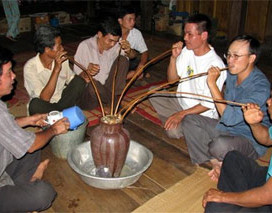
Visitors enjoy cần wine at a Muong residence
|
The northern mountainous region of Vietnam has garnered praise aplenty for its sometimes rugged, and sometimes lush natural beauty. Among the other attractions it has is a none-too-closely guarded secret – homemade wines – for it is in the hospitable nature of the region’s residents to welcome visitors to imbibe the best spirits in the house. This week, we present a sampling of some of the flavors from the slopes.
Dien Bien’s chít wine
Visitors to Dien Bien Province will have the chance to try one of the most famous wines in the northwestern region, chít wine. The wine is made from a type of milk-white chít worm (taken from chít trees growing on the region’s limestone mountains) and pure distilled rice wine. The brew is believed to promote good health, beautiful skin for women and increased sexual potency for men.
According to locals, the chít worm season normally lasts from April to July, when the worms eat the tree stems and grow up to 5 centimeters long.
These worms are put together with other restoratives such as medlar seeds, ashweed, dried jujube and lotus seeds in pure distilled rice liquor with an alcoholic concentration of 40 to 45 percent. The brewing process often takes about one year.
Chít wine is a gold-colored liquid which has a cool and a slightly bitter taste. It is usually served along with local delicacies like chicken baked in a clay pot, fried frogs, hotpot and thắng cố, a type of soup made with the viscera of horse, cow or buffalo.
Hoa Binh’s cần wine
Drinking rượu cần or cần wine (wine drunk out of a jar with pipes) is very popular among many minority groups in Vietnam, from the northern region down to the Central Highlands. However, the Muong people in Hoa Binh Province are said to produce one of the best cần wines in the country.
A jar of tasty cần wine is meticulously prepared. The necessary ingredients, including yeast and glutinous rice, are carefully prepared. Yeast is made from cinnamon leaves mixed with rice powder. Glutinous rice is soaked and then mixed with rice and bran. The rice is then steamed, cooled down and mixed with yeast powder before being placed in ceramic jars and covered carefully. After three or four days, the covers of the jars are partially opened and water poured up to its neck. Long bamboo straws are plugged into jars’ mouth and the enjoyment begins.
Cần wine is usually drunk in groups. To welcome guests, a Muong family will stretch out a mat in the middle of the room, place a jar of wine on it and invite guests to sit around it. After exchanging greetings, the host invites everyone to drink the wine. It is not unusual that this drinking session is accompanied by singing and dancing, not to mention boisterous conversation.
Lao Cai’s Sán Lùng wine
Sán Lùng is a commune of Bat Xat District in the northern mountainous province of Lao Cai. And its name is now synonymous with one of the best wines the people here are producing. Unlike other peoples in Vietnam who make wine from mature rice, the Mong people in Sán Lùng soak paddy in warm water until it sprouts then use the sprouts to make the special wine. The sprouts are steamed, cooled and mixed with yeast. The mixture is put in a jar for five to six days until it starts exuding a sweet smell.
Sán Lùng wine has a special taste that cannot be produced in other places. People attribute this taste to the water source here. The wine looks clear and somewhat green, and has a sweet smell and nutty taste. Locals will tell you that it goes best with baked buffalo or baked fish.
Reported by Mai Linh – Thanhnien News
Collected by Vietnam hotel
Posted by admin on March 30, 2011 under Vietnam Beaches, Vietnam Destinations, Vietnam attractions, Vietnam hotels |
|
Sometimes all you need is the right setting of sun, sea and sand for love to simply blossom.
|
Boutique hotel collection Mr & Mrs Smith (www.mrandmrssmith.com) help you to find the romantic beach retreats to get you in the mood for passion.
1. Six Senses Ninh Van Bay, Nha Trang, Vietnam
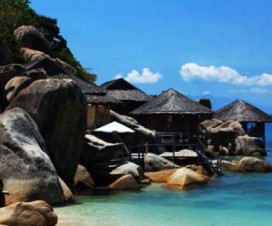
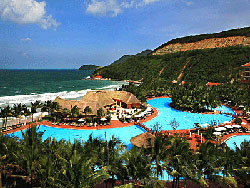
Set on a private peninsula that’s just a sexy speedboat ride from coastal town Nha Trang in south-central Vietnam, romantic boutique hotel Six Senses Ninh Van Bay offers luxury for lovers. Its 58 dreamy villas all feature seductive beds and bath tubs open to the outdoors, with private pools for cooling dips (choose between beach, spa or waterside settings). You can also dine alfresco by the bay, the pool or up on the rocks for serene sea views – or book a table for two in the atmospherically lit Wine Cave, perfect for popping the question. After quality pampering at the Six Senses Spa, make a date with a sunlounger on the secluded beach. REUTERS/Handout

2. Cap d’Antibes Beach Hotel, Côte d’Azur, France
With design as glittering as the surrounding sea, chic Côte d’Azur retreat Cap d’Antibes Beach Hotel in the south of France is all about Gallic glamour. Once a beachside club for the jet-set, including film stars Sofia Loren and Cary Grant, this heavenly hotel has its own beach for sandy sojourns. With just 27 rooms, it’s intimate, too; Deluxe Room 208 has dazzling views, but Room 201 has a fabulous fish mural. Even the restaurant is named Les Pecheurs (The Fishermen) after the maritime setting. Dine here for gastronomic gravitas, or casual beachside Le Cap serves up pasta, fish and local dishes by the waves. Bring this season’s swimwear for poolside posing.

3. Lizard Island, Great Barrier Reef, Australia
For a romantic hotel on the Great Barrier Reef, look no further than Australian boutique retreat Lizard Island, a short flight from Cairns off the Far North Queensland coast. With just 40 secluded rooms and 24 ivory-white beaches to choose from, you’re likely to have a seductive cove of sand all to yourself for that picnic by the waves. Swim off the beach, take a kayak or boat out, or go snorkeling or diving at famous Cod Hole on the outer reef with turtles and rays for company. Back at base camp, enjoy a hot-stone massage at Azure Spa, then dine on fresh fish and seafood at airy Osprey’s restaurant. This idyllic island has honeymoon written all over it. REUTERS/Handout

4. The Datai, Langkawi, Malaysia
Set on beach-blessed Langkawi Island, a back-to-nature getaway off Malaysia’s northwest coast, the Datai occupies a dramatic perch between pure white-sand beaches and verdant rainforest. Famed for its opulence, this beachfront luxury hotel attracts the great and the glam, with 112 wood-crafted rooms, including standalone villas in jungle pockets. The striking main pool boasts beach views, and is for adults only, so you can relax in peace. Alternatively, take a couple’s cooking class, enjoy a spa or yoga session, or go on a guided nature walk (look out for monkeys and eagles). With delicious Malaysian and Thai dishes up for grabs, as well as a beach club restaurant, dining is an affair in itself. REUTERS/Handout

5. Masseria Torre Coccaro, Puglia, Italy
A fortified farmhouse set amid sea-scented olive groves, Masseria Torre Coccaro boutique hotel in Puglia offers refined romance on Italy’s Adriatic shores. Located between Brindisi and Bari on the country’s south-east coast, its 37 stone-walled rooms are exquisitely decorated with linen bedding, silky sofas, baroque mirrors and antique furniture. Chill out in a poolside hammock, warm up in the Turkish baths or treat yourself in the Aveda spa. For nautical romance, commandeer Masseria’s private 14-meter yacht, then relax at the beach club restaurant. The hotel also runs a horse riding center, if you fancy a trot along the sand. REUTERS/Handout

6. Zeavola, Ko Phi Phi, Thailand
One of the only boutique hotels on the intimate twin islands of Koh Phi Phi, Zeavola resort is a sandy seaside hamlet of traditional Thai huts blending relaxed rusticity with mod-con indulgence. An affordable spot to savour beautiful shores, it offers 52 freestanding villas (beachfront ones are the most romantic – plump for number 51, nearest the sea). Inside, net-draped beds, teak surfaces and Thai furniture keep things simple. When you’ve overdosed on swimming and sunbathing, learn to dive at the PADI center or take a speedboat trip around the islands, then settle in at Tecada beach bar and restaurant for some serious sunset-scoping. REUTERS/Handout

7. Martinhal Beach Resort & Hotel, Sagres, Portugal
Set at Sagres on the wild south-west coast of Portugal’s Algarve, Martinhal Beach Resort & Hotel is beloved by beachcombers, with an inviting stretch of sand and a national park for neighbors. Natural materials rule in the 38 rooms, from cork to timber, wicker and stone, ensuring ocean views remain the star of the show. The Beach Rooms are the most private, with sea vistas from airy balconies. Floor-to-ceiling windows bring the outdoors in at O Terraço restaurant, too, where sea urchin roe with scrambled egg is a must. Distractions include tennis courts, a sports club, pools, watersports, a spa, sauna and steam rooms, but strolling along the seductive beaches at Sagres’ fishing port takes some beating. REUTERS/Handout

8. Cocoa Island, Maldives, Indian Ocean
To rev up the romance, escape to serene sanctuary Cocoa Island, a cluster of 33 suites and villas set over the Indian Ocean in the Maldives. A hit with honeymooning couples and lovers of pristine diving, it’s the stuff of faraway island fantasies. All rooms are individual at-sea dwellings sited off a snaking wooden pier, with private sun-decks, walk-in showers, roll-top baths and vintage-style ceiling fans. Resembling Keralan boathouses, they promise over-water views, soothing white interiors and teak flooring for laid-back romance. Scuba diving and snorkeling on the reef are mind-blowing, or just explore the holistic Como Shambhala Spa. Cocktails at poolside bar Faru beckon for re-intoxicating after. REUTERS/Handout

9. Shore Club Miami, Miami, United States
Miami meets Marrakech at Shore Club Miami, a stylish 309-room retreat in the heart of South Beach. This art deco hotel is a hedonistic playground for grown-ups by day or night, with a sexy retro lobby, sprawling lawns, the slinky Skybar and a branch of acclaimed Japanese restaurant Nobu. The party people may flock here, but it’s a romantic spot, too. Bag a sleek white room with a balcony sea view, loaded with hi-tech treats, then head down to the steamy hot tub and two elevated infinity-edge pools, fringed by decadent cushion-strewn day-beds. Luxurious, tropical and right by the beach. You’ve so arrived…REUTERS/Handout

10. Alila Villas Soori, Bali, Indonesia
Strung along Bali’s south-west coast between black-sand beaches and jade-green rice paddies, just-remote-enough Indonesian retreat Alila Villas Soori is seriously seductive. All 48 of its pool villas are sublime, minimal havens with ocean views, but book a second-storey Ocean Pool Villa for a blue bonus: a sea-view bath tub. After lazing by the beach or 25-meter infinity pool, enjoy a slumber-inducing Balinese massage at Spa Alila. Surfing, horse-riding and cycling are all on offer, or ask the Leisure Concierge to hook you up with bespoke visits to local food markets, artisans or romantic temples. Just steps off Kelating Beach, the resort’s casual restaurant Coast grills fresh seafood over charcoal or clink glasses at more formal restaurant Cotta. REUTERS/Handout
Source: Reuters
|
Posted by admin on under Vietnam Beaches, Vietnam Destinations, Vietnam Travel Info, Vietnam beauty |
A certificate honouring Xuan Dai Bay as a National Landscape Site was presented to the Phu Yen provincial Department of Culture, Sports and Tourism on March 28.
The bay was officially recognised as a national landscape treasure, according to a Decision approved by the Minister of Culture, Sports and Tourism on January 20, 2011.
Xuan Dai Bay, with a water surface area of about 13,000 hectares, is located between Song Cau town and Tuy An district in Phu Yen province. The bay is encircled by mountains which shape delightful, unique pools. The bank surrounding the bay is about 50 kilometres long and overlooks beautiful natural scenery with an endless white sandy beach.
The acknowledgement of the bay as a national landscape treasure will help promote the site’s tourism potential and create favourable conditions to exploit and develop different kinds of tourism in the locality.
The bay will be submitted for consideration as a member of the World’s Most Beautiful Bays Club.
Posted by admin on March 29, 2011 under Vietnam Festivals, Vietnam Travel Info |
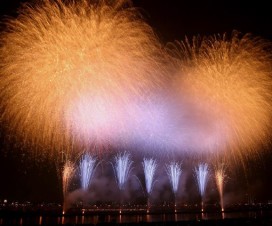
Five teams from the UK, South Korea, Italy, China and Vietnam will participate in the International Firework Festival in the central city of Da Nang on April 29-30.

Some travel firms said that their tours to Da Nang during this time are nearly fully booked.
Song Da Tour offers Hanoi-Hue-Da Nang-Hoi An tour in four days, starting on April 29, at the price of VND6.8 million/person. Tourists will visit almost all heritage sites in the central region, spend time at My Khe beach and see fireworks in Da Nang.
Redtour said that its tours to Danang on April 30 were fully booked. Tours on April 28 left only seven seats. This company offers Da Nang-Ba Na-Hoi an – Lang co in four days during this time, starting on April 28 and 30, pricing VND6.5 million/person.
Redtour’s manager Nguyen Cong Hoan said that visitors will watch fireworks from the roof of their hotel in Danang.
Hotels in Danang are busy preparing to welcome tourists during the firework festival. Furama Resort Danang said that most of its rooms were booked in late April. The resort will offer a tour package to see firework shows, pricing VND1.5 million/person, with ticket, dinner, bus, tour guide.
Vietnam Airlines and Jetstar Pacific also said that tickets to Da Nang in late April are nearly sold out.
According to the Da Nang Department of Culture, Sports and Tourism, there are 25,000-30,000 seats for visitors at the firework festival on April 29-30. Tickets will be delivered through travel agents.
For the first time, Da Nang authorities allow tourist boats to serve tourists at the firework festival but they are not allowed to sell ticket over VND200,000/person.
Source: Vietnamnet
Posted by admin on under Vietnam Beaches, Vietnam Travel Info |
Co-ordinated efforts by the Government, local and tourism authorities, and the travel industry are needed to develop a strong brand for Vietnamese coastal tourism, experts have said.
“A development strategy for developing a brand should be drafted and supported by the Government and tourism associations,” Dr Nguyen Van Luu, deputy head of the Ministry of Culture, Sports and Tourism’s Training Department, told a seminar in Mui Ne last week.
The seminar, on developing coastal tourism, was held under the aegis of the four-day International Sailing festival in Binh Thuan Province which closed on 20th March.
Tourism authorities and companies should focus on the country’s typical and most attractive features – like safety, friendliness, and hospitality – to create the brand, Luu said.
To strengthen that brand, good tourism products should be created.
Dr Nguyen Anh Tuan of the Viet Nam National Administration of Tourism, in a presentation that was distributed to delegates, said Viet Nam remained relatively undiscovered by global tourists, which is a strong point.
“It has advantages like picturesque bays, long and beautiful beaches, and unexplored islands and caves,” he said.
He suggested five sub-brands based on an area’s attractions: Sea-landscape for Halong Bay, relaxation and cultural heritage (Hue, Hoi an, My Son), long stay and relaxation by the sea in the central region, sea sports in Nha Trang and Mui Ne, and sea-island exploration in Phu Quoc and Con Dao.
In doing so, localities should focus on competitive tourism products and invest in key projects like high-end resorts while preserving natural landscapes, several participants said.
It was necessary to develop wharves for tourist boats and sea routes to meet tourists’ needs.
Dr Vo Sang Xuan Lan, head of Van Lang University’s tourism faculty, also in a presentation that was distributed, said the sea tourism brand should factor in destinations, service providers and culture, including folk culture, the habits, customs and nature of people.
He cited the example of Hoi An, which has become a popular tourist destination due to the preservation of the ancient town and its people, who are fully aware of their role in welcoming visitors and conserving the environment and their heritage.
Ngo Minh Chinh, director of Binh Thuan’s Department of Culture, Sports and Tourism, suggested that major events like yacht races and surfing and beauty contests should be organised to promote coastal and island tourism.
Viet Nam as a destination for tourism, especially coastal tourism, is still not very popular, figures from the ASEAN Travel Forum 2010 show. Last year Malaysia attracted more than 18 million international visitors, Thailand received almost 16 million, Singapore was third with 10.5 million, and Indonesia welcomed 7 million.
Viet Nam ranked fifth with more than 5 million arrivals above the Philippines, Cambodia, Laos, Myanmar and Brunei, the remaining ASEAN members.
Viet Nam has a coastline of more than 3,200km and thousands of islands. It has famous bays like world heritage Ha Long, Lang Co beach and Nha Trang.
Non Nuoc beach in Danang and Bai Dai in Phu Quoc Island are among the world’s most beautiful beaches.
The country also has spectacular caves, including Phong Nha and Son Mong (newly discovered) in the Phong Nha-Ke Bang National Park.
VietNamNet/Viet Nam News
Tags: beach in vietnam, Con Dao, halong bay, hoi an, Lang co beach, my son, Nha Trang, non nuoc beach, Phu Quoc Island, Vietnam beach, Vietnam Beaches
Posted by admin on March 28, 2011 under Food and Drinks, Vietnam Travel Tips |
With its rich culinary heritage and an exciting street food scene, Hanoi is a wonderful city for many delicious dishes.
They say that the way to man’s heart is through his stomach; cook him a good meal and he’s putty in your hands. I’d argue that somewhat similarly, residents of Hanoi are happiest at mealtimes, and many visitors fall in love with the city because of its incredible food. It’s a place that gets to you through the stomach!
For foreign guests and residents, if you want to understand Hanoi and its people, I’d argue that you have to understand the cuisine and enjoy discovering new foods. If you love food, you will love Hanoi; understand how people eat, and you’ll understand their nature.
Vietnamese people love to share a meal. Solitude is equated to loneliness. Anyone dining alone will be told “an mot minh dau tuc”, literally, you’ll hurt yourself by eating alone. But for the solo diners amongst you, fear not, you can always slip into the busiest restaurant and enjoy the buzz of jostling with your fellow diners over a bowl of pho or a plate of sticky rice. You’re alone, yes, but alone in a crowd.
The first rule for discovering Vietnamese food in Hanoi, is make sure you follow the crowds; the busier the restaurant, the better it probably is. Certain family run establishments are considered the place to eat certain foods. At peak hours, it should be hard to find a space at Hanoi’s best restaurants.
The second rule is that the best restaurants serve one basic staple – it’s often a one-dish-joint serving a ‘gia truyen’-specialty, a recipe passed on from one generation to the next.
Many of these dishes were originally created elsewhere. As a thousand-year old capital, people from the provinces have always been drawn to Hanoi, so the city has absorbed recipes and cooking techniques from all over the country.
One can loosely define Hanoian cuisine – generally the capital’s residents don’t care for sweet or spicy savoury food; there is a preference for fresh ingredients and subtle, pure flavours, and the fish sauce is served less diluted.

Certain dishes are year-round staples, such as pho (the nation’s signature noodle dish served with chicken or beef), bun cha (noodles served with slivers and patties of charcoal-grilled pork) or banh cuon (rice crepes filled with pork and woodear mushrooms). Other dishes are seasonal, perhaps, tied in with a festival, for example, banh chung (glutinous rice cakes stuffed with mung bean paste and pork and wrapped in a green banana leaf) is mostly served at Lunar New Year. During Mid-Autumn Festival (Tet Trung Thu), you will see mooncakes, sweet and savoury cakes filled with various things, including bean paste, salted egg, or preserved fruits and meats.
Other foods are associated with the lunar calendar. Eating dog meat – served in seven different ways at dog restaurants – at the end of the lunar month is considered a good way to wash away any lingering bad luck that might have been affecting you. The dog restaurants on Au Co road are often heaving with customers, mostly men, as this protein-rich meat is also considered to be “good for a man”.
On the full moon of the first and the seventh lunar months, Hanoians often cook xoi vo (steamed sticky rice with split peas) and che duong (green bean and sugar compote). When worshipping ancestors, boiled chicken with lemon leaves is a must. For a wedding, you cannot be without banh com (Sticky rice cakes with green bean paste) or xu xe/ phu the (Husband and wife sticky rice cakes).
Hanoi people love seafood, too. The city’s favourite fish dish is probably cha ca, which is famously served by a gruff family at Cha ca La Vong restaurant on Cha ca street in the Old Quarter. It is featured in every guidebook ever written about Hanoi. However, cha ca is now available in other restaurants and locals in the know complain that the quality of food at Cha ca La Vong has waned.
Bun oc (noodles and snails), banh tom (prawn fritters), ca kho to (caramelised fish cooked and served in a claypot), and mien luon or mien cua (glass noodles served with eel or crab meat) are also much loved in Hanoi. You can find seafood restaurants serving all kinds of shellfish – crabs, lobsters, oysters, clams and scallops, which are often simply steamed or grilled and served with a mixture of lime, pepper, salt and an optional diced chili for dipping.
New dishes are constantly surfacing, too. In recent years pho cuon, sheets of banh pho, wrapped around either beef or shrimp, has suddenly emerged as one of the city’s most popular meals. However, the ultimate communal dish is perhaps lau (hotpot), always popular in wintertime. Friends and families gather around a steaming pot filled with a vegetable or meaty broth and toss in fish, meat, eggs, vegetables, squid, or prawns – just about anything at all!
It’s hard to write about food in Hanoi without feeling like you’re only scratching the surface. As the city celebrates 1,000 years since its birth, you could probably name a 1,000 dishes to honour the capital’s millennium.
The city’s culinary heritage has been noticeably influenced by a few old foes over the years. Some people argue that pho is the product of both French and Chinese influences. From the former came the notion of using beef stock and beef in the style of pot-au-feu; from the latter perhaps the noodles and the use of star anise and ginger. Using beef would have been quite extravagant 100 years ago, so one theory is that the Vietnamese only started putting beef in their noodle soup to please the French colonists.
The French certainly left their fingerprints in the Vietnamese pantry and beverage department – you can find banh my (crusty baguette) served with pâté. The words for butter (bo, pronounced ‘buh’), coffee (ca phe), beer (bia) and cheese (pho mat) are clearly derived from the French language.
Today, many French chefs are inspired by Vietnam’s indigenous ingredients and recipes. Restaurants such as La Badiane, Green Tangerine and La Verticale are creating a vibrant amalgam of French haute cuisine infused with local flavours and ingredients. These restaurants are something of a sub-genre but they are also encouraging some high-end travelers to venture further and discover more about Vietnam’s culinary arts.
As Vietnam’s reputation grows, more and more people are discovering the country’s incredible cuisine, much of which is exceedingly healthy. Visitors to Hanoi are enthusiastically signing up for cookery classes, in the hope of learning how to create a local dish or two. Rather than buying a conical hat or a silk ao dai as a souvenir that will be stashed away and never worn back home, tourists can now pick up some noodles and fish sauce in the local Asian market and whip up a delicious bowl of bun cha, they learned to make on their holiday.
That way they’ll remember Hanoi as they first experienced it – right in the stomach.
Timeout/VOVNews
Posted by admin on under Vietnam Beaches, Vietnam Destinations, Vietnam attractions, Vietnam beauty |
The beaches and attractive landscapes of Cu Lao Cham in Quang Nam Province are a draw for travellers.
The island in Tan Diep Commune in Hoi An has been recognised by UNESCO as World’s Biosphere Reserve. It boasts several relics from diverse and ancient cultures, such as Sa Huynh, Cham Pa and Dai Viet. More information about hoi an hotels, please visit this link http://Vietnamhotels.net.
Arriving in Cu Lao Cham in the early morning is a rare delight, giving the visitor a chance to see the dawn’s glow from serene beaches.
Blue, clear and isolated coastline, such as Ong and Huong, are ideal destinations for holidays. The sea takes on a special sparkle at sunrise and sunset.
Visitors’ first impressions may be the warm smile and hospitality of the locals.
This is a fishing town, and fresh fish can be found in the area markets.
In addition, this is one of the few areas in Vietnam where Cham people can still be found.
Hai Tang Pagoda, built more than 400 years ago, adds to the town’s rare atmosphere. Burning a few sticks of incense and walking around the town may renew your senses and give you a bit of respite from the noise and fury of every day life.
At night, the silence of Cu Lao Cham is quite noticeable, compared to the busy streets of big cities. The only sounds are made by the waves crashing into the shore.


Peaceful beaches

An ancient well


Holy pagoda

An intimate sunrise
Posted by admin on under Vietnam Travel Info, Visa to Vietnam |
China and its neighbor Vietnam are considering building a visa-free tourism zone on the border of the two countries, tourism authorities said Wednesday.
The visa-free zone will include Dongxing City in southwest China’s Guangxi Zhuang Autonomous Region and Mong Cai City in northern Vietnam, said Yu Xiaojun, deputy chief of the Guangxi’s tourism bureau.
Tourists, and their vehicles, from China and Vietnam will not be required to have a visa or permit to enter the zone, he said.
The two cities have already worked out a blueprint, currently awaiting both countries’ approval, Yu said, without giving a time frame.
Once given the go ahead, the project will take five to ten years to take shape, said Zhu Shengyong, Party chief of Dongxing City.
On Monday, Dongxing City completed the construction of the largest marketplace on the China-Vietnam border, which is located on the east bank of the Peilum River, facing Mong Cai.
The 51-hectare market, costing 2 billion yuan (305 million U.S. dollars), includes border trade wharfs, import and export facilities and various commodity markets.
In 2010, China and the Association of Southeast Asian Nations (ASEAN) established the China-ASEAN Free Trade Area, which eliminates tariffs on 90 percent of products traded between China and ASEAN member countries.
Any further information about Vietnam visa online, please visit the website http://www.Vietnam-Visa.com/
Source: Xinhua
Posted by admin on March 25, 2011 under Vietnam Travel Info, Vietnam hotels |
By Hoang Vy in HCMC
Vinpearl Land Nha Trang has improved its games and services recently as part of an expansion project.
A private smoking area, a system of waiting rooms, budget food booths and free lockers are some of the new services.
Vinpearl would also expand its Amusement Park to four hectares with new indoor and outdoor games imported from Germany, Italy and Japan, more rare sea creatures at the Underwater World and entertainment programs at the Musical Fountain Stage.
New regulations will apply, prohibiting bringing outside food and beverages into the park and no smoking from March 29. The expansion project is expected to finish by 2011 to serve around 5 million visitors a year.
Since its debut in August 2006, Vinpearl Land has attracted more than 4 million guests. In 2010 it organized two prestigious beauty pageants, Miss Vietnam World 2010 and Miss Earth 2010 and welcomed nearly 1 million visitors.
Posted by admin on under Vietnam Travel Info, Vietnam World heritages |

Thien Duong cave
Thien Duong Cave in the Phong Nha Ke Bang National Park, a UNESCO-recognised world natural heritage site in the central province of Quang Binh, has become a favourite destination of domestic and foreign tourists.
After visiting the cave, many people recognised its irresistible magic, saying that this is really the most beautiful wonder of the Creator on earth.
Thien Duong was labelled the world’s most beautiful and magnificent cave when it was discovered by scientists from the British Cave Research Association in 2005.
Located in the middle of the Phong Nha-Ke Bang National Park, about 4 km west of the Ho Chi Minh Road, the cave, which is believed to be formed hundreds of millions of years ago, is surrounded by underground streams and rocky mountains.
Thien Duong Cave is 30-100 metres wide, with the widest point measuring 150 metres. With a length of over 36 km, it is considered the longest dry cave in Asia.
After crossing an old forest, visitors see the entrance to the cave shaded by century-old trees and are then dazzled by the mysterious beauty of stalactite pillars, each dozens of metres in diameter, and grandiose rock arches, which are works made by the enchantment and sudden inspiration of the Creator over the past millions of years.
The Truong Thinh Group, the operator of Thien Duong Cave, has invested VND tens of billions in a tourist project that aims to “draw visitors from all over the world”.
Quang Binh provincial Department of Culture, Sports and Tourism said that since the beginning of this year, Thien Duong Cave has attracted more than 10,000 domestic and international visitors.