Posted by vietnamtravelblog on October 8, 2010 under Vietnam Travel Info, Vietnam tours |
VietNamNet Bridge – Hanoi’s tourism companies have launched many tours to discover Hanoi’s culture on the occasion of the capital city’s 1000th anniversary.
The Dong Xuan JS Company introduces five tours to the Old Quarter on tramcars. Tourists will discover relics inside craft houses and artisans, learn about the spiritual culture of Hanoians at Buddhist temples, sample the famous cuisine of Hanoi and shop at Dong Xuan market.
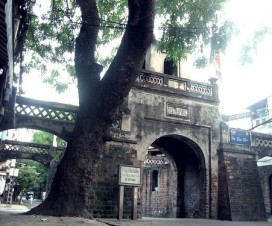
The most special tour among these is a tour through 19 old streets. Tourists are allowed to choose three sites from the below list to stop over for 30 minutes each: 48 Hang Ngang, Dong Xuan market, Huyen Thuyen pagoda, Bach Ma temple, O Quan Chuong gate, old house at 87 Ma May, the Great Church, King Le Thai To statue, King Ly Cong Uan statue and Ngoc Son temple.
Vietran Tour offers “Hunting Ly Dynasty’s Secrets” which allows tourists to discover the history of Thang Long-Hanoi and a special tour to some martial arts clubs in Hanoi. Tourists will watch a Binh Dinh Gia martial arts show at the Tram pagoda, Vo Dang Thai Cuc Chinh Tong martial arts at Phap Van pagoda and Shaolin martial arts at Bao Long club.
“1000-year journey of Thang Long – Dong Do – Hanoi” is a collection of tours designed by Vietravel, including four tours: Hanoi – Ha Long – Trang An – old capital Hoa Lu (4 days); Hanoi – Yen Tu – Ha Long – Ninh Binh (4 days); Hanoi – Phu Tho – Ninh Binh – Ha Long (6 days), Hanoi – Yen Tu – Ha Long – Sapa (6 days).
Joining these tours, tourists will visit historical and cultural relics in these provinces and cities and participate in activities to celebrate Hanoi’s 1000th anniversary.
PV
Posted by vietnamtravelblog on October 6, 2010 under Vietnam Culture, Vietnam Destinations, Vietnam Festivals, Vietnam attractions |
VietNamNet Bridge – Thousands of visitors attended the opening day of the International Tourism Festival in the Bao Son Paradise Theme Park on Saturday.
 |
| Visitors at the photography exhibition – “Ha Noi 1,000 Years Old” – at the Temple of Literature view some of the 1,000 photos on display. |
The festival features a wide range of cultural and tourism information about countries on five continents. International tourism companies and industry representatives from many countries have come to the festival to display their destinations and services such as Laos, Cambodia, Thailand, China, Bangladesh, Brazil, Egypt and Japan.
Vietnamese tourism businesses are taking this opportunity to present their tourism services at more than 90 booths, while Ha Noi agents are introducing the city’s potential at 180 separate booths.
Hout Sinuon, deputy director of the Cambodian Statistics and Tourism Information Department, said many festival attendees had already visited his booth.
“We are here to promote our culture and tourist attractions,” he said. “We think we will successfully lure tourists to Cambodia.”
An international workshop today will focus on practical benefits of co-operation opportunities, experience exchange, tourism development and joint-venture tourist projects.
The Bao Son Paradise Theme Park is the biggest entertainment and tourism complex in the city. Opened to the public last year, the park was developed to quench the local population’s thirst for entertainment and relaxation.
The 20ha entertainment and tourism complex consists of four main areas: traditional craft villages of Viet Nam, a replica of Ha Noi’s old quarter, an eco-tourism area and a culinary section offering cuisine from all corners of Viet Nam.
Many cultural and art activities are being organised throughout the park during the four-day festival.
A stage has been set up at the park’s gate to feature international music and a carnival. Visitors can also enjoy listening to traditional Vietnamese music such as cheo (traditional opera), folk singing from the central region, chau van (spiritual music), quan ho (love duets) and ca tru (ceremonial singing) at the village hall in the traditional craft village area. Two puppetry performances will be held every day during the festival.
Visitors will have the chance to join folk games such as walking on stilts, bamboo swinging, human chess and throwing a ball through a ring at the ethnic village’s replica of a Thai stilt house.
The park’s old quarter area brings back Ha Noi’s past life through calligraphy demonstrations, xam (blind blusker) singing, to he (toy figurines) making and street vendors.
“We’re trying to offer as many traditional Vietnamese art performances as possible,” says Nguyen Truong Son, director of Bao Son Group, owner of the park. “The performances will change everyday during the four day exhibition so visitors will be able to enjoy something different each day.”
 |
| Check it out: Visitors are introduced to speciality and tourism services at a Lao booth. (Photos: VNS) |
“With the theme Thang Long-Ha Noi, Convergence of 1,000 Years, this will be the biggest event held to celebrate the 1,000th anniversary of the capital, and the 50th anniversary of the Ha Noi Department of Culture, Sports and Tourism’s tourism industry,” said Mai Tien Dung, deputy director of the department.
“The International Tourism Festival is a key National Tourism Year activity and aims to introduce and honour the cultural and historical values of the capital. This event will also help promote Viet Nam’s tourism products and services in the international market,” he said.
The park and Thang Long Road, where the park is located, were built to mark the city’s millennium.
The opening ceremony for the Cong Nhan (Workers) Theatre was another cultural highlight that took place on Saturday in the capital.
Chairwoman of the city’s People Council, Ngo Thi Doan Thanh, and vice chairman of the People’s Committee Phi Thai Binh attended the ceremony.
Located at 42 Trang Tien Street, the theatre was first built in 1917 and was used as a cinema. After the liberation of the city from the French in 1954, the name of the theatre was changed to its current name.
The theatre’s renovation began in October 2007. The three-storey theatre, which includes a 500-seat auditorium and a well-equipped stage, is now ready to host a variety of different events.
The theatre’s opening is helping celebrate the city’s grand anniversary.
On the same day, a collection of 94 valuable books about Thang Long-Ha Noi were unveiled at the National Library in the capital.
A display showcasing documents about the capital city is also open to the public at the library.
Nguyen Dang Duc Bao’s win in the men’s 8,750m event at the Ha Noi Moi newspaper’s Run for Peace around Hoan Kiem Lake helped his Khanh Hoa team secure the team title yesterday in Ha Noi.
Bao, who has been the runner to beat during the past several years, stole the triumph from Nguyen Van Lai from the Military team in the last hundreds metres.
Lai failed to defend his title and finished second, followed by Bui The Anh from the Border Guard team.
The Border Guard surpassed the Military to take second place in the team event.
On the women’s side, Thanh Hoa sprinter Nguyen Thi Phuong won the gold medal in the 5,250m event. Nguyen Dang Thanh Thuy, who is Bao’s younger sister, came in second while Nguyen Thi Huong from Thai Binh finished third.
Phuong’s top place failed to help her Thanh Hoa team finish in the top three. The team title went to Khanh Hoa, with Thai Binh taking second and Quang Ninh finishing third.
Khanh Hoa easily won the overall title at the event.
Apart from the events for professionals, the running contest also had categories for amateurs.
The annual event marks the 56th anniversary of Ha Noi’s liberation (October 10) and the 1,000th anniversary of the founding of the capital.
VietNamNet/Viet Nam News
Tags: 1000th Thăng Long–Hà Nội anniversary, 1000th year thang long-hanoi anniversary, Bao son paradise, Bao Son Paradise Theme Park, Hanoi festival October 2010, hanoi travel guide, hanoi travel news, International Tourism Festival, quan ho, Thang Long - Hanoi, Thang Long-Ha Noi, Thang Long-Hanoi’s 1000th anniversary
Posted by vietnamtravelblog on under Vietnam Festivals, Vietnam Travel Info |


By Kim Tan | dtinews.vn |
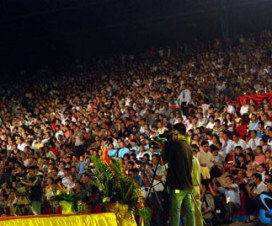
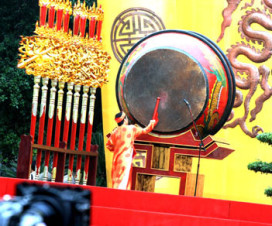
The 10 day celebration for Hanoi’s 1,000 year anniversary kicked off this morning, October 1, putting the city and its visitors in a festive mood with a wide range of activities.

Awakening Hanoi’s ancient heart beat with the opening of festivities
Top Vietnamese leaders and many distinguished international guests attended the opening ceremony on the side of Hoan Kiem Lake in the city’s centre.
National Assembly Chairman Nguyen Phu Trong lit the torch as a symbolic curtain-raising for the celebration.
In his opening speech, Pham Quang Nghi, Secretary of the Hanoi Party Committee, expressed Vietnam’s gratitude towards their forefathers who made great sacrifices to protect and build a beautiful and culturally rich Hanoi.
UNESCO General Director Irina Bokova handed over a certificate recognising Hanoi’s Thang Long Citadel as a World Cultural Heritage Site to Hanoi’s leaders.
Bokova said she is honoured to be wearing the Vietnamese traditional dress, the ao dai, to attend the millennium anniversary.
After the opening ceremony, many festival activities were immediately started in many areas and stages around Hoan Kiem Lake.
In the next 10 days, over 50 events will be organised in many places around Hanoi.

UNESCO General Director Irina Bokova handed over a certificate recognising Hanoi’s Thang Long Citadel as a World Cultural Heritage Site to Hanoi’s leaders.


Shows were put on to kick off the 10 day celebration
Tags: 1000 years of Thang Long- Hanoi, 1000th Thăng Long–Hà Nội anniversary, 1000th year thang long- hanoi celebration, 1000th year thang long-hanoi anniversary, event in hanoi, hanoi festival, hanoi travel guide, hanoi travel news, Hanoi's Thang Long Citadel, Hoan Kiem Lake, October 2010, Thang Long-Hanoi’s 1000th anniversary
Posted by vietnamtravelblog on October 4, 2010 under Vietnam Festivals, Vietnam Travel Info |
By Huu Nghi | dtinews.vn |
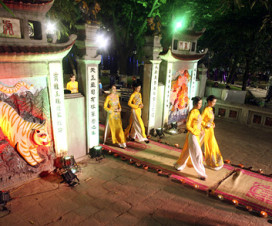
On the first night of Hanoi’s 10 day celebration of its 1,000 year anniversary, 100 models performed in the Ao Dai Festival by Hoan Kiem Lake in the city centre.
Based on an idea of bringing the finest of Vietnamese culture and tradition into the design, organisers designed and created 600 of the traditional dresses for the festival. The festival included two main themes: One showed the city of Hanoi in the past and the other showed special features of the ao dai from Vietnam’s three regions. From these two themes, organisers have prepared several Ao dai collections such as “Recalling memories”, “Sacred dragon features”, “Hanoi’s streets” and “Sunny flowers”.
Below are some snapshots of the show last night:


Tags: 1000 years of Thang Long- Hanoi, 1000th Thăng Long–Hà Nội anniversary, 1000th year thang long- hanoi celebration, 1000th year thang long-hanoi anniversary, ao dai, Ao dai festival, hanoi travel guide, hanoi travel news, Hanoi’s 1000th anniversary, Hoan Kiem Lake, vietnam travel news
Posted by vietnamtravelblog on under Vietnam Culture, Vietnam architecture |
Hanoi’s Old Quarter is one of the most exciting parts of the city for tourists but for many residents it’s far from glamorous.
To Vietnamese the Old Quarter in Hanoi is known as Pho Co, which means ‘Ancient Streets’. This is indeed the oldest part of Hanoi’s urban core. Only the recently excavated foundations of the Thang Long citadel could compete. But that was the Royal compound – a sealed, planned seat of power, where the country’s elite lived away from the thronging masses.
The Old Quarter is the descendent of Thang Long- Hanoi’s first urban gathering of commoners. A market town – once known as Ke Cho – sat on the outskirts of the Royal Citadel. This organic settlement grew through the centuries. From the 15th to 18th centuries it had a vibrant riparian trade on a par with Venice, according to European visitors. In the early 13th century, workshops started to cluster around the palace walls, slowly evolving into craft cooperatives, or guilds. Skilled craftsmen migrated to the Old Quarter, and artisan guilds were formed by craftsmen originating from the same village and performing similar services.
Inhabitants of each street came from the same village, so streets became synonymous for certain goods while also developing a homogeneous look. That’s how the street names were born. Hang Bac (Silver Trading Street), for example, started out as a silver ingot factory under the reign of Le Thanh Tong (1469-1497). Hang Thiec (Tin Trading Street) was home to set of tinsmiths. The craftsmen originally produced small tin cone-shaped tips to preserve the shape of the traditional conical hats – non. No prizes for guessing that on nearby, Hang Non, lived the hatters.
The Old Quarter is still faithful to much of its original essence. It’s still teeming with trade. It’s also now partly the city’s “backpacker quarter” with plenty of cheap hotels, guesthouses, travel agents, late night watering holes, pirate DVDs and gift shops selling knock-off clobber, propaganda art or simple souvenirs.
Some of the streets have a striking dual identity, partly traditional, partly modern – one side of Lan Ong is filled with apothecaries selling Chinese herbal remedies, roots and medicinal teas, the other half is dominated by childcare shops flogging diapers and kiddies clothes.
One European visitor, Samuel Bacon, who came to the city in 1685, noted how “all diverse objects sold in this town have a specially assigned street”, delighted at the sight of a shoe stall at the end of a street dedicated to manufacturing shoes. Over 300 years later, things have inevitably deviated and in some case the names got left behind. Now most people shop for shoes on Hang Dau (oil trading street).
Tourism Destination
The “street life” makes it a thrilling destination for tourists. It’s also one of the reasons why Hanoi has been described by Frommer’s as Asia’s most Asian city – the place is alive from dawn. Even without the traders, shoppers, and tourists, it would be a crowded place. It’s one of the most congested urban zones in the world with an estimated 84,000 people per kilometre.
This is not a place where you come to chill out. The tourists who fall in love with this part of Hanoi are the ones that like to get involved – haggling in shops, slurping noodles or drinking bia hoi on the pavement, and seeing the lighter side of getting harangued by the know-it-all postcard sellers or the shoeshine boys.
But the streets’ façade masks a darker side to life in the Old Quarter. If the tourists were to wander down the damp, cramped alleyways, they would find many people are living in squalor.
One resident, Nguyen Thi Van, owns a 17sqm-floor room above a clothes shop on Hang Luoc street, which has no windows. The house’s toilet and kitchen sit side by side. Van lives there with seven member of her family. “I’m lucky enough,” she says. “I know of families of 10 living in a 20sqm room.”
Van’s eldest son just got married last month and wisely decided to break with tradition – normally a newly-wed bride will move in with her husband’s family. They opted to live with her parents. Her other son works as a security guard and he often sleeps at his company’s office.
“If they all lived here, I don’t know how we’d manage,” Van says. In an old French colonial period house on Hang Vai street, much of the original interior is still apparent with wooden staircases, windows and floors. But the place is in a bad state of disrepair. The 18 families who live in the three-storey house are all sick of living in these slum-like conditions.
“We want to repair our home, but we cannot as we are not allowed by the local authorities,” says Do Thi My, one of 90 people living in the house. “The most terrible thing is the toilet – it’s shared by more than 100 people as neighbours use it too,” My says.
Dated architecture
Although the Old Quarter’s street outline dates back 500 years, many of the houses in the area were constructed in more recent times – from the beginning of the 20th century and onwards. Homes evolved out of market stalls, before actual streets were formed, and because storekeepers were taxed according to the width of their storefront, storage and living space moved to the rear of the buildings. Consequently, the long and narrow buildings (3m wide and 60m long) were called tube houses.
The houses tend to be interspersed by courtyards or “wells” to permit light into the houses and allow some space for activities like washing or gardening. As Australian geographers Brian Shaw and Roy Jones noted in a paper on heritage conservation in Hanoi, the houses also had a natural air conditioning system: the difference in ambient temperature between the inner courtyards and the outside street created air flow, and the longer the house, the greater the velocity of the flow. The structures were built out of brick cemented together with sugar-cane juice!
But in spite of all the problems, and in spite of the fact that the residents complain bitterly, many inhabitants don’t actually want to move elsewhere. Convenience seems to trump comfort.
“We never think of leaving as it’s so handy living here – we have everything we need all around shops, markets, schools for children,” says Pham Thi Bich, who lives on Hang Dong, who shares a 36sqm-house with four households.
“We are used to this lifestyle. And we depend on our shop at the front of the house. If the State forces us to relocate, how will we earn a living?”
Restoration of such an overcrowded and chronically outdated infrastructure is quite literally the million-dollar question. Over the past few years, UNESCO, Sida and other organisations have tried to come up with a feasible solution. Recently, a pilot project to renew a short section of Ta Hien street was approved – the first tentative step towards tackling this thorny issue.
The VND10 billion ($526,300) renewal project was funded by Hoan Kiem district authorities with additional financial and technical support from France. A new electricity system will be installed, lighting will be improved, homes will have a better water supply and drainage will also be upgraded. The street will also get more trees and the pavement will be re-paved.
And even though some residents complained they’d lose money from street side business while the project was in progress, perhaps that’s the only answer – a painstaking, gradual renewal, helping the Old Quarter to slowly evolve in a sustainable fashion.
Source: Timeout
Tags: 1000 years of Thang Long- Hanoi, 1000th Thăng Long–Hà Nội anniversary, 1000th year thang long- hanoi celebration, 1000th year thang long-hanoi anniversary, hanoi citadel, Hanoi guide, hanoi travel guide, hanoi's Old Quarter, Old quarter, Old quarter Hanoi, pho co, Thang Long - Hanoi, Thanglong citadel, vietnam travel blog, vietnam travel guide
Posted by vietnamtravelblog on October 1, 2010 under Vietnam Destinations, Vietnam Travel Info, Vietnam attractions |
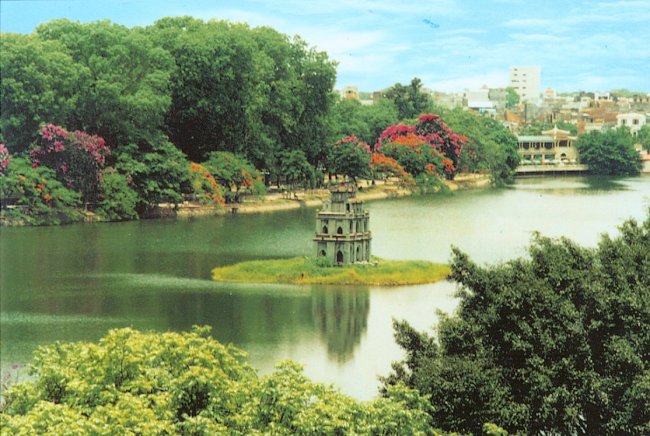
Hoan Kiem Lake has become the symbol of Hanoi for its 1,000 year anniversary and is lighting up the skies of the capital city.
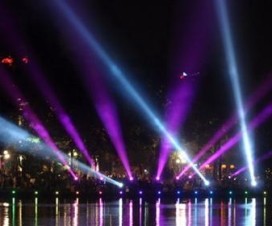
During the evening of September 27, organisers of the celebration of Thang Long – Hanoi rehearsed with a massive lighting system which has been installed around Hoan Kiem Lake in Hanoi.
The artificial lighting systems made the lake spark with reflections and passersby come to a standstill as powerful beams constantly changed colours. Photographer Thuan Thang of Tuoi Tre Newspaper took a series of photos of the show:

The lakes water reflects the changing lights

The lighting system will be operated throughout the great celebration

The one hour rehearsal attracted a huge audience

Powerful spotlights light up the sky

The Huc Bridge was brighten with lights

A beautiful photo opportunity
Posted by vietnamtravelblog on September 30, 2010 under Vietnam attractions, Vietnam hotels |
VGP – UNESCO representatives, mayors of cities twinned with Hà Nội, of capital cities of ASEAN countries and China, of capitals aged 1,000 years up, chief representatives of diplomatic missions and international organizations in Việt Nam are among foreign guests to the 1,000th founding anniversary of Thăng Long-Hà Nội slated for October 1-10.
 |
| Hà Nội will be 1,000 years old next month |
Domestic delegates will include top leaders of cities and provinces nationwide (one for each locality), heroic mothers, heroes of armed force, heroes of labor, intellectuals, religious dignitaries, and representatives of the overseas Vietnamese community.
It is reported that some 30 countries, including Italy, France, Spain, Hungary, Germany, Denmark, Singapore, the UK, Republic of Korea, China, Romania and Russia, will donate to the event their cultural and art activities.
The Italy-Việt Nam Friendship Association in the Italian port city of Genoa has established a committee to support the event.
The Netherlands will offer Hà Nội with 30,000 tulips.
Japan and Russia intend to open their cultural days in Hà Nội on the occasion
Friends from Thailand, Korea and Germany want to enrich the anniversary with their art performances
By Ngọc Vân
Posted by vietnamtravelblog on under Vietnam Culture, Vietnam Festivals, Vietnam Travel Info |
VGP – The Prime Minister recently approved an overall program to mark the 1,000th anniversary of the founding of Thăng Long-Hà Nội, with the highlight of a ten-day festival on October 1-10, 2010.

Numerous activities will take place to welcome the 1000th anniversary of Thăng Long-Hà Nội - Illustration photo
The festival will start with an opening ceremony at the monument of King Lý Thái Tổ and streets around the Hoàn Kiếm (Sword) Lake. Then come a series of activities, including exhibitions, art performances and sports events.
1. Opening day (October 1)
- The opening ceremony will be held by the Hà Nội authorities and the Ministry of Culture, Sports and Tourism at the Lý Thái Tổ Statue by the Hoàn Kiếm Lake in the morning of October 1.
- The exhibition of socio-economic achievements of Việt Nam and Hà Nội will open in the afternoon at the Giảng Võ Exhibition Center.
- The exhibition of cultural and art works of Việt Nam in different periods at the Cultural and Art Exhibition Center, 2 Hoa Lư, Hà Nội.
- “The country with Hà Nội” show will be lively televised in the evening of October 1, with the direct participation of many people in different sites in Việt Nam and abroad.
- A general cultural and art performance will be organized by the Ministry of Culture, Sports and Tourism in Hà Nội in the evening, with the contribution of foreign artists.
2. Activities on October 2-10
a. Cultural and art activities:
- Cultural exchange festival for ethnic groups in Việt Nam to celebrate the 1000th Thăng Long–Hà Nội anniversary in Hà Nội.
- A week for historical films in Hà Nội.
- “Thăng Long impetus and the song for the country” music show at the Hà Nội Opera House.
- Performace of selected new songs to celebrate the anniversary at the Bà Kiệu Temple stage.
- Street festival and cultural-art program of young Hanoians at various places in Hà Nội.
- The first international festival for young musical bands in Việt Nam at the Mỹ Đình National Convention Center.
b. Sports activities
- Final round of the international Thăng Long–Hà Nội Football Cup in Hà Nội and other provinces
- Performance of Vietnamese marital arts at the Quần Ngựa sports palace.
- A running contest around the Hoàn Kiếm Lake.
- International cycling tournament from Hồ Chí Minh City to Hà Nội.
c. Tourism activities
- A tourism festival in Hà Nội.
- An exhibition of antiques, documents and objects about Thăng Long–Hà Nội at the Thăng Long ancient citadel vestige site, Hà Nội.
- Exhibition of ornamental trees and flowers at the Thăng Long ancient citadel vestige site.
- Craft Village Festival in Hà Nội.
3. Grand celebration of the 1000th anniversary of Thăng Long-Hà Nội, October 10:
- A State-level meeting with military march and parade, Ba Đình Square
- A cultural gala night by West Lake
4. Other activities to celebrate the 1000th Thăng Long–Hà Nội anniversary in Hà Nội from October 1, 2010
- Circus shows under the motto “Hà Nội – The city for peace” at Thiền Quang Lake, Đông Kinh Nghĩa Thục Square and the National Circus.
- Music concerts by famous Vietnamese artists at the Hà Nội Opera House.
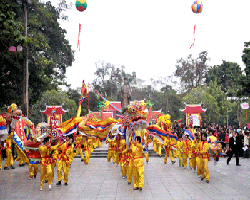
- Performance of ancient dances of Thăng Long–Hà Nội at the Lý Thái Tổ Monument.
- International music and stage festival with the participation of art troupes from some 1000-year-old cities in the world (around 29 troupes).
- A big concert performed by Vietnamese and foreign orchestras at the Hà Nội Opera House.
- The national press awarding ceremony on the 1000th Thăng Long–Hà Nội anniversary.
- The awarding ceremony of international competition “Hà Nội – Your Rendezvous”.
- The conclusion of the contest on Thăng Long–Hà Nội for Vietnamese citizens.
- Photo exhibitions of Hà Nội at 93 Đinh Tiên Hoàng Street and 45 Tràng Tiền Street.
- A calligraphy exhibition and festival at Văn Miếu (Temple of Literature).
- Exhibition on famous battlefields and campaigns in the military history of Việt Nam at the Việt Nam Military History Museum.
- Exhibition on national heroes and cultural celebrities of Việt Nam at the Revolution Museum.
- Exhibition displaying products of individuals and organizations presented to Hà Nội at the Hà Nội Friendship Palace.
- Ancient Thăng Long–Hà Nội exhibition at the Hà Nội Museum.
- Performance of traditional áo dài (long dress)
- A kite-flying festival
- The debut of a collection of books about Thăng Long–Hà Nội
- Inauguration ceremonies of the Hà Nội Museum (Phạm Hùng Road), the Hòa Bình Park (Từ Liêm District), statues of President Hồ Chí Minh and President Tôn Đức Thắng (Thống Nhất Islet in the Thống Nhất Park), the Workers’ Theater (Tràng Tiền Street), Thanh Trì and Vĩnh Tuy Bridges, and Láng-Hòa Lạc Highway./.