Vietnam for foodies

Posted by admin on December 25, 2010 under Food and Drinks, Vietnam Travel Tips | Be the First to Comment

Hoi An boasts some of the best food I’ve eaten on my trip thus far. For whatever reason, this little town claims a few delectable dishes as unique to their town alone. The first is White Rose, a simple but outstanding meat and shrimp dumpling steamed in a rice dough that somewhat resembles a white rose.

White Rose dumplings

Second is Cao Lau, a noodle and beef soup with bean sprouts and fresh herbs mixed in when it arrives at the table. The noodles are only available in Hoi An because they are made from a particular water source that gives them their unique texture. The noodles are a bit doughy but the dish is truly delectable because the meat is marinated and tastes a bit of cinnamon. And the fresh herbs are amazing…mint and basil, I believe.

Cao Lau served with rice crackers.

Finally, crispy rice pancakes, known as “Banh Xeo”, which consist of a fried pancake, kind of like a rice crepe, with bean sprouts and shrimp inside. The dish is served with all sorts of fresh herbs which you put inside the pancake and then wrap in a thin piece of rice paper. It’s topped off by dipping in an amazing spicy peanut sauce. To die for.

Crispy rice pancake with fresh herbs, ready to be rolled

A rolled pancake, ready for dipping!

Hoi An also makes a delightful fried won ton, showing the Chinese influence on this old port town. I for one am glad, because they are darn good.

Okay, they look a bit funky, but are basically fried yumminess wrapped around a meat center with veggies and sauce on top

During this trip I’ve also grown a slight obsession for squid, which I eat nearly every day. I’ve tried just about every type of squid you could imagine and my favorite thus far came from a food stand in Hoi An called “Mr. Hung.” I ordered squid grilled in a banana leaf with onions, garlic and lemongrass. It was so tender and delicious that I ate the entire thing. The ladies cooking the food made fun of me and said, mostly through sign language, that if I ate squid like that everyday I’d get fat!!

My squid is somewhere in that banana leaf, which is in a wire basket being grilled on an open flame….heaven.

The final dish…

Both Betsy and I agreed that Morning Glory was the best restaurant we visited in Hoi An. The food was simple, fresh and absolutely amazing. The proprietress of the restaurant cooks family food the way her mother taught her. I want to live at her house! She said that fresh herbs are such a strong cultural influence that many Vietnamese will start to feel homesick if they cannot have fresh herbs everyday. It’s true that most food comes with a plate of herbs which makes a huge difference in the quality of the dish.

Betsy ordered this interesting dish at Morning Glory…a shrimp coconut curry actually cooked in a young coconut. The sauce was slightly sweet and unbelievably flavorable.

The Vietnamese do not eat sweet breakfasts like we do in the states. One staple of their diet is “congee” which is a rice porridge with either fish, chicken or pork. It’s savory and quite good! The coffee here is also fantastic, albeit a little strong. It will seriously put hair on your chest so they dilute it with sweetened condensed milk! And it comes with a little coffee filter perched on the cup. Seriously delicious.

Congee for breakfast with a cup of coffee in the background. I love the little coffee filter so it can brew right at the table!

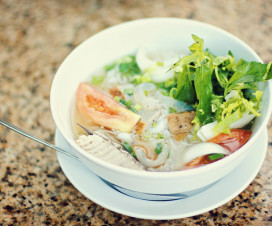
Another item that is everywhere in Vietnam is “pho,” pronounced “fer.” This is a simple noodle soup, traditionally with beef but you can get it with chicken or veggies, that is once again served with a pile of bean sprouts and fresh herbs you mix in at the table. Fantastic.

“Pho”, aka noodle soup, with a plate of fresh herbs and some fresh coconut water. You can’t get much healthier than that!

Finally, I tried a traditional Vietnamese dessert called “Che” which is basically a sweet green bean soup. It’s actually made with mung beans and is only slightly sweet but quite good! No wonder the Vietnamese are so slender! They even eat veggies for dessert!!

Eating my sweet green bean soup, served cold in a glass

I reluctantly leave the food of Vietnam behind…and will seek out Vietnamese restaurants in the states as soon as I return!

Con Dao listed in top 10 romantic tourist spots in 2010

Posted by admin on December 8, 2010 under Vietnam Destinations, Vietnam Travel Info, Vietnam Travel Tips, Vietnam attractions, Vietnam beauty | Be the First to Comment

Following Ha Long Bay, Con Dao Island has been chosen by the UK publishing company Lonely Planet to enter the top 10 best islands in 2011 for romantic vacations.

Along with Con Dao Island in the top 10 are Yemen’s Cocotra, Australia’s Torres Strait, Japan’s Yaeama, Guyana’s Illes du Salut, the RoK’s Ulleungdo, Panama’s San Blas, Taiwan’s Pengu, Honduras’ Bay and Hog island and Uganda’s Ssese.

According to Saigontourist, Con Dao Island was also a favorite places for honeymoons in the 2010 wedding season. Tourists traveling there have a peaceful time on the beautiful beaches, offshore islands and breathtaking landscapes.

Source: VOV

Destination at a glance: Vietnam

Posted by admin on November 24, 2010 under Vietnam Overviews, Vietnam Travel Info, Vietnam Travel Tips | Be the First to Comment

No longer held down by its past (or its politics), the slender nation of Vietnam makes for easy itineraries, book-ended as it is with two very different cities: poetic, tight-lipped Hanoi and zestful, go-go-go Ho Chi Minh City.

You can fly into one and out from the other, seeing the dialect, temperament and diet change as you move from the south’s rice paddy fields to the centre’s white-sand beaches and the north’s hill-tribe villages and limestone cliffs. It’s still cheap, but has increasingly become a mini China, with a growing nose of business, yet push-cart vendors amid the sports cars.

Despite the surge in attention, there are undiscovered pockets everywhere; to find them, you usually just need to walk a couple of blocks from the main street.

BEST TIME TO VISIT
March and April, September to November

TOP THINGS TO SEE
• Hanoi’s Hoan Kiem Lake, particularly when lined with morning exercisers at 5am
• Ho Chi Minh Mausoleum in the capital, Hanoi
• Dragon-shaped mountains and blue-green water of Halong Bay
• The citadel and royal tombs along the Perfume River in Hué
• Terraced rice fields, mountains and traditional homes in Sapa

TOP THINGS TO DO
• Eat pho (noodle soup) from a tiny plastic stool at a sidewalk eatery
• Pick one of the many Hoi An tailors to make a shirt, suit or dress
• Boat through the Mekong Delta
• Escape tourist ghettos, where it’s easier to mix with friendly locals

GETTING UNDER THE SKIN
Read Dumb Luck by Vu Trong Phung, a fun 1936 tale of Red-Haired Xuan, a Charlie Chaplin–type character
Listen to the motorbike engines, beeps and street vendor calls from a street cafe in Ho Chi Minh City
Watch a film having little to do with war, Tran Anh Hung’s The Vertical Ray of the Sun, showing life in modern Hanoi
Eat as much local food as you can; the pho, banh cuon (steamed rice rolls with minced pork) and goi cuon (summer spring rolls) are fresher, better and cheaper than Vietnamese restaurants abroad
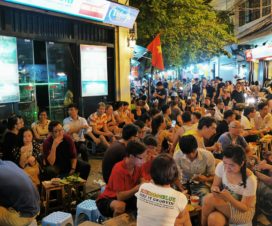
Drink bia hoi (draught beer), particularly at Hanoi’s infamous ‘bia hoi’ corner in the Old Quarter: a hundred stools, 101 drinkers and cheap beer

IN A WORD
Troi oi! (Oh my!)

TRADEMARKS
Conical hats; cyclos; ao dai (traditional dresses); scooter gridlocks

RANDOM FACT
Hanoi turned 1000 in 2010.

(Source: Lonelyplanet)

Five Reasons to Go to Vietnam’s China Beach Now

Posted by admin on November 5, 2010 under Vietnam Beaches, Vietnam Destinations, Vietnam Travel Tips, Vietnam attractions, Vietnam beauty | Read the First Comment

Driving from Danang airport to the sumptuous Nam Hai resort on Vietnam’s central coast, it is impossible not to notice the vast stretches of construction and “Opening Soon” signage that line the beachbound side of the road. When I remark on the phenomenon to one of the Nam Hai’s owners, he says the area — known as China Beach to foreigners — is poised to become the next Phuket. Having never been to Thailand, I can’t compare the two. It did, however, remind me somewhat of the Riviera Maya. Here are five reasons that coastal Vietnam should be on your travel radar right now.

1) Cities
If you’re like me, you like a little city to go with your beach. An evening of window shopping, people watching and sightseeing is the perfect end to a day spent by the pool. China Beach has got more than just, well, beach. Hoi An is about 15 minutes by cab from the Nam Hai. This UNESCO world heritage site is a beautifully preserved port town that specializes in lanterns and custom tailoring.

2) Newer is better, when it comes to development.

Coming of age in an era of green tourism and unprecedentedly high standards for design and architecture makes for fewer eyesores. Unlike the hastily built high-rise development that marked growth in the 70s and 80s, today’s builders are decidedly more sensitive to their surroundings. Perhaps the Nam Hai set the tone when it opened in 2006. The resort, which has won numerous accolades for its minimalist architecture, is a study in low-key opulence, composed of clean-lined gray marble, infinity pools that melt into the horizon and glossy teak-paneled villas.

3) Spas

The spa at the Nam Hai features eight individual suites that overlook a lilypad-strewn lagoon. It doesn’t get more peaceful than this. With the bar set this high, it’s a good bet that the region’s as-yet-unopened spas will be state-of-the-art.

4) Golf

The Montgomerie Links boasts views of the Marble Mountains and makes use of the region’s sandy soil and dunes in its 18-hole course. A few properties over, the just-opened Danang Golf Club features a Greg Norman-designed course that is the only one of its kind in Asia.

5) If China Beach were a wine, it’d be almost ready to drink.

Walking around Hoi An, you see plenty of tourists. And you also see plenty of locals, going on about their business, unrelated to the tourist industry. With so many new properties set to open in the next few years, the area is on the verge of some big changes. Going now gives you a fascinating sense of the past, present and future of this region on the rise.

(Source: huffingtonpost)

Travel trends for 2009/2010

Posted by admin on October 23, 2010 under Vietnam Travel Info, Vietnam Travel Tips | 2 Comments to Read

Holiday ideas around the world

Holiday ideas around the world

After bringing us the likes of Simon Cowell, Osama Bin Laden, Jordan and Jedward, the Noughties are almost over. But what were the Destinations of the Decade – stunning new places that are now firmly on the tourism map – and what will be the holiday hotspots of the Twenty-Tens/Oh-tens/Teenies/Tenties/Tenners? Here are some predictions from the experts:

The trend of the decade: Staycations

“Of the many holiday destinations British travellers have turned to in the past decade, our own backyard, the UK, has fared especially well as its appeal broadened,” according to Simon Tregoning of Classic Cottages.

“The profile of Cornwall, in particular, has grown since 2000 partly due to a rash of new attractions, from the Eden Project to high-profile celebrity restaurants like Fifteen: Cornwall, while Newquay has become synonymous with Britain’s new found passion for surfing.

“New air links have made Cornwall more accessible for residents across the country, and an increase in accommodation options – from the green to the ultra-luxurious – mean everyone is catered for, and at a higher standard than ever before. Long live the staycation!”

The short break of the decade: Unknown Italy

“As people worked longer hours throughout the decade, they felt the need to get away more frequently – and short breaks consequently exploded in popularity, with Italy leading the way,” says Kirker Holidays’ Ted Wake.

“Although Venice, Florence and Rome remain the classic choices, the likes of Sicily and the art cities of northern Italy – such as Bologna, Mantua and Ravenna – have enjoyed a steady rise in visitor demand. Just when you think you’ve seen every great Italian town or city, there’s always another one to seek out.”

The short/mid-haul holiday of the decade: Morocco

“Ten years ago the short break really took off: and, after Paris and Madrid, the exotic appeal of Marrakech suddenly registered. Just three hours away existed a cultural vortex – a land of souks, sorcerers, spas and sun, and a very cost-effective one at that,” explains Steve Diederich of The Best of Morocco.

“Beyond Marrakech lay similar jewels; packed into a relatively small country were ski resorts and high mountains, beaches, first-class golf-courses, Berber villages and the most scenic of desert-scapes.”

The ski resort of the decade: Kicking Horse, in British Columbia

Kicking Horse Mountain Resort started life as Whitetooth Ski Area, run by local volunteers in the town of Golden. In 1999 it was bought and hugely upgraded, reopening in Dec 2000 under its new name.

Back then, few people knew of it but “today Kicking Horse has worldwide renown for its powder, challenging skiing and 4,133ft vertical drop, second in Canada only to Whistler Blackcomb, and also as a fine option for beginner or intermediate skiers”, says Richard Rice of Ski Safari.

“Bring on the next decade, too: there’s newly a ten-year, $300 million development plan in place to expand Kicking Horse by 1750 acres.”

The safari of the decade: Botswana’s Okavango Delta

In the 1990s, the Okavango was still split up into the Moremi Game Reserve and a number of hunting areas – and tourism to the Delta was relatively small.

According to Chris McIntyre of Expert Africa the last decade has seen a steep change: “Southern African safaris are no longer the poor relation of East Africa trips, and the Okavango has turned from a backwater to the continent’s ultimate safari destination.

“From 2000 onwards, small, often fabulous lodges began arriving in areas previously reserved for hunting: gradually, over the last decade, we’ve seen many of these change to be photographic concessions, where hunting is no longer practiced. Safaris are now firmly established in the Okavango as a much more humane money-spinner.”

The adventure destination of the decade: Vietnam

“Options for the traveller to Vietnam have expanded dramatically in the past decade, explains Peter Crane from Explore.

“There have been vast improvements in the transport and hotel infrastructure, while enterprising locals have introduced an array of ways to see their destination: now there are luxury junk cruises around the incredible karst scenery of Halong Bay, tribal homestays and trekking in the North and Central Highlands, cycling holidays along the Mekong Delta, cookery schools in Hanoi and Hoi An and all sorts of volunteering trips.

“Combine these with beautiful landscapes, beaches, popular cuisine and a tropical climate, and it’s a winning combination. The icing on the cake is that Vietnam has consistently offered excellent value for money.”

The Latin America trip of the decade: Oaxaca State, Mexico

“During the past decade, more and more people have been discovering Mexico’s rich interior, heading beyond the commercial beach resorts to find colonial cities, elegant architecture, culinary treats and congenial people – all elements which can be found in the state of Oaxaca,” says Lloyd Boutcher of Sunvil Traveller.

“In the city of the same name, live performances take place in the main square, chic boutique hotels offer first-class accommodation and grasshoppers fried in chili make for unusual meals. In the country, Zapotec rugs are hand-loomed as they have been for centuries and the tombs of Monte Alban offer arguably Mexico’s best archaeological site. It’s easy to see why enquiries for travel to Oaxaca have risen so steadily over the past decade.”

Travel trends for 2010

Zimbabwe

“With the Mugabe era likely to end in the next few years, Zimbabwe’s tourism industry is poised to bounce back, and the good news is that its environments are generally in great shape,” according to Chris McIntyre of Expert Africa.

“The wonderful national parks are all situated on land that’s difficult or impossible to farm, so they remain largely untouched, while much of the game is apparently in good shape, too – even if a few areas have had high levels of hunting.

“Recent news has been very encouraging: an apparent upsurge of visitor numbers in 2009, and now a much less unstable, dollar based economy. Once an effective protection plan is re-installed and development returns to the country’s people, I can see it taking off fast in tourism terms. Zimbabwe used to have vastly more visitors than either Botswana or Namibia – and it can do so again.”

Colombia

“After years of civil unrest and conflict, stability has been restored in Colombia – and mainstream tourism seems likely to follow,” says Explore’s Peter Crane.

“Most emblematic of the country’s new era is the city of Medellin: once famed as the home of Pablo Escobar, it’s now a vibrant tourism stop, as new museums, parks and direct flights to Florida attest. All around are new options, however: from plantation stays and jungle trekking to eco-beach retreats and even medical tourism.

“Officials have boldly estimated 30 per cent annual increases in visitor numbers and it’s easy to see why: put simply, Colombia is the one Latin American destination with every kind of landscape – from beach to mountain, rainforest to plantation.”

India for skiing

“While the likes of Japan, Mongolia and Chile are likely to emerge as viable ski destinations in the coming ten years, and Russia will host the Winter Olympics in 2014, we feel that India’s slopes will be the hottest draw of the next decade,” notes Richard Rice of Ski Safari.

The Kashmir paradise of Gulmarg is already well-established as a resort, but now there’s talk of Doodpathri and Aur at Pahalgam following suit, and of New Zealand-style heli-skiing at Sonamarg. Tourism is always involving in India – with ever-improving flight services from the UK – and skiing seems likely to be the next big sector.”

Scandinavia – Noel Josephides

“Scandinavia remains Europe’s last great wilderness, offering dramatic and diverse scenery, excellent food, warm and welcoming people, surprisingly good summer weather and an unexplored, untouched appeal,” explains Noel Josephides of Sunvil Holidays.

“It is good value – the pound has held up comparatively well against the Swedish and Norwegian currencies, unlike the euro – and it’s so close: flights to Stockholm for example are just 2.5 hours from London. From a short-haul perspective, Scandinavia seems the obvious choice for the discerning traveller in the twenty-tens.”

Burma

“Lots of the potential new destinations for the next decade are places that are currently marginal for tourism due to restricted access. North Korea, Zimbabwe and Iran are all ripe for more mainstream tourism if they see internal changes in the coming decade – and especially Burma,” according to Derek Moore of AITO.

“This may not necessarily mean a change in regimes but an awakening to the potential earnings of tourism. Burma has a fascinating Buddhist tradition, pagodas stretched down the dreamlike Ayeyarwady, miles of beaches and the cultural idyll of Mandalay. Despite such unlimited potential for visitors, it will open up slowly, perfect for small tour operators rather than mass market operators.”

South-Eastern Mediterranean

“Perfect for discerning travellers balancing a sense of adventure with an urge for warm sunshine, the southern and eastern shores of the Mediterranean will prosper as a short break and longer-stay destination in the next decade,” in the opinion of Ted Wake from Kirker Holidays.

“Recent infrastructure improvements and the emergence of high-quality, often quirky accommodation in the likes of Syria, Jordan, Lebanon and Israel amount to an unforgettable cultural experience.”

10 Must-See Attractions in Hanoi

Posted by vietnamtravelblog on October 2, 2010 under Vietnam Destinations, Vietnam Travel Tips, Vietnam attractions | 5 Comments to Read

Vietnam’s desirability as a tourism destination seems to escalate every year, to the point where the country has almost become mainstream in appeal. What a phenomenal transformation for a country that was once a poor backwater, ravaged by civil and foreign wars, colonial incursions and endless regional strife. Underneath it all however, Vietnam has always been a jewel. Mass emigration abroad over the course of the last half century, to Australia, Canada, the United States, France and other nations, has had one major beneficial side effect that has come to the fore in recent years. Demographic assimilation diffuses cultural appreciation and curiosity and as a result, a Vietnam at peace and relative prosperity welcomes more tourists than ever.

From coastal resort towns to small village charm, the 13th most populous nation on the planet has a lot to offer. The gem of Vietnam however, may be the capital city of Hanoi. Busy, with a metro population of more than 6 million people, frenetic Hanoi has a host of highlights to take in. Here are 10 must-see attractions in the city that will mark 1,000 years of foundation in October 2010.

10. Temple of Literature

A tribute to Confucius and the site of the first university in Vietnam, the beautiful Temple of Literature has been around since the year 1070. The landmark contains numerous courtyards and pavilions, many of which have undergone careful restoration in recent decades.

Temple of Literature, Hanoi

9. Grand Opera House

A dramatic memory of French influence in Vietnam, the Grand Opera House in Hanoi is a typical and exquisite piece of colonial architecture. Built between 1901 and 1911, the opera house is a replica of the Palais Garnier in Paris.

Grand Opera House

8. Ho Chi Minh Mausoleum

One of the most conspicuous mausoleums in the world, the massive tribute to the most famous leader in Vietnam provides Hanoi with a landmark on par with Lenin’s tomb in Moscow. Open since 1975, the mausoleum site also contains a museum on Ho Chi Minh.

Ho Chi Minh Mausoleum

7. One Pillar Pagoda

The Buddhist One Pillar Pagoda is almost peerless in Vietnam, with a history that dates back a full millenium. The iconic landmark was badly defaced by French troops in 1954 but was rebuilt decades later.

One Pillar Pagoda

6. Hoan Kiem Lake

Hanoi is a city of lakes and Hoan Kiem is one of the most popular with visitors. Superbly scenic and serene, the lake provides a habitat for soft-shell turtles and contains many picturesque pagodas and small bridges.

Hoan Kiem Lake

5. The Presidential Palace

Although Ho Chi Minh obstinately refused to stay there, the Presidential Palace in Hanoi is a remarkable landmark. Built by the French at the turn of the last century in Italian Renaissance style, the palace serves as a government house today. Visitors can walk the grounds for a small price.

Presidential Palace

4. National Museum of Fine Arts

For a singular glimpse into Vietnamese culture, the country’s National Museum of Fine Arts is the best place to visit. The facility contains a vast collection of art, sculpture, crafts and artifacts from every period in Vietnam’s history.

National Museum of Fine Arts

3. Hanoi Hilton

Synonymous with prisoners of war, the Hanoi Hilton is a colloquial term for a notorious facility first used by the French, then by the North Vietnamese, to hold and torture captives. American POWs at the height of the Vietnam War gave rise to the name, with John McCain as one notable long-time prisoner. Today a part of the Hanoi Hilton serves as a museum.

Hanoi Hilton

2. West Lake

West Lake is first in size in Hanoi and is extremely popular with locals and visitors alike. Pagodas, restaurants and hotels line the body of water and serve as lively focal points.

West Lake

1. Tran Quoc

The most historic pagoda in all of Hanoi, Tran Quoc is the foremost symbol of Buddhism in the country. The landmark’s origins date back some 1,500 years, although over time it has undergone changes in appearance and location.

Discover superb deals on hotels in Hanoi.

Boats line up to visit the Perfume Pagoda outside Hanoi

Hanoi guide to shopping and hotels

Posted by vietnamtravelblog on September 27, 2010 under Vietnam Travel Tips, Vietnam attractions, Vietnam beauty, Vietnam hotels | Read the First Comment

Getting value at Hanoi business hotels and a guide to Vietnamese art galleries, silk, the best in Hanoi shopping, and some saucy nightlife.

Written and photographed by Vijay Verghese

AS HANOI geared up for its 1,000th anniversary celebrations (the city started as Thang Long in the time before time apparently), I prepared to hail a taxi. Instantly a wail of police sirens rent the air and an ominous cavalcade of black cars swept up. I withdrew my hand hastily. The doorman bundled me politely but firmly to one side. The Queen of Denmark stepped out of her limousine regally and vanished into the Sofitel Legend Metropole accompanied by throngs of admirers, diplomats and hangers-on.

The Sofitel is celebrating 110 years in the business against which my puny 53 years on the planet paled into insignificance. I had to exit at the other end of the hotel to catch a cab on a non-cordoned-off street. But with classy neighbours such as the Queen of Denmark, I was hardly complaining. I took it in my plebian stride.

Hanoi guide to just about everything

As you arrive in this ancient city, your taxi will speed past a mock Brandenberg Gate with powerful prancing horses frozen in bronze above the swirling traffic. This is modern Vietnam. The new Hanoi sprouting from every inch of dust from the airport to the Red River, sports a slew of motorcycle-choked ring roads, meandering highways, and slim-front Cinderella suburban houses in every imaginable hue along with the occasional faux-European embellishment. Why this is necessary in a town famed for its beautiful, if peeling, French villas, beats me, but then, who doesn’t keep up with the times?

Hanoi guide, Hanoi Opera House
Atmospheric Opera House

Fortunately, it’s easy to ignore all this creeping modernity to plunge, inelegantly and bug-eyed, into the familiar mayhem of stampeding cycles, mopeds and persistent postcard vendors. Now THAT’s Hanoi. The city sports a fresh lick of paint and diligent whitewashing is nowhere more evident than in the spatters on the pavements and on parked bicycles. It is a city of art, cycles, lakes, pedestrians, and gleaming Hanoi business hotels, some with excellent conference and meeting venues.

Hanoi exudes a laid back old world charm and the traffic, though plentiful, moves along at a leisurely pace. Instant string quartets materialise in hotel lobbies. People walk, couples promenade around the numerous lakes. Everyone is friendly, polite, and diligent. Some years back, I walked into a government-run hotel and asked to see the place. The receptionist beamed, took out a large bunch of keys, and we proceeded to do just that – floor by floor, room by room, cupboard by cupboard, inch by inch. She was thorough. A broad smile and a fresh key greeted me every time I said, “Well that does it.” So on with our Hanoi guide.

At another government hotel restaurant I devoured a huge lunch buffet for just D30,000 (US$1=D18,500). The room was empty save for a long table along the window where a group of about 15 were ravenously devouring heaped bowls of fish, pork, noodles and rice. I was shown to my table. I pointed to the buffet. The waiter smiled apologetically and shrugged. Apparently the buffet was over though it was barely 1.30pm. It had been cleaned out completely, from what I could gather, by the entire kitchen staff and the waiters who continued to slurp and chew and spit and joke on their table.

Hanoi business hotels, Sofitel Metropole
Sofitel Legend Metropole: vintage props

At length one of the celebrants rose and took my order. This is quintessential Hanoi, an egalitarian, easy-going, Sort-Of-Communist-But-Unblushingly-Capitalist city. Here, in a splendid reversal of the “chef’s table” where guests dine in a five-star hotel kitchen amidst gleaming pots and pans, the chefs dine with the guests. I picked up the buffet flier. It read, “Showcase of chef’s talent and enthusiasm of staff”. It was exactly as advertised.

In any Hanoi guide, the centre of the city from most standpoints is the lovely Hoan Kiem Lake where lovers stroll and urchins thrust postcards into tourist hands. Hanoi is a city of lakes, and postcards, both memorable for different reasons. There are several lakes. The largest is the West Lake with swan pedal boats and a nice shaded promenade along Thanh Nien that separates this romantic spread of water from Truc Bach Lake. Around Hoan Kiem and its Ngoc Son Temple is a profusion of eateries, silk shops and art galleries.

Hanoi shopping guide to silk and more

Most Hanoi shopping for silk, antiques and lacquerware is done along Hang Gai street and its extension, Hang Bong. Try the smart cuts and colours of  the relocated Khai Silk (113 Hang Gai, tel: 928-9883, or 26 Nguyen Thai Hoc street at Brother’s Café). The Khai Silk outlet at the Metropole Hotel has closed so you’ll need to make the trek out to browse crinkle silk scarves (US$24 up), purses, men’s linen shirts (from US$60 up), and graceful Vietnamese ao-dais (pronounced “ow-zai”) from US$40-US$60.

Pop into Hadong Silk (102 Hang Gai, tel: 3928-5056) where ties are roughly US$20; Hien Silk (100 Hang Gai, tel: 3826-9151); Thuy Ky (98 Hang Gai, tel: 3825-1606) that displays embroidered linen for the home with double bedspreads from US$55.

Hanoi Guide, Vietnam artists, Le Quy Thong at Hanoi Studio
Hanoi Studio art show

Also check out the small and cosy Silkroad (96 Hang Gai, tel: 3825-4237) with a silk scarf from US$24 and a range of modern ao-dais; Artcen Company (80 Hang Gai, tel: 3825-6154) selling statues, pottery and traditional jewellery; Tan My (66 Hang Gai, tel: 3825-1579) with silk ao-dais from US$35 up, and To Thanh Nga (54 Hang Gai, tel: 928-7550). Beware of the slimline ao-dai. Vietnamese women are impossibly svelte. They eat noodles by the mile, all day, but the carbs miraculously disappear, which is how you get three or four women on a single moped – and that’s just on the handlebar. Talk of hourglass waists…

Fortunately for visitors, garment sizes do not reflect these anorexic waistlines. Business is directed at less-than-compact foreigners so large-size stock predominates. Alterations can be done in hours and a complete dress stitched in a day.

Most shops stay open almost 8am till 8pm and some stretch it to 9pm so there’s lots of time to rummage around – every day. This is the Hanoi shopping heartland. At one end of this maze of small streets where you’re equally likely to find a lifelong treasure or get run over by a grinning road warrior, is the expansive Dong Xuan Market that stocks everything from shoes (US$20 up) caps, jeans and clothes, to handbags, watches, spices and condiments.

At the other end, closer to Hoan Khiem Lake, is the wondrous intersection at Nha Tho dominated by the old St Joseph’s church, an area that abounds in small neighbourhood cafes and cheery boutique shops selling clothes, home décor, and art. Mosaique Decoration (22 Nha Tho Street, tel: 928-6181) is typical of the convivial sprawl. It sells lampshades, cushion covers and stuff that MUST get into your home. It would be remiss to leave this out of any Hanoi shopping guide.

Hanoi guide, hideaway Zigzag cafe balcony on Trang Tien Street corner
Zigzag Cafe balcony, Trang Tien Street

From Hoan Kiem it is a five-minute stroll down Trang Tien (pronounced “chang tee en”) to the characterful Opera House that dominates the much-photographed landmark square or, rather, roundabout. Motorcycles buzz like hornets and of an evening a newlywed couple will turn up to be immortalised in front of this gracious building. Trang Tien is itself an interesting, fast-changing street, packed with a crop of funky art galleries and bookstores. The infostones bookshop (41 Trang Tien Street, tel: 3826-2993, www.infostones.com.vn) has architecture, art and design coffee-table glossies along with cookbooks, dictionaries and Vietnamese language translations.

The delightful Chi Yang store (formerly at 17 Trang Tien, tel: 936-0027) that stocks a pleasing collection of silk embroidered fabrics put to different uses, has moved to 63 Hang Gai. Pick up gauzy eye-catching wine bottle presentation wraps, cushion covers, bedspreads, or stylish embroidered linen bathrobes (US$80). On Trang Tien find handicrafts (23 Trang Tien, tel: 936-2508), which does carved soapstone boxes, lacquer bowls, and chess sets, while Dang anh Tien (19 Trang Tien, tel: 936-6199) sells old, wooden artefacts and statuettes. Tucked into another hole in the wall, Life Photo Gallery (39 Trang Tien Street, tel: 936-3886) stocks and displays some eye-catching black-and-whites. L’Espace (24 Trang Tien) run by the French Cultural Centre is a bright stop for flavour-of-the-month exhibitions and music recitals. But if you must have a touch of glam and wish to cruise the rarefied environs of top-dollar Hanoi shopping, try the glitzy (by Hanoi standards) Trang Tien Plaza, at the Hoan Kiem lake end of the street. This is a polished, mall-style affair with jewellery, perfumes, sunglasses, and handbags and the latest in international designer fashions, all at hideously inflated prices. Hanoi brand shopping is at its best at the Sofitel Legend Metropole where you’ll find top designer labels in glittering surrounds. In this vicinity expect to find Louis Vuitton, Hermes, Sergio Rossi, and the Galerie Royale with Kenzo, La Perla and Estee Lauder.

Hanoi art galleries and artists for walls or investment

Hanoi sightseeing, Pagoda
Pagoda catches the sunlight

As any Hanoi guide will tell you, art galleries are all the rage in Hanoi – for foreigners that is. Apartment walls everywhere from Hong Kong to New York are groaning under the weight of inspired Vietnamese creations, and the oils-and-lacquer avalanche continues. A favourite is the Apricot Gallery (40B Hang Bong, tel: [84-4] 3828-8965, www.apricot-artvietnam.com). The gallery features the colourful impressionist Le Thahn Son, the vivid village scenes of Dao Hai Phong and Hong Viet Dung’s shadowy figures emerging from pale gold backgrounds. A 1.5sq m Dao Hai Phong sells for around US$7,000.

Apricot sister gallery Thanh Mai (64 Hang Gai, tel: 3938-1146, and 11 Trang Tien Street) has one-metre Dao Hai Phong’s from US$2,600 up. At 113 Hang Bong Street with a second hideaway not far from the Opera House at 3b Phan Huy Chu is the Mai Gallery (tel: 3938-0568, www.maigallery-vietnam.com) run by none other than Mai herself. She stocks up-and-coming artists as well as the Hanoi Five Faces group, which includes Tran Quang Huy’s distinctive metallic female faces set in delicate murals. Another choice on Hang Gai is the Thang Long Gallery (41 Hang Gai, www.thanglongartgallery.com).

Several Trang Tien road art galleries have gone with the arrival of the wrecking ball. One simple Trang Tien option if you are not too picky is the small family-run Hanoi Art Gallery (16-36 Trang Tien, tel: 3934-7192) with Nguyen Minh Phuoc’s ethereal monks walking up temple steps and some attractive lacquer portraits of hill tribes. This gallery stocks younger artists, including wannabe Le Thanh Sons and the like whose work is vibrant but less expensive. It’s worth a visit if you are starting to dabble and don’t really wish to splash out enormously. The larger Thanh Binh Gallery (25-27 Trang Tien, tel: 3825-1532) offers upmarket display space while the spacious Green Palm (15 Trang Tien, tel: 936-4757, www.greenpalmgallery.com) is well stocked with works by established artists and offers bright splashes of colour like the red lacquer baby-monks from Le Huu Ich from US$1,500 up. Trawl for works by Le Quy Tong (architecture, bridges and striking impressionist faces).

Hanoi Art Gallery, Trang Tien Street

A one square metre Dao Hai Phong here may retail for around US$3,500 while a larger Le Thanh Son could fetch US$19,000 or more. Green Palm is also at 82 Hang Gai Street and 110 Hang Gai. Hanoi Studio (13 Trang Tien, tel: 3934-443) run by Duong Thu Hang is closer to the Opera side of the street and offers ample viewing space with stylish works by Bui Tien Tuan who creates sketches of ladies on silk with a print-and-dye finish conjuring up a vibrant Japanese or Paris feel depending on your point of view. Pick up a one metre canvas from roughly US$2,300. The studio promotes young and upcoming artists. Find a second Hanoi Studio gallery at 23 Trang Thi Street. Around the corner at 7 Hai Ba Trung is Atena Fina Arts with a broad range of styles. And just across the road from the Sofitel Legend Metropole is the Trien Lam My Thuat Gallery at 16 Ngo Nguyen.

Keep an eye out for bright lacquer-on-wood paintings by Thanh Chuong who relentlessly churns out water buffalo portraits, deifying these beasts in all manner of cuddly and cud-chewing poses. Along the way you will also likely encounter Nguyen Thanh Binh’s enormous output – devoted almost entirely to paintings of schoolgirls in white against gold backdrops: dull but popular, with many knock-off artists feverishly imitating these styles.

Hanoi Dining, Restaurants, Cafes and Bars

Dining out is one of the great pleasures in Hanoi and the city has some excellent choices, atmospheric, and relatively cheap. As night falls, the avalanche of cyclos, buses and cars subsides and visitors can venture onto the streets with a small measure of confidence. The pace is sedate though an occasional lady may approach you on a moped and enquire if you want “Boom boom”. On then with our Hanoi guide to the most interesting dining establishments. Head to the relocated Bobby Chinn now at 77 Xuan Dieu Street near West Lake. Grab a bite or drink in rather chic surrounds replete with paintings, drapes, cosy nooks, Buddha-Bar-style music and eclectic French-Thai dishes. If you’re popping by for a drink, make it late.

Tucked right under the Opera building next to an alfresco Highlands Coffee is the chic and upscale nineteen 11 (1 Trang Tien Street, tel: 3933-4801), a contemporary escape for fine dining in brick-and-wood surrounds. Good service, interesting menus (Vietnamese and Continental) and steep prices. The characterful Emperor restaurant villa closed and reopened as Club Oriental (22 Tong Dam Street near the Opera House, tel: 3826-8801). Or try the intimate Club Opera (59 Ly Thai To behind Metropole, tel: 3824-6950).

Hanoi dining, Green Tangerine for French fusion
Green Tangerine restaurant

For some real atmosphere plunge into the clamour of the Old Quarter close by Hoan Khiem Lake to the fabulous Green Tangerine (48 Hang Be Street, tel: 3825-1286) with its alfresco patio and signature blue-green doors leading into a small two-storey villa where you are assured of some rather innovative and tasty French and European treats. Food is excellent, if a tad pricey, and you can expect an extensive wine menu.

An older eatery with a gracious villa ambience albeit wearing a somewhat deadbeat and empty look at times, is Nam Phuong (19 Phan Chu Trinh, tel: 3824-0926). It is housed in an old corner villa, a sedate oasis amidst the whining motorcycles that scream down the street. The menu is not bad at all.

For Vietnamese fare other choices include Indochine (tel: 3924-4097) that has been in decline for a while, the excellent, if simple, Cay Cau (De Syloia Hotel, tel: 3933-1010), and the charming villa-housed Le Tonkin (14 Ngo Van So, tel: 3943-3457). At all these spots, a decent lunch for two without wine will come to around US$20. Le Tonkin is in an attractive restored French villa with green louvred windows. It offers indoor and outdoor seating. For a zesty Vietnamese-Euro lunch buffet try Tara (tel: 935-1069) in a converted French villa at 3A Ngo Quyen.

While wandering down Trang Tien near the Opera, stop awhile one floor above the traffic at the quaint Zigzag Cafe (No.2 Nguyen Xi Street, tel: 393-64 111), which perches unsteadily above a small leafy t-junction with tables and sun umbrellas scattered along a wraparound balcony. There’s an indoor airconditioned section too. Nothing fancy, just a nice rustic pit-stop with Vietnamese tea a steal at 10,000 dong. Pastas, fried rice and Vietnamese dishes are around 45,000 dong. The entrance is hidden in a side street off Trang Tien. Also duck into the small alley midway down Trang Tien that doubles as a motorcycle park and a teen hangout with ice-creams and cakes. There are lots of book stores in this area. Serving up a cool and chic atmosphere with good service and delicious food is the contemporary Wild Rice (6 Ngo Thi Nham Street, tel: 3943-8896) and its sister Wild Lotus (on Nguyen Du Street). Try their tangy fried beef with coconut sauce. The alfresco courtyard affair Brother’s Café (26 Nguyen Thai Hoc Street, tel: 3733-3866) is a breezy choice with extensive buffets. For something less lavish and on-the-run, check out the woody Paris Deli (tel: 3934-5269, 6 Phan Chu Trinh, just across from the Hilton, with a second outlet on Nha Tho Street near the church) and the new Highlands Coffee at Nha Tho.

Hanoi dining, nineteen 11 restaurant at Opera
Chic nineteen 11 in the Opera building

The atmospheric Moca Cafe (tel: 3825-6334, 14-16 Na Tho) features just about everything from Italian and Vietnamese to Indian on its extensive menu. The food’s not bad at all and this is a great place to hang out, especially upstairs if you bag a window booth. Indonesian nasi goreng? They’ve got it too, and heaps of books should you wish to stay longer. At 57 Ly Thai To, the cosy Au Lac Café (tel: 3825-7807) is another popular hangout.

Back at the Opera House and its radial streets, WiFi Cafes and coffee shops abound with the occasional trendy restaurant. Off Trang Tien at 3 Nguyen Khac Can is the compact and cheery three-storey Pane e Vino (tel: 3826-9080) that does passable and jolly Italian with a smile. Nearby are the Au Lac Club (tel: 3936-9009, 3A Nguyen Khac Can), and the redbrick The Sushi Tokyo (tel: 3936-4236, 15 ngo Trang Tien). Around the corner pop into the tiny Ferrari red Segafredo Zanetti coffee shop (18A Ngo Quyen, tel: 3936-9421).

A popular after-hours spot behind the Metropole is the Press Club (tel: 3934-0888, 59A Ly Thai To), which includes the fancy European-style Library Bar, the Terrace Bar & Restaurant, and a nice little deli. Of course, for some of the best Vietnamese food in town you’ll need to exercise your wallet, but not immodestly, at the Sofitel Legend Metropole’s Spices Garden (tel: 3826-6919). Their Le Club rustles up a fancy high tea and chocolate buffet of an afternoon, 3pm-5.30pm. Not to be outdone, the Hilton has refashioned its Chinese restaurant into the mod Ba Mien specialising in Vietnamese cuisine taking in the “three regions”. It can get a bit dark and quiet here though the service is friendly. Spices Garden at the Sofitel Legend Metropole is a cheery and classy option, fronting the pool and gardens, with a great buffet that actually serves up some excellent Vietnamese food.

But if you have the money and the moxie and wish for a close brush with the bizarre, check out the Hale Club (pronounced “haa-lay”, tel: 3942-4201, 64 Nguyen Du). This is an imitation Bangkok bar with chrome poles, pounding music, dancers (most in red-and-white sailor outfits) and perplexed foreigners downing cheap Tiger Beer. There are karaoke rooms as well. At midnight the police pop in to turn off the music though die-hards can still drink late. Arrive fashionably late or you may be the sole customer listening to “Five Hundred Miles”. Catering mainly for Vietnamese, the throbbing Hale Club is not hard to find. It is next door to the Ministry for Public Security not far from the Nikko Hotel.

Hanoi guide, romantic Hoan Kiem Lake
Hoan Kiem Lake: romantic

For something a bit more risqué – if less so these days – head to the Daewoo hotel’s Club Q, where long-legged ladies will sashay up and press you for a drink. No money, no honey. If you want to be a cheapskate, play pool in the corner unmolested. Daewoo has toned down of late. For more of the same on a grander scale, visit the Hanoi Hotel nightclub after 8pm or, wilder yet, the Big Boss KTV club at the Fortuna Hotel after 7pm where immaculate lovelies will be brought to your table while the mama-san flashes a torch beam on their faces one by one. Tacky and embarrassingly silly, but… there’s music, dancing, karaoke and, occasionally conversation – “You handsome man. You take me hotel.” The banter will set you back about US$30 for the pleasure of your partner’s company. Drinks are extra. Both the Fortuna Hotel and Hanoi Hotel offer massage and pseudo spa treatments.

Sightseeing outside Hanoi, Ha Long Bay, Perfume Pagoda

There are several day trips around Hanoi including golf at King’s Valley, 36km away, a cruise through Halong Bay with its stone outcroppings reminiscent of Thailand’s Phang Nga Bay, and a tour of the Perfume Pagoda following which you can drift down the river on a rowboat peeking into grottos and caves along the way. The verdant Tam Dao; hill station is do-able in a day but Sapa (with its hill tribes and wonderful walks) will take at least two to three. While hotels have several tour agents listed, one you might try is Asia Sun Travel. This is run by the energetic and resourceful Ta Bich Ha whose special interest is tours for the disabled. Bich Ha speaks excellent English. There’s the upbeat 4U Tours Hanoi Or team up with Exotissimo at one of its many hotel counters. Halong Bay is around three hours by road.

Hanoi business hotels, heritage hotels, and budget stays

C
Sofitel Legend Opera Wing room

So where should one stay? Given that Hanoi is not a particularly large town, location is not a major issue though a central spot near the Opera House and Hoan Kiem Lake is considered eminently desirable if you are looking for top Hanoi business hotels. Two charming properties here are the Hilton Hanoi Opera, which mimics the colonial design of its historic neighbour, the Opera House, and the stately 100-year-old Sofitel Metropole Hanoi, once the sole choice for visitors, that includes among its distinguished guests the likes of Noel Coward, Charlie Chaplin and Somerset Maugham.

The 364-room Sofitel Legend Metropole Hanoi with its starched colonial whitewash is a cultural heirloom that comes packaged with a navy-blue vintage car parked outside to underline the point. It has two blocks, the older one sporting creaky teakwood floors. The Metropole offers Broadband in all rooms and Wireless access in public areas at US$18 per day. The pool has been renovated. The atmospheric Old Wing of the hotel has undergone refurbishment to emerge all spit and polish. The 32sq m Luxury Rooms feature compact bathrooms with L’Occitane toiletries, dark wood parquet flooring, a wooden work desk, classical comfy chair, silk cushions in sober colours, and double-glazed windows to firmly keep out street noise. Room features include a classic-face bedside clock, a ceiling fan, a rather comfy bed, flat-screen TV, DVD player and a large safe that can actually accommodate a laptop. Three cheers. One step up is the 37sq m Grand Luxury Room with a larger bathtub (with a separate shower cubicle) and a lounging divan.

The “New” wing or the Opera Wing as the hotel terms it has also gone through a dramatic facelift. The corridor carpets are done in startling orange-red stripes while the walls are in vertical black-and-white barcode stripes across which hang virginal white doors. It’s not as hallucinogenic Alice in Wonderland or Sixties as it sounds. The ensemble is designer mod.

Hanoi business hotels, Sofitel Legend Metropole, Opera Wing room image
Sofitel Legend Grand Luxury Room

Rooms themselves feature flat screen TVs, stark polished dark timber underfoot with starched white linen on the beds and splashes of red in the chairs, crimson wake-up-call toilet tiles and cabinets. The shower is hand-held. Also find a weighing scale, a small box safe (that won’t house a laptop), coffee and tea-making facilities, a large-face classical clock, and crisply focused “pipe” lights for reading. It’s an interesting and enlivening juxtaposition for an historic Hanoi hotel.

The premium business traveller Club Metropole is housed in the Opera Wing (converted from office space) and turned into an executive haven with a Club Lounge, complimentary Internet and WiFi, vastly muted colours this time, and 48sq m Grand Premium Club Rooms. Expect a leather-top table, king-size bed with a faux-crocodile leather headboard, floral walls, and a funky freestanding bathtub accompanied by twin vanities and Hermes toiletries. And, in all rooms, you’ll spot the stylish black-satin-cloaked bottles of mineral water with their elegantly raised crimson Dracula collars.

For Hanoi brand shopping head to the surrounding block or the hotel’s Metropole Arcade for Louis Vuitton, Cartier, Chopard, Rolex, Salvatore Ferragamo, Hermes, Sergio Rossi, Jaeger-le Coultre, Bally, Burberry, IWC and more. In the vicinity are Esprit, Escada and Estee Lauder. Despite the colonial opulence and seemingly laid back atmosphere, this is easily one of the best Hanoi business hotels with brisk and friendly service.

After hours, unwind in the fabulous new Le Spa du Metropole set in a dedicated wing across three floors of elegant, classical, dreamy, aromatic décor with seven treatment rooms, a foot reflexology lounge and a hammam steam room. Check out the plush themed rooms and pick from Oriental or modern among others. Later, bop the night away at Angelina.

Hanoi business hotels, Hilton Hanoi Opera
Classical lines of the Hilton

The Hilton Hanoi Opera, by contrast, has modern interiors, a businesslike feel and a high-ceiling lobby that echoes to the sounds of an excellent acoustic jazz-and-pop band most nights. You could transport the Hilton and plonk it down in Paris without causing a murmur. It slips into period that well. The executive floors here feature free Broadband though all hotel rooms have access at a modest fee. Satellite television is available in all 269 rooms. The rooms at the Hilton are what perhaps set this hotel apart from others – they feature bright floral prints and wallpaper married with a smart working desk and three-pin (square) plug connections. None of those old-fashioned European round plug sockets here.

The impression is bright, welcoming and friendly. These are the sort of rooms where you can both relax and crank out work, with equal aplomb. (If you need executive pampering, book into the seventh floor where refreshments and snacks flow endlessly.) The toilets feature a separate shower cubicle and bathtub. A good spot as any to catch some rays, is the small outdoor pool overlooking the Opera House. The Chinese restaurant has been reincarnated as the signature Vietnamese restaurant Ba Mien. Ba Mien specialises in three regions’ cuisine, dishing out Hanoi, Hue and Saigon favourites in a spacious, cool and chic environment. The hotel houses some designer brand outlets with fashion accessories. It is among the top Hanoi business hotels. Expect free Wi-Fi in the lobby from 8am to 10pm and Broadband in-room at US$15 per day.

The bustling Sofitel Plaza Hanoi overlooking the West Lake is more group oriented. Its highrise rooms offer sweeping views and you can take a dip, any time of year, in the top-floor all-weather pool – with a retractable roof. Classic Rooms start at 30sq m offering lake or river views and most come with a bathtub and separate shower.

Hanoi conference hotels, Sheraton is a good meeting venue
Sheraton: eat, work, play

A bit farther out on the far, secluded side of the lake, the gleaming Sheraton Hanoi offers a stylish resort ambience with all the crisp flourish you’d expect from quality Hanoi conference hotels. It is an interesting, and relaxing mix, with lakeside frontage and pleasant gardens. Views are great, though the rooms look askance at the lake, rather than all the way across the length of it. This is a minor quibble as the place is really first class, especially if you have a large cranky corporate meeting in tow. The rooms feature conservative pastels with dark, rich, wood tones and, yes, three-pin (square) sockets. There is a flat safe for small notebooks if not a full-size laptop.

Rooms are Broadband enabled (US$18 per day) so you can plug in and start surfing right off the bat. There are two telephone lines. Call your wife and boss simultaneously, and then wonder why on earth you attempted this. Internet access is free for a brief surf at the lobby Link@Sheraton that is set up with a couple of humming computers. In-room find two generous 500ml bottles of complimentary mineral water. To work up a sweat, or cool off, there’s a free-form pool set in the lakeshore gardens, an extensive fitness centre, and a tennis court. Pin-stripers can de-stress all the while marvelling at the excellent meetings facilities. Savour Vietnamese fusion at Hemisphere’s and later unwind at the Nutz Bar which gets swinging late.

If you wish to just look at the Sheraton and can’t afford to stay there, the next best thing is to kip at the neighbouring Dragon Hotel, an ornate Chinese establishment that offers a dizzying amalgam of artefacts, urns, ceramic horses and wood carvings in a bright yellow building that resembles a pagoda. The place is basic but clean and a bit eccentric. If you get spooked easily, think twice before checking in. This is Halloween meets Friday the 13th. Heck it’s only about US$39 a night.

A newer kid on the block – or over the water, more appropriately – is the that opened in March 2008. Formerly The Lien Resort Hotel, the 359-room InterCon has upgraded this over-water enterprise with considerable flair.

Hanoi business hotels, InterContinental Westlake Hanoi
InterContinental Westlake Hanoi/ photo: hotel

Expect an inviting tropical swimming pool right by the lakeside, Club InterContinental for business travellers in need of all-day butler service and high speed Broadband and Wi-Fi (US$18 per day), and capacious rooms upwards of 43sq m with 32-inch LCD televisions, satellite channels, twin vanity, and bathtub with separate rainshower. Rooms reflecting a modern Vietnamese style largely look onto the waters of the lake. Gourmets can enjoy Italian, French and Asian fare. Service is welcoming and brisk, a cut above the usual Vietnamese five-star fare.

A bit out of town in Kim Ma Street is the Korean-owned if-you’ve-got-it-flaunt-it Hanoi Daewoo Hotel. Needless to say, the kimchi and bulgogi are terrific. The high-rise hotel is slathered in marble and it boasts an extraordinarily generous 80m outdoor pool in which you could have shot The Titanic. Presidents Vladimir Putin and Bill Clinton have stayed here but I’m not sure if cigars are big around here. Daewoo also has apartments, a good fitness centre, an 18th floor sky lounge and meeting facilities. High-speed Internet is available free, which is a huge plus. There are 411 rooms, mostly in bright pink-rose pastels with a work desk, a deep safe (not laptop size unfortunately), and generous views of lakes in all directions. Floors 15-17 offer the benefit of an Executive Lounge with canapés, drinks and breakfast. In the evenings, the young and restless – or old and jaded – can pop into Club Q for an enlivening moment.

Three Hanoi business hotels worth looking at are the Hanoi Horison Hotel (run by Swiss-Belhotel International) not far from the Daewoo, the crisp and modern Hotel Nikko Hanoi and the Melia Hanoi which boasts the largest conference space in the city. You could stage an Indian wedding at the Melia and still have room to swing a cat by the tail though animal rights groups may not appreciate use of a feline barometer.

The Hanoi Horison Hotel has a good executive floor and a decent Chinese restaurant. Its conference facilities can accommodate up to 800 people. The Horison Club floors offer both plug-in and wireless Internet options. The property is not too far from the action and offers quick access to both the airport as well as downtown.

Melia Hanoi room
Melia Hanoi Deluxe King room

The Melia Hanoi offers Broadband throughout the hotel. Wireless is available in the lobby as well as on select floors. There is an open-air pool, a fitness centre, and a Grand Ballroom that seats 1,200. There are, of course, smaller function rooms as well. Rooms are pretty straightforward, with light wood, and pastels. Here you’ll get THREE 330ml bottles of complimentary mineral water, a small safe, and a well-stocked mini-bar. Melia is not your average understated address. It is large, businesslike and busy. Expect woody hues, echoing hallways and a sense of people on the fly. After hours enjoy tapas at the foot-tapping Latino Bar.

The Hotel Nikko Hanoi is minimalist and corporate. Deluxe rooms start at a spacious 36sq m with Executive rooms stretching that to 48sq m with free and unlimited Internet access. There’s Chinese on the menu as well as Japanese while a broad-menu brasserie covers more bases and palates. Also find a sunny outdoor swimming pool and a fitness centre with sauna, massage services and Jacuzzis.

The Fortuna Hotel is a four-star dive, albeit clean and neat and orderly, that masquerades as a business hotel. It has little to recommend it save for the lively nightclub, spa and friendly doormen. It is a way out of town in a seedy commercial area though the Exhibition Centre is walking distance through the scrum. The basement beckons with slippery sleaze but the rooms are not too bad. Deluxe rooms come with iron and ironing board, a hair drier, a flat-screen TV, Broadband access, a decent work desk, a coat stand, large laptop-size safe and even a Jacuzzi. The hotel has its rules and standards. You cannot take durian fruit up to your room but scantily clad ladies are no problem.

Other distractions here include the Millionaire Club with over 50 slot machines and the aforementioned Big Boss KTV dance club which is worth a look-see for high-camp fun. Similarly, the Sunway Hotel, positioned rather boldly as a “boutique” property, but is a tad disappointing. Its service and facilities are fair but the overall ambience is bit cramped and dark. On the bright side, it offers a health club with assorted fitness gadgetry, a sauna, and some herbal spa massages. Its location is not far from the Opera House area.

Hanoi business hotels, Movenpick, the former Guoman
Chic Super Deluxe at Movenpick

A smaller but interesting option is the well-located doll’s-house De Syloia that offers the Cay Cau Vietnamese restaurant, a small business centre and a gym. This is a compact, homey establishment but you will find meeting rooms, a business centre, in-room safe and satellite TV.

The smart Guoman has rebranded as the Movenpick Hotel Hanoi. It always had strong European accents and this trend continues – albeit with a very mod transition – in this Hanoi boutique hotel incarnation. There are 154 rooms starting at 30sq m. Super Deluxe rooms have dark accents with wood flooring enlivened by a green border carpet, silver chest-of-drawers below the flat-screen LCD TV, a black leather sink-in reading chair, silk drapes, and large face bedside clock. The wallpaper is in grey tones and a partial see-through glass wall leads the eye from bedroom to a compact bathroom. Expect an iron and ironing board, a large electronic safe, weighing scales, a data port and two multiplug electric sockets by the table. The hotel also has rooms set aside for women travellers who will appreciate the iron and ironing board, bright lighting, and a portable make-up mirror. And in the Junior Suites find a Jacuzzi bathtub. All rooms offer Broadband Internet access at US$12 per day and WiFi is accessible throughout the hotel in rooms and in public areas. Meeting facilities are brisk, if small-scale, catering for corporate get-togethers, with Wireless and plug-in Internet access. Also expect a gym with massage and sauna, reflexology and a Jacuzzi. Not to be outdone by the Metropole, Movenpick has a cream vintage Citroen parked outside. This is a good hotel choice but don’t expect a swimming pool.

Not commonly mentioned in any Hanoi guide, the very welcoming and friendly Hoa Binh Hotel is centrally located just two blocks from the Opera House on Ly Thuong Kiet Rd. This is a three-star establishment with a French restaurant, a sleepy yet inviting air and a fair bit of character not least on account of the numerous classical columns and creaking floorboards. The place first got underway in 1926 under the name Le Splendide, and that name is retained by its French restaurant that doubles as a cheerful breakfast venue that serves a hearty buffet in the mornings. Staff are keen to help and manage weddings, foreign visitors and local guests with egalitarian charm. They clearly take pride in their hotel.

Hanoi budget hotels, Dragon hotel Hanoi
Chinese-style Dragon Hotel

One receptionist told me her mother had worked there previously and she was carrying on that family tradition. Deluxe rooms here are much larger than your average five-star Hanoi hotel, with a diwan, two chairs, a writing desk, a vanity table with mirror, a large lumpy and springy bed, a TV that usually works (though CNN is impossible to find), an electronic safe that will house your video camera, a mini-bar, and Internet both in-room as well as the business centre (at US$3 per hour). WiFi is free in the lobby. You’ll get a large wooden almirah in the foyer (remember foyers?), shampoo and bath gel, a shaver, wall-mounted hair-drier and two bottles of mineral water each day. There is a tea and coffee-making facility.

A local agent could secure this with a huge breakfast for around US$52 per night. I booked into room 255 that mysteriously was not on the second floor. It was not on the third floor either. I was mystified. A maid later pointed out a side staircase on the second floor that went up to the fourth floor where my room was located at the end of a long corridor. Quite a bit of schlepping about but at that price I’m not complaining. Do watch out for the noise though. Being on a busy intersection means you will be vigorously reminded of the huge strides modern Vietnam is making as heavy trucks and whining motorcycles roar by at all hours.

Farther along the road at 94 Ly Thuong Kiet Street near the Central Station is the new and modern four-star French-run Mercure Hanoi La Gare with 102 rooms featuring a look-in glass bathroom wall. Playfully, the drapes are on the outside. Another newbie is the four-star Best Western Muong Thanh, a highrise construct in a newer residential area called Linh Dan about 9km from the city centre. Expect high-speed Internet, pool, spa, steam room, solarium, fitness centre and in-room iron and ironing board.

A flavourful and tiny Hanoi boutique hotel option is the tucked away Cinnamon Hotel near St Joseph’s church in the Nha Tho area (26 Autrieu Street) with just six rooms. Cosy, welcoming and well located and a steal at US$75 up. A modern if pricier option is the 106-room self-style Hanoi boutique hotel, new Silk Path Hotel at 195 Hang Bong not far from Hoan Khiem Lake. For high rollers and karaoke enthusiasts, there’s the Hanoi Hotel (modern yet grotty but with a lakeside location), with a smart Chinese restaurant, a sauna and massage, a slot machine room for foreigners only, and a bopping nightclub where you’ll encounter the usual avalanche of nimble, nubile lovelies. This is a BIG nightclub. Best to come with friends if you don’t wish to look too furtive and lost.

Hanoi long-stay hotels and executive apartment options

Hanoi guide, Trang Tien Street is fast changing
Quaint Trang Tien Street

For Hanoi long-stay hotels and for visitors in need of something more laid back there’s the Sedona Suites Hanoi, in the Quang Ba area 15 minutes from downtown, with 175 rooms (starting at 59sq m) with kitchenette, satellite TV, in-room safe, and a raft of activities from badminton and tennis to squash, basketball and sauna. There is a mini-mart, a business centre and small meetings facilities. Other apartment-style long stay hotel options include the upscale 185-residence Somerset Grand Hanoi (from the Ascott group at 49 Hai Ba Trung Street) close by the Melia in town, with gym, sauna, business centre, conference area, tennis, Wi-Fi, and kindergarden; and the newer, smart, and contemporary Fraser Suites near West Lake on Xuan Dieu Street. Expect secure keycard access to residential floors, large LCD TVs and the usual mod-cons. Families can avail of a children’s playroom and the Syrena Shopping Centre is just a hop and a skip away. Hanoi has several decent serviced apartment options.

Transport, taxis, and getting around through the mayhem

Getting around Hanoi is not too difficult. There are metered taxis, and metered taxis and. Well, some taxis start at D12,000, some start at D6,000, while still others start at D7,000. At the end of the day for a distance over 2km the fare will be roughly the same, as the cheaper taxi meters run faster. Make a note of Hanoi Taxi (tel: 3853-5353). Rides within the city are normally about D20,000-D40,000 though some meters run at Olympian speeds.

Within the city, hotels can arrange a private taxi with a driver and an air-conditioned vehicle. How much English your driver speaks is another matter. A hotel car will set you back a wee bit more with perhaps a more significant vocabulary range. As one guide explained to me, “Here, driver speak English is not popular.” This is about as good as it gets.

Airport survival tips and Hanoi duty-free shopping prices

Hanoi shopping guide to art, Le Thanh Son is colourful but pricey
Le Thanh Son: colourful but pricey

Getting in to town from the newish Noi Bai International Airport is a doddle. Airport Taxis are just US$15 to town (though some will ask for US$20) and they are parked right at the front entrance as you exit. Taxis from town to the airport are cheaper at around US$10. Noi Bai boasts air-bridges to connect to jets (dispensing with the creaking buses), and glassed-in immigration officials. A handy sign on all the glass booths used to offer a word of caution for visitors. “Do not pull the glass,” it read. Quite right. Alas, it has gone, a sign of breathless upgrades at the shiny new terminal. Departures at Noi Bai are fairly painless too. The departure lounge, which is a bit stark, if comfortable, resembles a giant, abandoned warehouse.

There are just a couple of duty-free shops, trinket stalls (British colonial sola topi sun-hats and the like), one cafeteria and one library with three or four books in English, like the riveting Our Great Spring Victory. It also stocks contemporary fare such as Selected Writings on Utilitarianism by Jeremy Bentham and the collected works of Thomas Hardy. Change your dong BEFORE you clear immigration.

Hanoi duty free shopping prices are about what you’d expect anywhere in Asia. A Johnnie Walker Black Label one litre bottle is US$32 and a 12-year-old Chivas also US$32. Here’s you’ll find Bally, Ferragamo, Burberry, Longchamp and Aigner. Christian Dior’s 50ml eu de parfum J’adore retails for US$80, a Chanel Allure 7.5ml parfum is US$104, and a BVLGARI 50ml Rose Essentielle eu de parfum is US$85.

Airport staff, like people everywhere in Hanoi, are exceptionally polite. I caught them in the middle of a tearful Korean soap opera that had just about everyone glued to the large-screen tellies around the terminal. I had to apologise to the ladies to have to tear them away to reopen their shops and turn on the lights. They wept some more when I enquired about further discounts.

Hanoi dining, Nam Phuong
Villa-style Nam Phuong restaurant

If you’re flying out of Hanoi on Vietnam Airlines (www.vietnamairlines.com.vn) bear in mind that its Airbus A320s have a 3-3 configuration in economy with a HUGE middle seat. I kid you not. Middle seats B and E are at least three to four inches wider than the rest. Don’t ask why. On the A321s sporting the new corporate livery and deep blue upholstery, pick Exit Row 8 Seats ABC and EF. Seat 6D right behind business class has terrific legroom and no seat in front. For legroom, also try Exit Row 21. Remember the large middle seats. Offer your wife the window, graciously, then lean back in seat B, don your sola topi and snooze.

(Source: Smarttravelasia.com)

The Nam Hai is a top Vietnam spa resort

Posted by vietnamtravelblog on September 22, 2010 under Vietnam Travel Tips, Vietnam hotels | Read the First Comment

The Nam Hai, by GHM Hotels, is a top Vietnam spa resort
PAZILY running along the east coast of Central Vietnam in an almost unbroken swathe of alluring white sand, China Beach has captured the popular imagination like no other sun-and-sand playground. And it is here, on a prime stretch of Ha My Beach near the historic city of Hoi An that The Nam Hai stakes its claim as perhaps the best Vietnam luxury resort, 30km south of Danang.

The Nam Hai is no ordinary beachfront getaway. It sets a new benchmark for sybarites in search of real tropical class. Sprawled across 35 hectares, this splendid Vietnam spa resort opened in December 2006 offering 60 elegant Villas and a further 40 Pool Villas each within landscaped gardens with unobstructed views across the azure South China Sea on to the mist-wreathed Cham Islands.

Great care has been taken to harmonise seamlessly with nature and the design flows along traditional lines with useful modern

touches, like handy Internet access for pin-stripers on the move. Stay abreast of stocks and shares and global markets whilst losing yourself in simple pleasures. Enjoy the spacious bedrooms with en suite baths, walk-in closets, and high ceilings, all adding to a heightened sense of space. The decor at this Hoi An beach resort is simple yet chic, the lines minimalist with none of the clutter associated with hotels that try too hard.

The Pool Villas also offer a butler’s station, a maid’s room and a temperature-adjustable pool for a dip anytime of the year. The villas are stylish and inviting in a warm and personal way. For a luxury Vietnam beach hotel with excellent spa facilities, look no further. And, if it’s water sports you crave, just step onto the beach and get walking, or playing.

The Nam Hai, Hoi An is managed by fast-growing Singapore-based GHM Hotels who specialise in upmarket boutique resorts, often combining the traditional with unique contemporary flair.


The Nam Hai, Hoi An, Vietnam

One of the best Hoi An beach resorts with spa Hotel Facts

(Source: Smarttravelasia.com)

The Nam Hai, Hoi An

Tel: [84-510] 940-000 Fax: [84-510] 940-999
Web: www.ghmhotels.com
E-mail: namhai@ghmhotels.com

How to Find Hotels in Vietnam

Posted by vietnamtravelblog on September 21, 2010 under Vietnam Travel Tips, Vietnam hotels | 5 Comments to Read

Vietnam surprises visitors with lovely natural settings including beaches, forests and deltas. Vietnam is experiencing a cultural rebirth, and, for many tourists, the newly restored historical sites are astounding. There are some things that you need to know before going to Vietnam and some experience for find the best Vietnam hotels.

Things You’ll Need:

* Plane tickets
* Passport
* Camera
* Luggage
* Hotel reservation
* Computer
* Map
* Credit card

Instructions

a.Know Your Destination

1.Rub shoulders with the locals. The capital of Vietnam is Hanoi, which has a population of over five million people.

2. Bring layers. Vietnam is tropical in the south and monsoonal in the north, with a rainy season from mid-May to mid-September.

3. Get a good guide to Vietnamese phrases, as Vietnamese is the official language

b.Travel to Vietnam

1.Fly to Vietnam via Air Vietnam, Air France, Aeroflot, Thai Airways, Philippine Airways or MAS.

2. Book passage on a cargo ship from Hong Kong, Thailand, Singapore, France or Japan to Ho Chi Minh City, Danang or Haiphong.

c. Go From Place to Place

1.Get on a domestic flight via Vietnam Airlines to travel long distances. It is more affordable to fly than to take a train.

2.Charter a taxi for the day for somewhat less than $50.

3.Take a train to travel from Ho Chi Minh City to Hanoi.

4. Get on a bus to get a feel for life in Vietnam. The buses can be slow, but a trip on one will give you a chance to mingle with locals.

d. Choose vietnam hotels

1.To book accommodations, contact Vietnam National Administration of Tourism at 011 (+84) 4 9423998 or visit their Web site www.Vietnamhotels.net

2.Get a room in the center of the action in Hanoi. Nightly rates for a 5-star hotel can go below $100 in some cases.

3.Steep yourself in the fine arts by booking your accommodations close to the Ba Dinh District of Hanoi. The Fine Arts Museum is located on Nguyen Thai Hoc Street.

4.Enjoy a stay at an exclusive hideaway spa in Nha Trang, Vietnam.

5.Get a mid-priced hotel room in Hanoi for around $70 to $150 a night.

6.Stay in Thai Nguyen to learn more about the history of the Vietnamese people. Museums related to the cultures of Vietnam’s ethnic groups are located there.

e. Seek Out Tourist Destinations and Attractions

1. Visit a bird sanctuary in Vietnam. A day trip to see Vietnam’s avian life makes for an ecologically-oriented adventure not to be missed.

2. Shop near rural accommodations by traveling to handicraft villages, where one can buy ceramics, jewelry and fine art made from coal.

3. Explore. Go to the ecological forest of Can Gio, which is about 30 miles outside of Ho Chi Minh City.

Advice:
- When booking your
Vietnam hotels, it is recommended to stay at a five-star hotel to ensure quality standards.
- Tipping in Vietnam is greatly appreciated, and should be 5 to 10 percent of the bill. Government hotels include a 10 percent service charge on the bill.
- Buses can be slow and unreliable.

Natural Wonders: Vietnam National Parks

Posted by vietnamtravelblog on September 7, 2010 under Vietnam Culture, Vietnam Destinations, Vietnam Travel Info, Vietnam Travel Tips, Vietnam World heritages, Vietnam attractions | 2 Comments to Read

I usually think about how people draft their trips and vacations. Things like choosing a destination, selecting airlines and planning entertaining activities. Most times, I am kind of a random traveler. Living in Taiwan for such a long time, my travel pattern is that if the airfare looks right and the place sounds fun, I wouldn’t mind pay it a visit. Reading about Vietnam, I would choose Vietnam as a destination because it means a mysterious cultural discovery.

Although Vietnam is a quite well known country because of its media coverage in films, news and television programs, Vietnam did not open its gate to the rest of the world until the end of the Vietnam War. The media exposure did not ensure an accurate report of Vietnam, and not many travelers’ found the way to share their indescribable experiences.

For a long time, Vietnam was occupied by various countries: Chinese Empire, France and Japan. During the Cold War, the North was controlled by China, and the South was supported by United States. Since the Vietnam War ended in 1975, Vietnam has been shaping its new identity. Under the influences of many other cultures, Vietnam blended them into their ancient traditions and made their own personality. Today Vietnam is welcoming visitors to show off its unique traits and share its national treasures.

National parks in Vietnam are one of the country’s most valuable resources. From north to south, there are 87 national parks scattering around. They are nature reserves, historical sites and natural areas. The common issues among the national parks are the illegal hunters and traders. They endanger the nature cycles of Vietnam. The Vietnamese government and international organizations are doing the best they can to stop these harmful actions and to educate the public the importance of preserving the lands.

Cat Ba National Park
Cat Ba Island is the largest island in the Cat Ba Archipelago in Ha Long Bay. About 16 kilometers away from Cat Ba Town, there is the Cat Ba National Park. The park’s headquarter is located in Trung Trang. One-third of the park is the marine zone, and the rest is the forest. Although there are many wild animals such as wild boars, macaques, deer, white-headed langurs, bird species and reptile species and over 600 plants in the park, they are not well protected. Some local people hunt them or make traps to capture them for their high prices in the market.

Cat Bat is a great place for hiking and outdoor activities. However, if you are not an experienced hiker, trails at Cat Ba might be quite a challenge for you. In this situation, a sophisticated tour guide is highly recommended for the purpose of safety. Exploring Cat Ba, you will see one of the most beautiful landscapes in Vietnam and the copious ecosystem. Oriental pied hornbill, a very rare species in Northern Vietnam, can be seen in the park. Other attractions include limestone formations, numerous waterfalls, caves and grottoes. Human history dates 6,000 to 7,000 years back, and the entire Ha Long Bay region was listed as the World Heritage Site by United Nation Educational, Scientific and Cultural Organization (UNESCO) for its biological significance.

Cuc Phuong National Park
Cuc Phuong National Park was founded in 1962 in Hanoi. It is the first national park of Vietnam. The park is about 100 kilometers southwest of the capital. 90 percent of the park is covered by forests, and about 2,000 plant species grow in the park. More than 60 mammal species are in the park and the special residents inc the park are the Red-Bellied Squirrels. The highest mountain is 648 meters above the sea level.

Cuc Phuong is where the Endangered Primates Rescue Centre is located; the Center rescues the animals from illegal trading. Cuc Phuong National Park is also a main attraction for botanists. Researched done by United Nations Development Program (UNDP) and Flora and Fauna International (FFI) distinguished the complexity of the tropical forest and the monsoon influence on Southeast Asia in Cuc Phuong National Park.

At the park’s surroundings you will see limestone cliffs, plenty of plants and mammals. The summit May Bac (silver cloud) is 656 meters in elevation. The limestone caves in the park are eminent attractions and include Thang Khuyet Cave, Con Moong Cave, Pho Ma Cave, and Nguoi Xua Cave. Quen Voi Cave presents diverse aspects of the limestone after its long-term weathering process. The best time to visit the park is during the dry season from April to November.

Phong Nha-Ke Bang National Park
The Phong Nha-Ke Bang National Park situated at the north of Truong Son range in Quang Binh, is one of the world’s two largest limestone regions. It is called “the paradise of researchers and explorers of grottoes and caves.” Over 95 percent of the park is limestone formations, grottoes and caves and forest. Vietnamese and British scientists have surveyed the 20 limestone formations in the park.

The karst formation of Phong Nha-Ke Bang National Park has evolved since 400 million years ago, and it is also the oldest major karst area in Asia. The formations of underground rivers and caves also extend to the border of Laos. The rock formations, underground rivers, large caves, passageways and sand bank all possess world-class beauty. The many marvelous rocks in the park own charismatic names such as Lion, Fairy Caves and Royal Court. Phong Nha-Ke Bang is also an archeological and historical location. The government officials recognize its value and plan to make it a major tourist destination of the nation in the near future.

Accommodations can be arranged at the parks, please contact the tourist center to obtain more information. Read more about the national parks in Vietnam; go to the official Web site: Vietnam Tourism.

(Source: BootsnAll)