Village living in the bronze age shines on
Posted by vietnamtravelblog on September 17, 2010 under Vietnam Beaches, Vietnam Destinations, Vietnam attractions | 3 Comments to Read

Vu Thu Ha discovers an unassuming house near Truc Bach Lake that is home to opulent bronze works from Ngu Xa Village.

Hot stuff: Melted bronze is poured into a mould to cast a five-tonne bronze bell at Nguyen Van Ung's workshop, one of the two remaining bronze casting workshops in Ngu Xa Village. VNA/VNS Photo Huy Hung

Hot stuff: Melted bronze is poured into a mould to cast a five-tonne bronze bell at Nguyen Van Ung’s workshop, one of the two remaining bronze casting workshops in Ngu Xa Village. VNA/VNS Photo Huy Hung

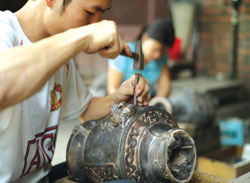
Be patient: A young artisan at Nguyen Van Ung's workshop. Because bronze casting is a tough task which requires not just a great deal of skill but also concentration, diligence and love, not many youngsters today are patient enough to pursue this work.  VNS Photo Viet Thanh

Be patient: A young artisan at Nguyen Van Ung’s workshop. Because bronze casting is a tough task which requires not just a great deal of skill but also concentration, diligence and love, not many youngsters today are patient enough to pursue this work. VNS Photo Viet Thanh

Metal memories: A product by Ngu Xa artisans, the three tonne bronze statue of Chu Van An, a famous Vietnamese scholar from the Tran dynasty, rests at the Temple of Literature in Ha Noi.

Metal memories: A product by Ngu Xa artisans, the three tonne bronze statue of Chu Van An, a famous Vietnamese scholar from the Tran dynasty, rests at the Temple of Literature in Ha Noi.
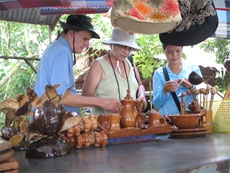
Master's craft: Artisan Nguyen Van Ung checks one of his products displayed at the showroom in his house.
Master’s craft: Artisan Nguyen Van Ung checks one of his products displayed at the showroom in his house.

One and only: All Ngu Xa bronze products are made by hand, one after another, so each product is unique.  VNS Photos Viet Thanh

One and only: All Ngu Xa bronze products are made by hand, one after another, so each product is unique. VNS Photos Viet Thanh

Nguyen Van Ung’s red house is easily spotted along picturesque Tran Vu Street on Truc Bach Lake to the west of downtown Ha Noi. The house is eye-catching not only because of its colour, but also due to its unusual architecture, a mishmash of ancient and modern.

If, like the many foreign tourists who come to the city, you venture through the front door, you will travel back in time 400 years to the age of the Ngu Xa artisans who specialised in casting bronze.

Defying the tests of time, Ngu Xa Village, like the bronze works its craftsmen produce, refuses to die.

The room on the ground floor of the house is like a small museum. It is where Ung and his craftsmen keep alive an ancient and proud tradition.

There is a Vietnamese saying: “Linh hoa Yen Thai, do gom Bat Trang, tho vang Dinh Cong, tho dong Ngu Xa” (Glossy silk from Yen Thai, pottery from Bat Trang, goldsmiths from Dinh Cong, bronze-casters from Ngu Xa). These were the most famous traditional craft villages of Thang Long, now known as Ha Noi.

According to historical records, in the 16th century during the Le Dynasty (1428-1789), bronze craftsmen from five villages in Sieu Loai and Van Lam districts (which are now in Bac Ninh and Hung Yen provinces) moved to Thang Long royal capital to practise their craft. They produced statues, bells, Buddhist artefacts and coins for the royal court. Their reputation shone, like the works they produced, throughout the kingdom.

In recognition of their prowess, they were permitted to settle on the Truc Bach peninsular in the west of Thang Long, which now consists of six streets on the edge of Truc Bach Lake. They named their new home Ngu Xa, or Five Villages, in memory of their original homes.

The heyday

From the 17th to mid-20th century, virtually everyone in the area worked with bronze. When you were born, your future was already cast.

Nguyen Huy Luong wrote the poem Tung Tay Ho Phu (Praising the Beauty of West Lake) in the early 19th century, which glorified the work of the bronze makers: “Lua dom ghen nam xa gay lo” (Even fireflies have to envy the kindling fire of bronze-casting furnaces at Ngu Xa).

Many works by Ngu Xa artisans through the ages have become national treasures, such as the 3.6-tonne statue of Huyen Thien Tran Vu (the Guardian) in Quan Thanh Temple in Ha Noi made in 1677 and the 14-tonne 3.95m statue of Buddha Amitabha at Than Quang Pagoda in Ngu Xa Village, which took four years to create and was completed in 1952. The larger-than-life statue of the Buddha sits on a blooming lotus with 96 petals, which by themselves weigh 1.6 tonnes. It is the largest bronze statue of the cross-legged Buddha in northern Viet Nam.

Ung is especially proud of this work because his father and uncle were among the craftsmen who created the statue.

Apart from the skill casting bronze necessitates, it also involves a great deal of physical labour, as Ung explains.

“Bronze casting is extremely strenuous work. But it was much harder in the past without machinery. Now we use cranes and vehicles when pouring molten bronze into moulds, which makes things a lot easier.

“Just imagine for a moment: two people carrying a 50kg pot of molten bronze and pouring it into a mould, time and time again. Can you imagine just how much time and effort it takes to pour tens of tonnes of molten bronze into a mould to make a statue?”

But, according to Ung, it is a labour of love.

Keeping the flame alive

Unlike the ancient statues created by Ngu Xa craftsmen, the village itself has changed beyond all recognition. Truc Bach Lake has shrunk, and tarmacked streets criss-cross the former village, which is now better known for pho cuon (beef and vegetable wrapped and rolled in a rice pancake) and seafood.

Ngu Xa’s fortunes declined sharply in the mid-20th century due to the scarcity of bronze, and craftsmen were even forced to churn out aluminium goods to meet the needs of society and the military during the war.

However, it underwent a resurgence in the late 80s when the economy of the country improved and demand for bronze was rekindled.

But, the artisans themselves are few and far between. Now, Ung’s family is just one of two keeping the traditional art form alive. And the other is headed by Ngo Thi Dan, who is actually Ung’s sister-in-law.

“Bronze casting is very hard work. It requires not just a great deal of skill but also concentration, diligence, care and true love. That’s why not many young people are interested in pursuing this line of work,” Ung says, adding that it is a melting pot of culture, art and religion.

“It is actually a 5-in-1 job,” Ung says.

He explains, not without a degree of pride: “A good bronze caster must be skilful in five things: first, he must be a sculpture with an eye for design; second, he has to build the mould, which is made from clay (the exact makeup of which is a secret known only to Ngu Xa artisans); third, he must make a casting kiln; fourth cast the mould and last, he must carve the final design.”

The job is not without heartache.

“Sometimes you spend several months making a product, but just one small mistake and all is lost. For example, you might cast a bell that to all intents and purposes is perfect, but then the ring doesn’t sound right. That is when you fail and all your effort is in vain.”

Casting bronze also requires room, says artisan Dan.

She says her house, like that of Ung’s, only has enough space for displaying some of her works and they both have to rent rooms near the Hong (Red) River as workshops.

“This prevents us from expanding our business and training more apprentices,” Ung says.

But despite these difficulties, both Ung and Dan are determined to keep the bronze casting tradition alive.

And their work is as sought-after now as ever.

“It’s regretful that we don’t have enough capacity and staff to meet the demands of the market,” Ung says.

Thirty artisans work alongside Ung, including his three sons and other children from his extended family, as well as non-relatives.

Among his proudest achievements are the statues of Sakyamuni at An Da Pagoda in Hai Phong City, Duc Ong (the Lord) in Huong Tich Pagoda and President Ho Chi Minh displayed at the National Assembly and the Presidential Palace. Just recently, Ung’s team finished casting a five-tonne bell, which will be hung in the bell tower at the historical Dong Loc T-Junction in Ha Tinh Province.

Ung has had many offers to work abroad, but he says that his goal is to keep the bronze-casting tradition alive where it belongs, here in Ha Noi.

“I want to first serve Vietnamese customers and pass on my craft to Vietnamese artisans,” he says, casting a glance around the room. VNS

Hanoi. Je t’aime

Posted by vietnamtravelblog on September 16, 2010 under Vietnam Destinations | Be the First to Comment

Duc Hanh meets the artist Ngoc Linh, who in 1991 created a series of tiny oil paintings inspired by Hanoi.

Duc Hanh meets the artist Ngoc Linh, who in 1991 created a series of tiny oil paintings inspired by Hanoi. As the city prepares to celebrate its millennium anniversary, he now hopes his miniature paintings will inspire efforts to preserve the city’s heritage

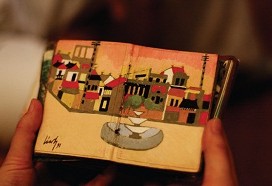
Ngoc Linh’s miniature paintings were created in 1991 on old lottery tickets as at the time he couldn’t afford actual paper

People tell me that the artist Ngoc Linh is 80 years old but I’m not convinced. When I arrive at his door I come face to face with a sprightly man who seems far, far younger.

Born in Lang Son province, Ngoc Linh is ethnic Tay and was originally named Vi Van Bich by his parents. His grandfather Vi Van Dinh was chief of Ha Dong and Thai Binh provinces in French colonial times. His father studied in France before returning to Vietnam to open up a small business on Hang Dao street.

When Linh’s grandfather moved to Thai Binh province, he spent a lot of time with his grandson. Linh’s love for the countryside is apparent in his early career. In 1961 he worked as a set designer on the film Vo Chong A Phu (Mr and Mrs A Phu), about the life of mountainous tribes in the northwest in French colonial times. He also worked on Sao Thang Tam (August Star), which was filmed in 1975, right after national unification.

One of his most famous pieces is the large oil painting of Xuan Chien Khu (Spring in the northernmost Vietnam base), which features imposing landscapes, a burning sun, wild flowers, green forests and turquoise mountains. In another picture, Linh paid tribute to Vietnam’s 54 ethnic groups in a massive oil painting he made in the early 70s. Ngoc Linh’s paintings were clearly imbued with the harmonious pastoral beauty of his hometown of Lang Son – the surrounding forests, the precipitous slopes, and the sweet smell of anise and cinnamon in the air.

But the artist is also deeply fond of the capital city. Living alone in his house-cum-studio in Hao Nam street, he often paints and reflects on the streets of Hanoi. When I broach the subject, he wanders over to a small red lacquer box and takes out one of his prized possessions: a pocket book on which he has written the words, “Hanoi… my love.”

Inside the well-worn book are 140 tiny oil paintings he created in 1991 when he set out to document a precious beautiful corner of an old Hanoi that was vanishing slowly in the face of the country’s rapid development in the early 1990s. The paintings are minute but intricate, vivid and overflowing with love.

Back in the mid-80s, after working on several successful films, work dried up in the film industry. With no job, Linh decided to set up a café to keep himself busy. Ngoc Linh Café at 96 Ba Trieu street was a popular spot. For around four years, the artist made coffee and washed 500 glasses a day.

But in the end he decided to close the café  so he could have more time to paint. His family set up a wedding-dress-for-hire shop but he spent his days cycling around Hanoi observing the daily changes he saw around the capital.

“I felt sad when I saw the old beauty of Hanoi – French villas, old street houses, ancient villages and green trees – disappearing,” says Linh. “I decided to capture these things’ last days, at least what I loved.”

But why did he make these oil paintings on such tiny paper?

The artist blinks his eyes and smiles before explaining that in those days his family was rather poor. Paper and canvases were very expensive and hard to buy. Linh’s 14-year old granddaughter had a classmate whose mother sold lottery tickets. Linh noticed the discarded tickets were printed on nice, thick, smooth paper with imprints of beautiful Vietnamese women.

“At the time such paper was a precious commodity and rare for a poor artist like me,” recalls Linh. “But their small size meant I could put some in my pocket while cycling around the city. So I asked for 100 tickets and started to paint over the pages to make this book.”

“At first I drew for pleasure, but the work started to bewitch me. Initially I painted on one side of the ticket but eventually both sides were used. I only left two pictures of the beautiful girls to remember they were lottery tickets.”

The Hanoi in his paintings appears vivid and strange in comparison to the present bustling and overcrowded capital. The old Cua Nam Market is now a modern ten-storey business centre. The O Quan Chuong Gate guards an empty street. His charming portraits and drawings are imbued with the honey sunshine of autumn or spectacular red sunsets.

“I loved the beauty of Hanoi when its peaceful and quiet but now the old houses, villas and garden houses, are being lost day by day and being replaced with rigid and soulless buildings. I wish to keep these beautiful images for my descendants.”

He also wishes his artwork could send an inspirational message to city authorities and encourage them to maintain the country’s heritage.

VNS

UNWTO: Vietnam a top growth tourist destination
Posted by vietnamtravelblog on September 15, 2010 under Vietnam Travel Info | Be the First to Comment

VietNamNet Bridge – The United Nations World Tourism Organization (UNWTO) has put Vietnam in the list of the top Asian countries with strong tourism performance in the first half of this year.

International tourists visit a perfume store at a commercial center in HCM City. (Photo: SGT)

UNWTO said in a statement about global tourism that international tourist arrivals are estimated to have grown by 7% in the first six months. Asia Pacific with the growth of 14% and the Middle East with 20% led growth in the global tourism industry in the period.

The organization said Vietnam and Myanmar had the same growth of 35%, ranking the two countries as particular countries which had strong results in the period, behind Sri Lanka and Japan.

“Asia in particular is experiencing a very dynamic rebound, with strong results from Sri Lanka (49%), Japan (36%), Vietnam (35%), Myanmar (35%), Hong Kong (China) (23%), Macao (China) (23%) and Singapore (23%),” says the report.

UNWTO said Asia had once again shown a strong capacity for recovery. International tourism has been a driving force in the region, currently the second most visited region in the world with 181 million international tourist arrivals, or 21% of the world total.

However, the organization still maintained its forecast that the global tourism sees continued growth but risks remain. “Although we are witnessing a clear recovery in international tourism, we must remain cautious,” UNWTO Secretary-General Taleb Rifai said in the statement.

Nguyen Van Tuan, head of the Vietnam National Administration of Tourism, earlier told the Daily that local travel remained a key pillar for the country’s tourism, with up to 17 million Vietnamese people traveling in the first half, representing over two-thirds of the figure for all of 2009.

Growth in international visitor arrivals was 32.6% in the first half, with more than 2.51 million foreign visitors coming to the country. The number reached nearly 3.35 million in the first eight months, up 35.2% year-on-year.

VietNamNet/SGT

Hoi An, Hanoi named best Asian destinations
Posted by vietnamtravelblog on September 14, 2010 under Vietnam Destinations, Vietnam Travel Info, Vietnam attractions, Vietnam hotels | 7 Comments to Read

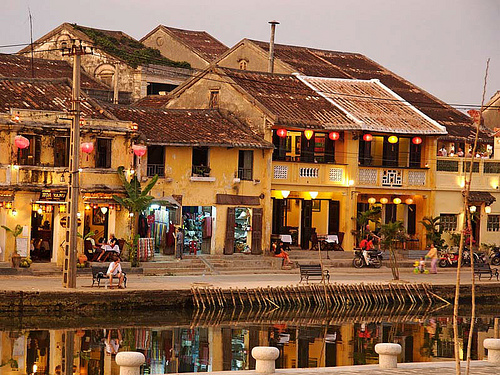
Hoi An and Hanoi were listed as two of the best holiday destinations in Asia in a recent poll carried out by online travel magazine Smart Travel Asia.

The historic town of Hoi An remained in the fifth spot in the top ten holiday destinations in Asia while Hanoi entered the list for the first time in seventh position. Kerala in India topped the list, moving up from third last year.

Hoi An

The annual Best in Travel poll that ran from May to July also listed the best hotels, resorts, spas, airlines and airports in Asia.

The Nam Hai in Hoi An was ranked second in the top 25 leisure hotels and resorts in Asia.  Sofitel Legend Metropole Hanoi, Sofitel Da Lat Palace and Princess d’Annam Resort and Spa were also featured in the list.

Hanoi

Smart Travel Asia has over one million readers worldwide who are frequent travelers. The Best in Travel poll, now in its sixth year, allows readers to vote for their favorites among thousands of options in Asia.

(Source: VOV)

Vu Lan Festival traditions still alive and strong
Posted by vietnamtravelblog on September 13, 2010 under Vietnam Festivals | 3 Comments to Read

People all over Vietnam have been preparing offerings for their ancestors and attending activities during Vu Lan festival.

The street selling votive paper products have been busier, restaurants offering vegetarian food have been filled with an abundance of customers, and people have been flocking to pagodas to pray for the deceased in honour of Vu Lan Festival.

Which motorbike is better? (Photo by T. Nguyen)

Vu Lan festival, also known as the Amnesty of Unquiet Spirits, is held during the seventh month of the lunar calendar. It is a chance for Vietnamese children to honour their parents and try to help the lost souls of their ancestors find their way back to earth.

Activities during the month include preparing ritualistic food offerings, burning incense, and burning joss paper, a paper-mache form of material items such as clothes, gold, bank notes and other fine goods for the visiting spirits of the ancestors.

In Hanoi, during the Vu Lan holiday, Hang Ma Street selling votive paper products are the busiest.

From the beginning of the 7th month of the lunar calendar, Thu, came to Hang Ma Street where sells votive paper products in order to buy necessary offerings for her family’s Vu Lan.

Votive paper products sold out on Hang Ma street (Photo by T. Nguyen)

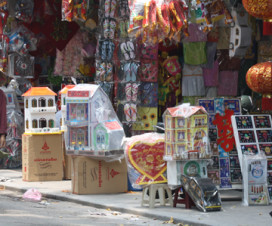
In order to meet various demands of customers, the whole of Hang Ma street displays and sells many kinds of votive paper products ranging from traditional items such as ao tu than (4-part dress), coi trau (Betel chewing kit), non la (palm-leaf conial hat) or horse drawn carts to modern items such as cars, motorbikes, fridges or televisions.

In addition, votive paper multi-floor houses were made in a very sophisticated manner. A good 3 floor house cost about VND180,000-250,000 ($9.1-12.7). A good quality paper car or motorbike sells for about VND80,000-100,000 ($4.1-5.1). A television or fridge might sell for about VND50,000 ($2.5).

A standard offerings kit could cost a total of nearly VND1.2 million ($61). However, according to sellers here, many rich customers were willing to spend dozens of millions of dong on very expensive kits.

A shop owner on Hang Ma Street shared that they had sold out of expensive offerings since the 14th of the month. Now they have only normal offerings left.

In Ho Chi Minh City, goods for the festival varied but the customer demand was not remarkable. In big markets, the number of sellers seemed to be more than buyers.

Many customers go to enjoy vegetarian food during Vu Lan

Nguyen Thi Hien, selling vegetarian food said the prices and demand for vegetarian food during this festival were not so high. She presumed that heavy rains made many people not want to go to markets.

An agent selling votive paper products in Binh Tay market, Ho Chi Minh City said, “The number of customers had increased for this half month but they did not buy much. We expected that they would have many customers buying large offerings kits this year. We did not know that our sales result would turn out like this.”

However, many special programmes for the festival held in restaurants and at tourism sites attracted quite a lot of visitors. Suoi Tien Tourism site received over 1,000 monks from Ho Chi Minh City and its neighbouring provinces, cities as well as thousands of tourists and locals on the opening ceremony of the festival.

In addition, many restaurants offering vegetarian food had lured customers as well.

Thien, living in District 3 said, “On this occasion I want to take my parents to a good restaurant to enjoy vegetarian dishes. They often prepare this kind of food at home but on this day I want them to have time to take rest.”

According to a vegetarian restaurant owner on Road 3/3, District 10, many families here are tending to welcome the festival at vegetarian restaurants because it’s not easy to prepare vegetarian dishes at home.

In Hue City, many young people were excited to visit pagodas, the gravestones of their ancestors or making vegetarian food at home.

Many young people go to pagodas to pray for their ancestors

Nguyen Hoang Nguyen living in Hue City said, “It’s a traditional festival in our country so we should honour and celebrate it.”

Le Thi Dung, studying at Nguyen Hue Secondary School shared, “It’s great because my mother and I will go to the market and buy fruit and food to offer our ancestors and dead grandparents.”

Nguyen Cong, a student said, “I was born in Quang Nam Province but I am studying in Hue City. I went to the pagoda to pray for my parents to have good health.”

In Nghe An Province, Quan Lau, Quang Trung and Ga Vinh markets have been full of customers who out to buy offerings for the deceased. Votive paper products had the best sales.

Nguyen Thi Chau had bought many things such as joss paper, a paper car, a fridge and more. She believes that it’s necessary to give the dead essential items which the living use on earth.

Thai Thi Thuy, a seller in Quang Trung market said she tried to give the dead as many offerings as possible on this day.

There are many kinds of votive paper products (Photo by Nguyen Duy – Thanh Ha)

Phan Thiet (Mui Ne)

Posted by vietnamtravelblog on September 11, 2010 under Vietnam Beaches, Vietnam Destinations, Vietnam Travel Info, Vietnam attractions, Vietnam hotels | 3 Comments to Read

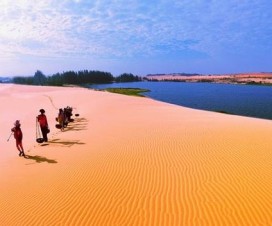
Maybe the definitive favorite among Saigon expats due to its location and great beach. Even though Vung Tau is a few hours closer, the service level and the quality of the beach normally drags us there. The destination is often called Phan Thiet, but it is actually a small one street city 10 kilometers away that gets the most visitors. Mui Ne is the name and this place is perfect for short term visitors with its abundance of resorts and restaurants. A 4 hour drive from Saigon, it is close enough to escape to for a weekend.

Mui Ne, Vietnam

Just a few years ago it was a sleepy fishing village with a long stretch of white beach, nowadays the fishing village is still present on the east end of the beach. The beach and the road next to it has become a city in itself with resorts on the beach and restaurants across the road. A variety of resorts for all budgets can be found here and the food is quite a bit cheaper than in Saigon. The weather is normally fine all year around in Mui Ne and the people traveling here consists of a healthy mix of tourists, Vietnamese tourists, Saigon expats and backpackers.

To do in Mui Ne

Although most people, especially expats, go to Mui Ne to escape the hustle and bustle of Saigon, there are still some things to be done when you get tired of your resort’s swimming pool. On the way to Mui Ne or as a daytrip, you might want to check out the 49 metres tall Buddha taking a rest on the top of a mountain Ta Cu, 30 kilometres from Phan Thiet. Another tourist attraction in Mui Ne are the sand dunes of different colors, the best way to see them is to go on a halfday tour to see them all, and perhaps even try dune surfing which basically is you on a piece of plastic going down a sand dune. Normally these tours also include the fairy stream which is a small river that you walk upstream in, a relaxed and interesting experience.

Last but not least, due to good winds kite-surfing & windsurfing are very popular in Mui Ne and if you want to learn there are almost always instructors on the beach. Overall there are quite a few water sports to try out in Mui Ne.

What about Phan Thiet

Neighboring Phan Thiet has one of the finest 18-hole golf courses in the country, at the Ocean Dunes Golf Club. The new Sea Links Golf Course opened in 2008 offers an additional 9 holes.

How to get there

Bus from Saigon,  we recommend Sinh cafe.
If you prefer having your own private car taking you, send us a request and we will make it happen.
If you are coming from Hanoi or even out of Vietnam, we can help you arrange a flight ticket to Saigon and the trip from Saigon to Mui Ne and back.

Favorite resorts

Terracotta Resort, 28 Nguyen Dinh Chieu – The best bang for your buck, excellent resort for a budget price.

Victoria Resort, Km 9, Phu HaiA bit isolated, great breakfast and beach.

Sailing Club, 24 Nguyen Dinh ChieuThe favorite of Saigon expats, a modern classic.

Favorite restaurants

Gecko, 53 B Nguyen Dinh Chieu – Great music, decent food and a pool table outside. All you need.

Favorite bars/clubs

Jibe’s, 90 Nguyen Dinh Chieu – Relaxed bar that is perfect after a day at the pool.

(Source: Expat.vn)

Five-star resort to open on Con Dao

Posted by vietnamtravelblog on September 10, 2010 under Vietnam attractions, Vietnam hotels | 2 Comments to Read

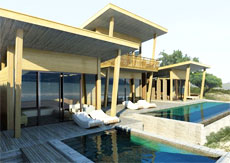
HCM CITY — Six Senses Con Dao, the first luxury resort on the famous Con Dao Island in the southern province of Ba Ria – Vung Tau will welcome its first guests in December.

The five-star resort boasts “ultra-contemporary architecture designed to enhance the natural beauty of the site”.

All materials and resources have been locally chosen, and from sustainable sources, the resort developers say.

The resort has 50 villas, each with its own private infinity pool and unobstructed views of the East Sea with a total capacity of 200 guests. Each villa has both space and privacy along with indoor and outdoor bathrooms.

Con Dao is part of a 16-island archipelago around 200km from Vung Tau city.

Minimalist air-and-hotel tours attract active travellers

Posted by vietnamtravelblog on September 9, 2010 under Vietnam Travel Info | 4 Comments to Read

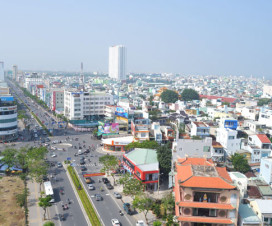
Crescent city: The central city of Da Nang is a favourite destination for both Vietnamese and foreign tourists. Vietnam Airlines is offering a Free&Easy tour of the city. — VNA/VNS Photo Huy Hung

Crescent city: The central city of Da Nang is a favourite destination for both Vietnamese and foreign tourists. Vietnam Airlines is offering a Free&Easy tour of the city. — VNA/VNS Photo Huy Hung

The wanderers: Located about 30km from Da Nang, the historic town of Hoi An is another tourist favourite. — VNS Photo Doan Tung

Travel addicts have more options after the recent launch of two new Free&Easy tourist packages by the national carrier Vietnam Airlines.The new packages to Seoul and Pusan, South Korea include an economy-class return ticket, two-night hotel accommodation and round trip airport-hotel transfer.

The airline launched its first Free&Easy package at the end of 2005. It now offers packages to four domestic destinations and 10 locations in Southeast and Northeast Asia.

Domestic packages include tours to Da Nang, Hue, Nha Trang and Da Lat from Ha Noi and HCM City, with prices ranging from VND2.6-5.2 million (US$135-270). The domestic packages are only available to Vietnamese citizens and foreigners living in Viet Nam.

International packages are available for Vietnamese citizens and all foreigners.

The reasonable prices for the Free&Easy packages have attracted many people, including Ngoc Diep, who has taken several trips, mainly to Thailand.

“I’ve travelled to Bangkok four times over the past two years for less than $200 each trip,” she said.

However, due to the current chaotic security, Bangkok is no longer Diep’s favourite option. She’s considering Seoul or Pusan as her next travel destination.

“Although these packages are more expensive than the Bangkok package, I believe it will be worth it,” she said.

University student Khanh Ly and her friends bought Free&Easy packages to Beijing for their summer holiday.

“We didn’t worry about the hotel because it was included in the package, leaving us more time to discover Beijing,” said the 22-year-old.

Ly said that after she returned from Beijing some of her classmates decided to choose similar vacation packages.

“My friends selected the package to Siem Riep because they longed to visit the World Heritage site Angkor Wat. The reasonable $179 price also influenced their decision,” she said.

The package does not include entrance tickets to tourist attractions.

“Although we bought the Free&Easypackage, we still had to pay for the entrance tickets whenever we visited any sightseeing sites, while some tours designed by travel agents include these costs,” Dao Mai Trang, a white-collar worker, said.

However, Trang and her friends still have reason to be Free&Easy customers.

“We don’t want to wake up early to join pre-planned tour activities. We prefer our own flexible travelling schedule. That’s why we have bought Free&Easy tours several times.”

According to the Vietnam Airlines Passenger Marketing Department (PMD), 1,800 customers bought the Free&Easy packages from May to July, a 25 per cent increase over the same period last year, with Vietnamese customers making up 70 per cent of that figure.

“The tours to Singapore, Hong Kong and Siem Riep are our customers’ favourites,” said PMD staff Phi Thi Bich Ngoc.

Similar packages are also offered by tourist agencies, including the New Orient Tour, Viettran Tour and Hanoi Red Tours.

Vietnamtourism Hanoi Joint Stock Co deputy director Nguyen Thi Kim Thanh has offered a tip for those who are considering a Free&Easy package: “In order to get the best price, the traveller should book the tour as far in advance as possible.”

Most people who have taken a Free&Easy tour agree with Thanh’s advice, saying they had to plan for their trip a couple of months early.

“Although the Free&Easy tour includes many conditions, it was designed for flexibly and can be adjusted to meet the demands of all travellers, including those who wish to take business class on the plane or stay in a five-star hotel,” Thanh said.

Vietnam Airlines plans to launch a Free&Easy package to Shanghai by the end of this year. — VNS

Hanoi sparkles with fireworks on National Day

Posted by vietnamtravelblog on September 8, 2010 under Vietnam Festivals | Be the First to Comment

A firework display and an open-air concert brightened Hanoi on the National Day, September 2.

A firework display and an open-air concert brightened Hanoi on the National Day, September 2.

Ten of thousands of people flocked to Hoan Kiem (Restored Sword) Lake in the heart of the capital city to enjoy the fireworks which were set off at 9:00pm and also broadcast live on VTV.

The open-air concert that was performed by 400 singers and dancers, martial artists, and pupils, also took place on the bank of Hoan Kiem Lake .

The artistic performance began with a Lion dance, followed by a demonstration of VOVINAM (Vietnamese marital art), and songs about the Vietnamese people and the country.

The audience also enjoyed video clips featuring Hanoi ’s history, from the Dinh Dynasty (968-980) to the day when President Ho Chi Minh read the Declaration of Independence (September 2, 1945).

Firework displays and concert were also held in other locations across the country to mark National Day.

People flock to the road on September 2 evening.

Source: VOV/VNE

Natural Wonders: Vietnam National Parks

Posted by vietnamtravelblog on September 7, 2010 under Vietnam Culture, Vietnam Destinations, Vietnam Travel Info, Vietnam Travel Tips, Vietnam World heritages, Vietnam attractions | 2 Comments to Read

I usually think about how people draft their trips and vacations. Things like choosing a destination, selecting airlines and planning entertaining activities. Most times, I am kind of a random traveler. Living in Taiwan for such a long time, my travel pattern is that if the airfare looks right and the place sounds fun, I wouldn’t mind pay it a visit. Reading about Vietnam, I would choose Vietnam as a destination because it means a mysterious cultural discovery.

Although Vietnam is a quite well known country because of its media coverage in films, news and television programs, Vietnam did not open its gate to the rest of the world until the end of the Vietnam War. The media exposure did not ensure an accurate report of Vietnam, and not many travelers’ found the way to share their indescribable experiences.

For a long time, Vietnam was occupied by various countries: Chinese Empire, France and Japan. During the Cold War, the North was controlled by China, and the South was supported by United States. Since the Vietnam War ended in 1975, Vietnam has been shaping its new identity. Under the influences of many other cultures, Vietnam blended them into their ancient traditions and made their own personality. Today Vietnam is welcoming visitors to show off its unique traits and share its national treasures.

National parks in Vietnam are one of the country’s most valuable resources. From north to south, there are 87 national parks scattering around. They are nature reserves, historical sites and natural areas. The common issues among the national parks are the illegal hunters and traders. They endanger the nature cycles of Vietnam. The Vietnamese government and international organizations are doing the best they can to stop these harmful actions and to educate the public the importance of preserving the lands.

Cat Ba National Park
Cat Ba Island is the largest island in the Cat Ba Archipelago in Ha Long Bay. About 16 kilometers away from Cat Ba Town, there is the Cat Ba National Park. The park’s headquarter is located in Trung Trang. One-third of the park is the marine zone, and the rest is the forest. Although there are many wild animals such as wild boars, macaques, deer, white-headed langurs, bird species and reptile species and over 600 plants in the park, they are not well protected. Some local people hunt them or make traps to capture them for their high prices in the market.

Cat Bat is a great place for hiking and outdoor activities. However, if you are not an experienced hiker, trails at Cat Ba might be quite a challenge for you. In this situation, a sophisticated tour guide is highly recommended for the purpose of safety. Exploring Cat Ba, you will see one of the most beautiful landscapes in Vietnam and the copious ecosystem. Oriental pied hornbill, a very rare species in Northern Vietnam, can be seen in the park. Other attractions include limestone formations, numerous waterfalls, caves and grottoes. Human history dates 6,000 to 7,000 years back, and the entire Ha Long Bay region was listed as the World Heritage Site by United Nation Educational, Scientific and Cultural Organization (UNESCO) for its biological significance.

Cuc Phuong National Park
Cuc Phuong National Park was founded in 1962 in Hanoi. It is the first national park of Vietnam. The park is about 100 kilometers southwest of the capital. 90 percent of the park is covered by forests, and about 2,000 plant species grow in the park. More than 60 mammal species are in the park and the special residents inc the park are the Red-Bellied Squirrels. The highest mountain is 648 meters above the sea level.

Cuc Phuong is where the Endangered Primates Rescue Centre is located; the Center rescues the animals from illegal trading. Cuc Phuong National Park is also a main attraction for botanists. Researched done by United Nations Development Program (UNDP) and Flora and Fauna International (FFI) distinguished the complexity of the tropical forest and the monsoon influence on Southeast Asia in Cuc Phuong National Park.

At the park’s surroundings you will see limestone cliffs, plenty of plants and mammals. The summit May Bac (silver cloud) is 656 meters in elevation. The limestone caves in the park are eminent attractions and include Thang Khuyet Cave, Con Moong Cave, Pho Ma Cave, and Nguoi Xua Cave. Quen Voi Cave presents diverse aspects of the limestone after its long-term weathering process. The best time to visit the park is during the dry season from April to November.

Phong Nha-Ke Bang National Park
The Phong Nha-Ke Bang National Park situated at the north of Truong Son range in Quang Binh, is one of the world’s two largest limestone regions. It is called “the paradise of researchers and explorers of grottoes and caves.” Over 95 percent of the park is limestone formations, grottoes and caves and forest. Vietnamese and British scientists have surveyed the 20 limestone formations in the park.

The karst formation of Phong Nha-Ke Bang National Park has evolved since 400 million years ago, and it is also the oldest major karst area in Asia. The formations of underground rivers and caves also extend to the border of Laos. The rock formations, underground rivers, large caves, passageways and sand bank all possess world-class beauty. The many marvelous rocks in the park own charismatic names such as Lion, Fairy Caves and Royal Court. Phong Nha-Ke Bang is also an archeological and historical location. The government officials recognize its value and plan to make it a major tourist destination of the nation in the near future.

Accommodations can be arranged at the parks, please contact the tourist center to obtain more information. Read more about the national parks in Vietnam; go to the official Web site: Vietnam Tourism.

(Source: BootsnAll)