Perfume River (Hương River)

Posted by vietnamtravelblog on August 28, 2008 under Uncategorized | Read the First Comment

A visitor to Hue once remarked after his vacation here: “A visit to Hue would not be complete without a boat excursion on the gentle Perfume River, or else you cannot feel the romance of Hue”.

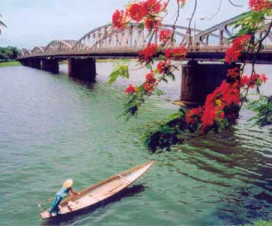
The Perfume River (Vietnamese: Sông Hương or Hương Giang; Chinese: 香江) is a river that crosses the capital city of Hue, in the central Vietnamese province of Thua Thien Hue. Perfume or Huong River is around 80 kilometers long, and owes its name to the fact that it flows through many forests of aromatic plants before reaching Hue, bringing with it a pure and fresh aroma.

Source and flow

The Perfume River has two sources, both of which begin in the Truong Son Mountain range and meet at Bang Lang Fork. The Ta Trach (Left Tributary) originates in the Truong Dong mountains and flows northwest towards Bang Lang Fork. The shorter Huu Trach (Right Tributary) flows through the Tuan ferry, landing towards Bang Lang Fork.

Then it flows in south-north direction passing the temples of Hon Chen and Ngoc Tran, and turns north-west, meandering through the Nguyet Bieu and Luong Quan plains. From this, the River then continuously flows int the north-east direction to Hue city, only an echo of Truong Son mountain, and passes the rest place of the Nguyen Emperors. The river of green water continues its itinerary, passing Hen Islet and various villages, crossing the Sinh junction, which is known as the capital of ancient Chau Hoa, before emptying into the Tam Giang Lagoon.

From Bang Lang to Thuan An estuary, the Perfume River is 30 km long and runs very slowly (as the river level is not much above sea level). The Perfume River darkens as it winds along the foot of Ngoc Tran Mountain – home of the Jade Cup Temple – where there is a very deep abyss.

Artist inspiration

The poetic romantic Perfume River is the deep inspirations to numerous artists, poets, and composers;

“Who turns to Hue

Who comes back to Ngu Mount

Who comes back to Huong River

The river water never sinks

Ngu Mount birds fly back to friends

Whoever are children of Hue remember to return…”

are the beautiful lyrics of a famous song, “Who comes to Hue”, written by Duy Khanh. In the autumn, flowers from orchards upriver from Hue fall into the water, giving the river a perfume-like aroma, and a beautiful poetic view. I have asked several artists about the reason for their inspiring love for Perfume River, and received nearly the same answer: “Well, my inspiration derives from the pure water, the fascinating landscape, and the gentle bridge over the river”.

Today, travellers coming to Hue could not miss a while of boating along the river. Most of them admit that this is one of the most beautiful and extremely splendid riverside landscape (especially at night when lights are on) that they have ever visited!

A river tour

Perfume River at night

As mentioned, the river flows through a series of beauty-spots, taking visitors to every corner of the ancient citadel when you travel by boat. Along the river, you can visit Da Vien, Phu Xuan, and Truong Tien Bridges, come to the Tomb of Minh Mang, Hon Chen Shrine, Thien Mu Pagoda, and finally to bathe in the sea. Upstream, at the Tomb of Thien Tho, you can hear the rustling of the pine tree, which may help you become a… poet!

When the night comes, the surface of the river glistens under the moonlight, and the songs of the boat rowers can be heard breaking the silence. Just come here and you will feel the pure atmosphere of romance and beauty!

The Mid-Autumn Festival

Posted by vietnamtravelblog on August 23, 2008 under Vietnam Culture, Vietnam Festivals | Be the First to Comment

Travel Resources and Partners


>> Vietnam Visa – Apply for Vietnam Visa online.

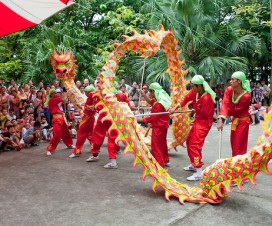
Every year, on the 15th day of the 8th month in lunar calendar, the children throughout the country in Vietnam are given permission by their parents to march in a procession and carry their lanterns, to eat the Mid-Autumn Festival cakes and to perform the dragon (unicorn) dance, oh, how great and uproarious they are!

Killing the Inner Insect Festival

Posted by vietnamtravelblog on under Vietnam Festivals | Be the First to Comment

This festival take place on 5th day of the fifth lunar month in every house of the Kinh (Viet).

This is the middle year festival for the prevention of disease and ward off evil spirits (the day of changing weather from spring to summer, this is the time easy to get pathogen). On the day of “killing inner insects”, every one has to get up early, eat fermented sticky and fruits. The worshipping is held at noon, hour of Ngo.

Shopping in Vietnam

Posted by vietnamtravelblog on August 21, 2008 under Vietnam Travel Tips | Read the First Comment

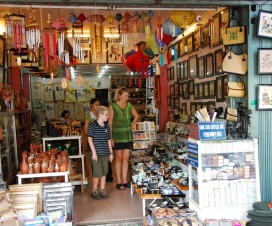
Vietnam has some fantastic shopping opportunities, so it’s well worth setting aside half a day or so to properly peruse. Hotspots include  Hanoi, Hoi An and Ho Chi Minh City, each of which has a temping selection of everything from avant-garde art to sumptuous silk suits.

Some of the best buys are as following:

Vietnamese Art & Antiques

There are several shops to hunt for art and antiques. Both traditional and modern paintings are a popular item. More sophisticated works are displayed in art galleries, while cheaper mass-produced stuff is touted in souvenir shops and by street vendors. A Vietnamese speciality is the “instant antique”, such as a teapot or ceramic dinner plate, with a price tag of around US$2.

As Vietnam has strict regulations on the export of real antiques, be sure the items are allowed out of the country. Most reputable shops can provide the necessary paperwork.

Vietnamese Clothing

Vietnam is emerging as a regional design center and there are some extravagant creations in the boutiques of Hanoi and Ho Chi Minh City.

Ao dai, the national dress for Vietnamese women, is a popular item to take home. Ready-made ao dai costs from US$ 10 to US$20, but custom numbers can cost a lot more. There are ao dai tailors nationwide, but those in the tourists centers are more familiar with foreigners.

Hill-tribe gear is winding its way to shops in Hanoi and Ho Chi Minh City. It’s brightly patterned stuff, but you may need to set the dyes yourself so those colours don’t bleed all over the rest of your clothes.

T-shirts are ever popular items with travellers, cost from US$1 to US$4.

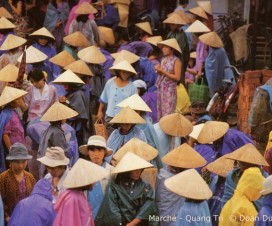
Non (conical hats) are favorite items for women in both rainy and sunny times. The best quality ones can be found in the Hue’s area.

Vietnamese Handicrafts

Hot items on the tourist market include lacquerware, boxes and wooden screens with mother-of-pearl inlay, ceramics, colourful embroidery, silk greeting cards, wood-block prints, oil paintings, watercolours, blinds made of hanging bamboo beads, reed mats, carpets, jewellery and leatherwork.

War Souvenirs

It’s easy to by what looks like equipment left over from the American War, but almost all of these items are reproductions and your chances of finding anything original are slim. The fake Zippo lighters engraved with platoon philosophy are still one of the hottest-selling items.

TIP: Bargaining

Bargaining should be good-natured, smile and don’t get angry or argue. Once the money is accepted, the deal is done. Remember that in Asia, “saving face” is very important. In some cases you will be able to get a 50% discount or more, at other times this may only be 10%.

Conical Hat (or Non La)

Posted by vietnamtravelblog on under Vietnam Culture, vietnamese clothing | 4 Comments to Read

Take a peasant’s common conical hat, add a touch of this and a little of that, and you will have the idea, but not quite an authentic Non Bai Tho or “Poetical Leaf” from Central Vietnam. Just a few simple arrangements added to the conical form are enough to give the Vietnamese leaf-covered hat unique features found nowhere else among Asia’s various types of conical hats.

The legend of the conical hat is related to maternal love and the history of rice growing in Vietnam.

Once upon a time, the legend says, when a deluge of rain was falling there descended from the sky a giant woman wearing on her head four huge round leaves as large as the sky itself and stitched together by bamboo sticks. The leaves protected humankind, then still naked, from the rain. The giant messenger from the sky twirled round the leaves on her head to dispel clouds and rains. Those who followed her were taught by her how to grow crops. One day mankind dozed off as they listened to stories narrated by her. When they woke up the goddess was gone. The Vietnamese built a temple in her memory and honored her as the Rain-shielding Goddess. Following her example, people went into the forests to fetch broad and round leaves (palm) which they stitched together on a bamboo frame. This was to become an indispensable headwear for the farmers on the fields, boatwomen carrying passengers across rivers, travelers under the blazing sun…

However, Vietnamese girls do not like just any conical hat they come upon. The dearest to them is inevitably the one called the “Poetical Leaf “for they become milder, more elegant and more delicate when once they put on a hat, which gives shelter to their blushing cheeks like a crowing bud protected from sun, rain or rough wind. Vietnamese women also use the conical hat to fan off the heat of summer, as a container for a bunch of vegetables, and even as a bowl to relieve the thirst when passing by a well, etc. Romantically, young couples can veil their kisses behind this traditional conical hat during their dates.

The shape as well as the size of the conical hat has evolved greatly. As a rule, the broad-rimmed hat was reserved for women while men wore hats with a higher cone and smaller rims. Then, there were hats made specifically for wealthy and powerful people, hats for children, hats to equip the army, hats for the Buddhist clergy, for the mourners…, more than 50 types in all. Undoubtedly, the two best known and best liked are the conical hat of Chuong village in Ha Tay province, north of Hanoi, and the “Bai Tho”, hat of Hue, the old imperial city.

The prototype of Lang Chuong hat is a large disk-like bamboo frame covered with palm leaves and perpendicularly bent on its rim to form a band of about four inches. At the centre is placed a small bamboo frame to fit the head. The strap is usually very elaborately made of silk, adorned with yellow tassels also made of silk. This hat used to be worn by upper-crust families during visits to pagodas or festive occasions.

The present conical hat is, however, patterned on the “Bai Tho” hat originating in the old capital city of Hue and the birthplace of many eminent literary men. It is true that the place where the hat comes from has been romantically famous with its peaceful Huong (Perfume) River and its majestic Ngu Binh (Peace) mountain. Moreover, Hue has been famous for her attractively sentimental, soft-voiced and long-haired girls who often gave inspiration to poets whose creative works have been handed down to the present day. And the “Poetical Leaf” has a prominent place in all that poetical, dreamy and yet scholarly diet of the ancient city. It is so called because the artisan takes great pains to cut the characters of a verse out of a palm leaf and insert them between two layers of palm leaves before stitching them together. The characters will be easily readable when the hat is seen against sunlight. Nowadays the characters are usually replaced by a decorative figure such as a flower, a dragon or even a landscape.

The making of a conical hat is a one-hundred-percent handicraft. The leaves used to cover the hat are brought from the forest. Then they are exposed to the dew for one night to soften them. When the leaves become dry but still soft they are flattened either by hand or by ironing. Only young leaves are selected. Old or dark ones are discarded. A hat usually consists of 16 to 18 rims made from a special kind of bamboo. In order to have a well-made hat, it must be knitted together with a peculiar kind of thread called “doac” made from the leaves of a special kind of reed. Finally, the hat is trimmed and painted with a coat of attar oil to keep it clean and smooth.

The skill of the craftsman (who in this case is more likely a woman) can be judged by the regularity of the leaves arranged on the hat. The roundness of the rim and particularly the fineness of the stitches which must be so done as to reveal no knot.

Although the conical hat is no longer the cities women’s everyday costume, it remains the ubiquitous headwear in the countryside. And a young girl with her conical hat, quite charming in her four-flapped long dress, is always a popular image of Vietnam and the Vietnamese people.

Money Issues

Posted by vietnamtravelblog on under Vietnam Travel Info, Vietnam Travel Tips | 2 Comments to Read

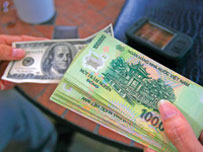
Vietnamese currency is called Vietnam Dong and abbreviated as VND. Notes are available in paper denominations of 5.000VND, 10.000VND, 20.000VND, 50.000VND, 100.000 VND and 500.000VND. Beside VND, US dollar is widely accepted.

Traveler’s Check

Traveler’s check is a good way to carry money around Vietnam because the exchange rate is fixed and it can be replaced in case of lost or stolen. Checks can also be easily exchangeable in banks.

Credit Card

Most major credit cards such as Visa, Master card and American Express are very usefully in the big cities and some tourist sites too. Those cards can be used in the most mid range to the high-end class hotels and some luxury restaurants. You can also get the cash advances from ATMs of the almost Vietnamese banks especially Vietcombank.
Banks in Vietnam has developed a large number of ATM networks but it is not recommended to trust completely in ATM because sometimes you cannot get cash from them especially during lunar New Year. Furthermore, many shops and restaurants don’t accept credit cards as a payment method.

Currency Regulations

You can bring as much as money to Vietnam as you can. There is no limit on amount of foreign currency by tourist but you must declare to the customs. At this time, the minimum amount of money for declaration is 7000$.

Vietnam: Travel in Paradise

Posted by vietnamtravelblog on under Vietnam Overviews, Vietnam Travel Info | 4 Comments to Read

Ho Chi Minh City in southern Vietnam is a metropolis on the move. The commercial hub of Asia’s newest tiger economy teems with motorcycles and scooters; there are 3.15 million of them officially registered, with about a thousand new scooters being signed up every day. They flow along the streets en masse, 24/7, like criss-crossing shoals of fish. From what I can tell, the average occupancy of these machines is about 2.2. Three-up is common; four-up, not unusual. On a couple of occasions, I think I saw five-up including toddlers.

In a tapering 1,500km-long country like Vietnam, a sense of nationhood has been something of a struggle to come by. However, the motorcycle could be riding to the country’s rescue. This is a nation that lives in the saddle. It eats, sleeps, holds neighbourly conversations (at 70kph, with just a few inches separating interlocutors as they buzz down the street), reads newspapers, carries washing machines, walks the dog, transports pigs, chickens and ducks, and works on laptops, all on motorbikes. If you see a pile of furniture tottering down the street, that’ll be someone moving house on their motorbike. Crossing the road in Ho Chi Minh City requires faith. Step out and let the stream eddy miraculously around you, and be sure not to panic halfway across and change direction. That could be fatal.

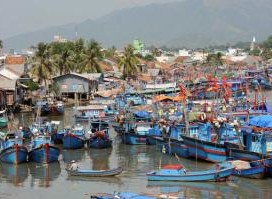
Paddles and pedals: fishing boats in the resort and market town of Nha Trang (Getty Images)

Until crash helmets became mandatory earlier this year, motorcycles were notching up horrific casualties: one thousand motorcyclists a month, apparently. Now, crash helmets are bona fide fashion items. Even when not saddled up, young Vietnamese flaunt them about town, emblazoned as they are with colourful designs. Face masks, too. You find surgical white masks being worn, as well as coloured scarves wrapped around the face, Lone Ranger-style. The women complement the look with elbow-length silk gloves to prevent their arms getting sunburnt. The effect of the gloves, masks and helmets is to transform Vietnamese women into ninja Catherine Deneuves caught in a dash from operating theatre to movie premiere.

The Caravelle Hotel is the place to shake off jet lag. Opened in 1959, with bullet-proof glass, it was the base for The New York Times, The Washington Post, NBC and CBS during the Vietnam War. Journalists and armchair strategists covered the closing exchanges from the top floor bar. The hotel overlooks the opera house, the Hotel Continental, where Graham Greene wrote The Quiet American, and the twin spires of Notre-Dame cathedral, legacies of French colonialism whose imprint is still clearly visible on this haphazard city. Every side-street shows the accent of pre-war France in its shutters, balconies and Art Deco flourishes.

Elsewhere, a less romantic, more hard-edged version of Ho Chi Minh City is taking over, as newly minted skyscrapers reach upwards like a graph of soaring capitalist growth.

What should one see? The Reunification Palace, where the president of South Vietnam lived, is a 1966 building eerily reminiscent of the Royal Festival Hall. Its occupation by communist forces on 30 April 1975 marked the end of the Vietnam War. The tanks that smashed through the gates that morning are still in the grounds, as tourist attractions. The palace shows, if nothing else, what frightful taste the presidents of South Vietnam had: featureless concrete vistas offset with the most hideous soft furnishings. Goodness knows how it ever past the feng shui man.

Everywhere in Ho Chi Minh City you see war relics – a gun, a tank, a military vehicle, an aeroplane – memorialised into tourist attractions or civic amenities. The War Remnants Museum is a refreshingly harrowing exhibition of the horrors of war, rendered in photographs, installations and military hardware. It makes the grisly Imperial War Museum in London look like Disneyland.

For a people that saw off the French and the Americans within the space of 21 years, the Vietnamese are a remarkably friendly lot, and welcome visitors of all nations, including Americans and the French. If this was England, you’d never hear the end of it: the Vietnamese, in contrast, have a wonderful calm acceptance of the past and seem focused solely on the future. This is a quality that the West secretly admires.

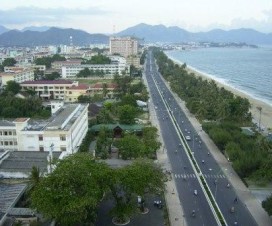
Ho Chi Minh is worth a day or two, but it is good to get out of the city. Two hundred miles to the north-east, you find Ninh Van Bay, the jewel of the 3,260km Vietnamese coastline. Arcs of honey-coloured sand, a warm sea studded with coral reefs, a fan-shaped cluster of islands to keep off tsunamis, a mountain rampart to guard against typhoons, and the sunniest climate in Vietnam… these are what make Ninh Van one of the most beautiful bays in the world. Nha Trang, the main town, spreads out behind the beachfront promenade, where every morning thousands of Vietnamese perform t’ai chi among the topiary.

Hailing a trishaw, I plunged into the massing scooters of the rush-hour traffic to find the beating heart of the town, Nha Trang market. This must rank as among the culinary wonders of the world. There are more varieties of fruit, vegetables, herbs, spices and pulses here than you can shake a chopstick at, along with several things in the meat and fish section that would give a society for the ethical treatment of livestock a collective heart attack.

I spent a morning dodging bicycle panniers laden with pomelos, ducking beneath crates of mangos on vendors’ heads, sidestepping porters balancing swing-basket yokes filled with rice, and puddle-jumping between stalls selling fish and seafood kept alive by having water splashed on them. The narrow alleys were filled with delivery men, fresh ingredients, the noise of motorcycles and horns, and customers dawdling or catching up on gossip. You could hear the haggling for miles.

Vietnamese cuisine is a close cousin of Chinese, thanks to China’s occupation of Vietnam for the thousand years up to the 10th century. But the Vietnamese tend to use more fresh herbs than the Chinese, and they love soups and steamed fish. However, once you have covered the basic rice/soup/fish combinations, Vietnamese cuisine goes way off-piste. Very few species of animal in Vietnam escape the meat cleaver, u o wok and burner. Just about every animal in the country has a dish devoted to it, and sometimes a restaurant, too. This flair for gastronomic improvisation is a legacy of war. Faced with destroyed fields and nothing to plough with, Vietnamese cooks were reduced to experimenting with bat, cat, rat, dog, seahorse and the celebrated 18-inch mouse-eating Vietnamese centipede.

“In the Mekong delta [southern Vietnam], you eat a lot of snake, gecko and turtle,” said Trung, my guide. “Cobra is a favourite. The blood is served with rice wine. The heart you knock back in one, while still beating – bang-bang! – and the meat is served both grilled and as a soup.”

Snake is the chicken of south-east Asia. If you’ve travelled in this part of the world, you’ve probably eaten snake several times without knowing it. Since December last year, airport officials at Hanoi have uncovered at least two consignments of smuggled snakes. One was labelled “seafood”. It contained one ton of live rat-snakes.

My rickshaw driver parked outside what looked like a motorbike shop. A palisade of new scooters gleamed outside. Upon closer inspection, the premises resolved into a café. This was Bac Hai, Nha Trang’s premier pho opportunity. Pho, a noodle soup, is Vietnam’s national dish; it may have originated from French pot-au-feu – whose last syllable it shares.

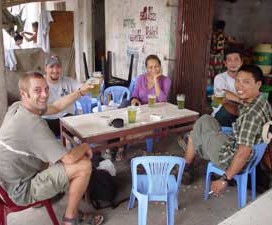
The interior of Bac Hai is as basic as a beer crate. You sit on red plastic stools and eat off metal trestle tables, with what look like betting slips for napkins. The noodles are served in a soup with chunks of beef or pork or sna… sorry, chicken. With lemon and chopped Vietnamese basil, a bowl of pho makes one of the most rewarding ways of spending a dollar.

Every fifth shop in Nha Trang appears to be a coffee shop. In fact, the whole country is on a caffeine high, as you might expect from the world’s second biggest exporter of coffee (after Brazil). Coffee is a Vietnamese ritual. Hot water drips through a tin filter placed on top of a glass. Once the water has seeped through, ice and condensed milk are added and the concoction is stirred and served. It tastes like coffee ice cream and is the perfect antidote to Vietnam’s perennially sweltering climate.

Nha Trang is primarily a market town and beach resort. It is also the birthplace and home of a local cultural icon: Long Thanh, the photographer whose black-and-white images capture the soul of the Vietnamese people, set against moody landscapes. His Hoang Van Thu Street gallery is well worth a visit. Thanh wanders around town and the hinterland taking extraordinary shots of archetypal Vietnamese scenes of bicycles, baskets, rickshaws, women in their conical hats, crones and moments of every day life, images that have merited Thanh more than 57 international shows – and there isn’t a single war-scene among them.

Where to stay in Nha Trang? If you want real value for money, there are hundreds of hotels catering for Vietnamese holidaymakers. Vietnam’s average annual wage is US$600 (£307). Were you to go native in Nha Trang, you could live like a king for a few hundred pounds. But if you want to indulge yourself, the Evason Hideaway at Ana Mandara is the only hotel built directly on the beach (all others are set behind the promenade). It comprises villas, pavilions and walkways set in a formal garden ablaze with tropical plants. You have to watch where you walk, in case you tread in one of the water features with their very hungry goldfish.

“The average room costs US$188 [£99] a night,” said Lionel Valla, the manager. “You can have a one-hour massage for US$45 [£24]. Vietnam is the best value in south-east Asia. And we have a 600-metre beach.”

Even though the Ana Mandara is hemmed between the promenade and the beach, it feels like a calm oasis. If you really want to escape from the crowds, the rickshaw rallies and scooter races, then head to the Six Senses Hideaway Ninh Van Bay, accessible only by boat, seven miles across the bay. Here, you enter a realm that has less to do with Vietnam and more to do with the imagination of its owners, Sonu and Eva Shivdasani. It’s a place you visit if you want to see Vietnam by looking down the wrong end of a telescope.

The Shivdasanis have gone for the natural look. Everything is designed to look as undesigned as possible, and as close to a piece of driftwood as possible: call it low-impact chic. A chair or bathroom sink is not just a chair or bathroom sink: it comes wrapped in a whole sustainable, carbon-neutral, light-footprint philosophy. It is a five-star Robinson Crusoe experience with the mod cons out of sight, and with terrific food, wine and service. I spent three days there, mesmerised by the luminous splendour of Ninh Van Bay; the water, the air, the light, melding colours and sheer lack of motorcycles.

It sounds odd to say that Vietnam seems relatively unspoilt by hordes of foreigners when, during the last century, it was trampled over by the French, the Japanese, the French (again) and Americans. It also had million of tons of bombs dropped on it, as well as horrific quantities of Agent Orange. But a visit during these more peaceful times is a chance to marvel at how this charming country has shrugged at the horrors of the past, drawn a line under them, and is moving forward to make a different type of history – on scooters.

Traveller’s Guide

Getting there

The writer travelled with Qatar Airways (0870 389 8090; www.qatarairways.com), which flies to to Ho Chi Minh City via Doha.

Alternatively, Air France (0870 142 4343; www.airfrance.co.uk) flies via Paris.

To reduce the impact on the environment, you can buy an “offset” through Abta’s Reduce my Footprint initiative (020-7637 2444; www.reducemyfootprint.travel).

Staying there

Caravelle Hotel, 19 Lam Son Square, Ho Chi Minh City, Vietnam (00 84 8 823 4999; www.caravellehotel.com). Doubles start at US$234 (£123), including breakfast.

Evason Ana Mandara, Beachside Tran Phu Bloulevard, Nha Trang, Vietnam (00 84 58 522 222; www.sixsenses.com/ana-mandara). Doubles start at US$306 (£161), room only.

Six Senses Hideaway, Ninh Van Bay (00 84 58 728 222; www.evasonhideaways.com). Doubles from $844 (£444), room only.

Visiting there

Long Thanh Gallery, Hoang Van Thu Street, Nha Trang City, Vietnam (00 84 58 824 875; www.longthanhart.com)

Red tape and more details

British passport-holders require a visa to visit Vietnam. These can be obtained by post or in person from the Embassy of Vietnam, 12-14 Victoria Road, London W8 5RD (020-7937 1912; www.vietnamembassy.org.uk) and cost £38.

www.vietnamtourism.com; 00 84 4 942 3760

By Rory Ross
The Independent (UK)
August 9, 2008

Nha Trang – a great-viewed sea city

Posted by vietnamtravelblog on August 20, 2008 under Uncategorized | Be the First to Comment

Back to my home, Binh Dinh, to see Father

Then, Phu Yen, to see Mother, and Khanh Hoa, to my Sweet Honey

Khanh Hoa, an aloe wood region

Has high mount, has wide sea, and has our dearests back home!

– Vietnamese Folk Song -

Khanh Hoa is a South Central Coastal province of Vietnam. It is well known by the attractive beauty of its own capital – Nha Trang. Among its 3 bays, Nha Trang ranks first thanks to 100% pristine beaches, excellent view, gorgeous islands, mountains, and rivers.

Nha Trang not only gets great natural advantages of its geography position, landscape, and climate, but inherits its rich background in culture and humanities as well. Although it is 1,280 km far away from Hanoi and 448 km from Ho Chi Minh city, it is easily accessible for tourists by all means of transport: by road, rail, air and waterway.

History

Until the middle of the 19th century, Nha Trang had still been a deserted area with wildlife animals like tigers, and was a part of Hà Bạc, Vĩnh Xương District, Diên Khánh Province. Nha Trang officially became a center urbain under the Indochina Governor General’s decision issued on the 30th August 1924. After only 2 decades of early 20nd century, Nha Trang underwent rapid changes and became today’s Nha Trang city – a marvellous picture with old view but modern and fresh environmental city of Khanh Hoa.

The name of the city – “Nha Trang” - derives from a false Vietnamese spelling of a geographical name in the Cham language of the site Ya Trang, (which litterrally means Lau River, the name of the now Cai River as referred to by the Cham people). From this, the name was adopted to call what is now Nha Trang.

Natural conditions

Nha Trang is known as a sea city with a great long beach and a lot of islands, making the city different and outstanding from any other cities of Vietnam. With 19 islands, Nha Trang is famous with beautiful view and different species living inside (such as the Monkey Island). People also live there, specifically around 2,500 households and 15,000 persons. The biggest island is Hon Tre with 36 square kilometer, being laid far far away in the distant sea, bringing Nha Trang Bay the impression of being out-of-the-wind, “all calm and still”.

Concurrently on mentioning about Nha Trang Bay, there is a small story to tell. One of my friend from Japan, Sono Kimura, who has just come to Vietnam for language and culture study, asked me to bring him to somewhere in the country that has 100% pristine sea sight but modern services as well. Of course I brought him to Nha Trang Bay. Sono spent much time on leisuring around most fastinating rocklands, coral beaches, sand banks, mysterious caves and islands. “ Wow, all is 100% prestine but fresh, beautiful and enchanting, making tourists feel like falling in love with… nature”, passionately said Sono. Then, when coming back, he decided to apply for 1 more course, Oceangraphy, his new “love”.

Cultural values

Nha Trang is famous for natural beauty, therefore, most great Beauty Contests of Vietnam and some of the World have selected this city to be the performance place. Nha Trang people are now very proud to witness the greatest Beauty Contest of both Vietnam and the World to take place here. For the past years, Miss Vietnam and Miss Earth have occurred in Nha Trang. More importantly and proudly for Nha Trang in particular and Vietnam in general, Nha Trang (to be exact, Vinpearl Land (which means Vietnam’s Pearl) – the 5-star resort of the city) was selected for the “Miss Universe Pageant 2008”.

Another cultural activity is sea festival. Sea Festival is held anually, and August-Nha Trang Rendezvous Festival is held every 2 years absorb numerous tourists. All the festivals fully cover sea food, arts and activities like Sea-Food Zone, Sea Night Carnaval, ect., and some exhibitions about Cham Brocade Textile, Arranging Art, and so on. If you would like to get to know about this City, please come and join them on any of those occasions.

The culinary offer in Nha Trang is very varied, which are the reasons tourists enjoy their stay in Nha Trang. One of Nha Trang’s most valuable specialities is “yen sao” (translated as “salangane”), “nhím biển” (translated “sea-chesnut”), “cầu gai”…, which make this sea city special. A salangane is not a swift or swallow. It builds its nest with its saliva. The salangane was associated with royal banquets in the past, and with expensive formal parties today. In the past, salangane was an “ideal precious age prolongging medicine” for Kings.

Apart from Seafood, Nha Trang has many other delicious special delicacies, such as Ninh Hoa dried Spring Rolls (Nem nướng Ninh Hoà), Fish noodle (Bún cá), Canh cakes (Bánh Canh), etc., containing the characteristics of the land. Some scholar once said: “Special food or delicacies reveal their genuin land in the most lively way”.

Sea Entertainment & Places of Interest

If you are a young active person, longing for sports activities to refresh your mind, you have chosen the right place. Nha Trang has a wealth of tourist activities for visitors, for example, boat sailing, island hopping, scuba diving, etc. are performed in Nha Trang. Scuba diving is one amongst the most interesting, mysterious and unique sports sea games in Vietnam in general and Nha Trang in particular. If you prefer sky to sea bed, you could join kite boarding. Winds are steady but don’t expect to get up on one hull too often. For luxury stay, high-quality services and interesting sea activities and games, Vinpearl might be an ideal destination. The 5-star resort is located on Hon Tre Island off the coast of Nha Trang City. It is considered one of the top 29 most beautiful bays in the world, there is a tropical paradise waiting to be found, one of Asia’s best kept secrets.

If you are more quiet, and would like to discover natural scenes, you could spend time on sight-seeing tours. There are a lot of beautiful sea sights here, such as Hòn Chồng Island, Hòn Tằm Island, Hòn Mun Island, Hòn Con Sẻ Tre Island, Hòn Ông Island, Monkey Island, Đảo Yến Island (Swallow Island), Thuỷ cung (sea palace), Thap Ba Spring, and Ba Ho Waterfall. All the islands are scattered around the bay, and again, 100% pristine and beautiful. Each name reveals the island itself’s main traits, for example, Monkey Island, where there exists hundreds of monkeys, or Swallow Island, which has a number of swallow species, the rich source of salangane (“Yến sào”). And the others’name express the islands’ shapes. Hon Noi Island is the most beautiful island of swallow, which you really have to come and see to have a brief real understanding of Vietnam’s traditional precious salagane-making industry.

If you are a scholor coming here to discover historical sides, you must drop by Tháp Bà Ponagar (a Champa Tower), Palace of King Bảo Đại, Long Sơn pagoda, Đá Hang pagoda, Kim Thân Phật Tổ Statute, Nha Trang Oceanography Institute, the largest of its kind in Indochina where thousands of oceanic life samples, exhibits are on display. It is also home to the largest oceanic library in Vietnam, Chánh Tọa Church (or Mountain Church), Nha Trang Pasteur Institute, Trí Nguyên Aquarium (an aquarium where hundreds of rare oceanic species are fed), and so forth.

The city is now fast becoming a popular destination for international tourists, attracting large numbers of backpackers and more affluent travelers as well. Are you going to visit the South Beaches of Vietnam? Well, the foremost summer advice is “Nha Trang”!

[youtube=http://www.youtube.com/watch?v=hGyxK6eZB-U]

Vietnamese typical food and drinks

Posted by vietnamtravelblog on August 19, 2008 under Food and Drinks, Vietnam Travel Tips | Be the First to Comment

Eating in Vietnam ranges from cheap noodle soups on the street for about 25 cents to a banquet in one of the luxury hotels. Vietnamese restaurants offer a broad selection of international fare including French, Italian, American, Indian, Chinese and Japanese.

The most typical Vietnamese food is  Pho, the noodle soup with meat in it. It is very cheap at around 10,000d per bowl and usually well spiced. The main types are: Pho Bo with beef, Pho Bo Tai with rare beef fillets and Pho Ga with chicken.  Com – steamed white rice is eaten for lunch and dinner.  Nuoc Mam is the fermented fish sauce used to spice absolutely everything in Vietnam.

Seasonal fruits such as dragon fruit, rambutans and longans, fresh vegetables and local seafood are widely available, although supply can vary by region and season. All fruits and vegetables should be  cooked or peeled before eaten.

Drinking water or ice is generally  not recommended, even in the cities. Bottled water is cheap and readily available, so we recommend you don’t take the risk.

bia hoi barVietnam is a  beer culture and Hanoi is the “bia hoi” capital of Vietnam.  Bia hoi (draught beer) is one of things you  should not be missed. It’s the most popular beverage throughout the country and the  cheapest beer in the world, 2,000d a glass. For the higher quality, there are plenty of local as well as imported brands, such as 333, Carlsberg, Hanoi, Tiger, Saigon, LaRue, San Miguel and Heineken.

Beside beer, Vietnam is also a place to enjoy  tea (Thai Nguyen tea or “Thai tea”),  coffee (“Trung Nguyen coffee”) or something heavier,  wine (“Nep Moi” – the Vietnamese whisky).

TIP: Tram phan tram! and Zho zho!
Remember these words well as all over Vietnam, glasses of beer or wine are raised and emptied, cries of “100%” or “bottoms up” and “cheers!” echo around the table.

Climate of Vietnam

Posted by vietnamtravelblog on under Climate, Vietnam Travel Tips | Be the First to Comment

The climate of Vietnam varies considerably from region to region. Although the entire country lies in the tropics and subtropics, local condition varies from frosty winters in the far northern hill to year-round, subequatorial warmth in the Mekong Delta.

Climate chart of Northern Vietnam Climate chart of Central Vietnam
Climate chart of Southern Vietnam

Vietnam’s weather is indicated by  two monsoons. The  winter monsoon comes from the northeast between October and March, bringing wet cold winter to all areas north of Nha Trang, and dry and warm temperatures to the south. From April or May to October, the southwestern monsoon bring warm, humid weather to the whole country except for those areas sheltered by mountains.

  • For the best balance, try the months of April, May or October;
  • For those sticking to the south, November to February is dry and a touch cooler;
  • From July to November, violent and unpredictable typhoons hit central and northern Vietnam.

It gets pretty crowded from November to March and in June and August. Prices tend to peak over the Christmas and New Year period, but if you don’t fancy sharing the sites with the masses, try to avoid these busy times.

Some travellers like to time a visit with  Tet (Vietnamese New Year), which is the biggest festival in the calendar in late January or early February. A nice idea but not ideal, as the whole country is on the move.